Origins and status
Vasiṣṭha is one of the most venerated and ancient mythological sages, serving as a towering figure of wisdom, patience, and duty rather than a documented historical person.
- Mind-born son. In the Purāṇic texts he is described as a Manasaputra — a mind-born son of Lord Brahmā, the creator of the universe.
- One of the Saptarṣis. He is counted among the Seven Great Sages who are said to guide humanity and the cosmos across the different epochs (Yugas).
The royal guru
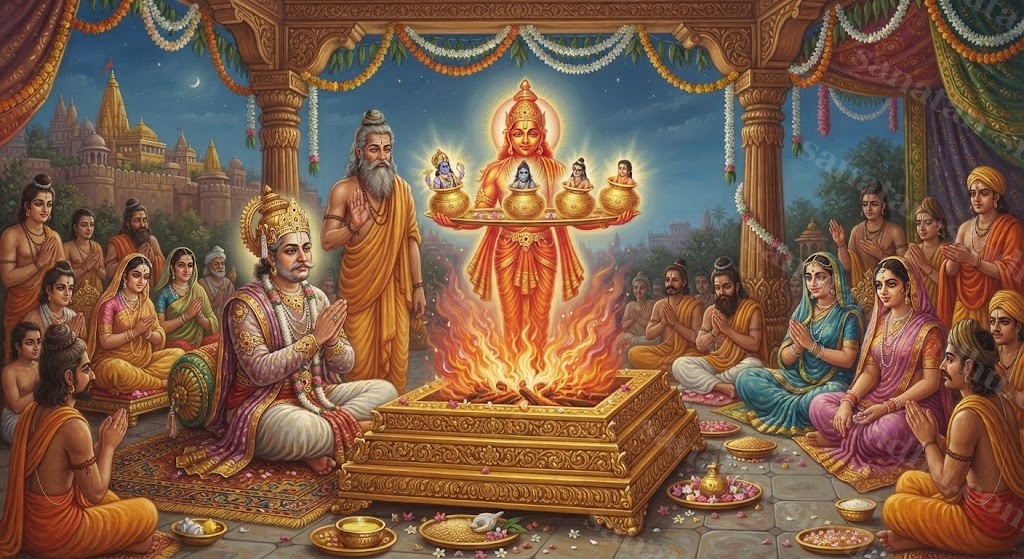
Vasiṣṭha is best known in the Rāmāyaṇa as the Kula Guru — the family priest and chief advisor — to King Daśaratha and the Raghu dynasty. He performed the fire sacrifices that led to the birth of Rāma and his brothers, and later served as their primary spiritual and political teacher.
The epic rivalry with Viśvāmitra
One of the most famous allegorical stories in Hindu mythology is the fierce rivalry between Vasiṣṭha and King Kauśika, who later became the sage Viśvāmitra.
The conflict began when Kauśika tried to steal Vasiṣṭha's wish-granting cow, Nandinī (also called Kāmadhenu). Vasiṣṭha defeated the king's entire army using only his spiritual power (Brahma-tejas). This defeat drove Kauśika to perform thousands of years of extreme penance to equal Vasiṣṭha's spiritual rank, eventually transforming him into the great sage Viśvāmitra.
Philosophical legacy
The Yoga Vāsiṣṭha is a monumental philosophical text structured as a discourse between Sage Vasiṣṭha and a young, disillusioned Lord Rāma. It is one of the most important works on Advaita Vedānta (non-dualism), exploring the nature of reality, consciousness, and liberation.
Astronomical symbolism
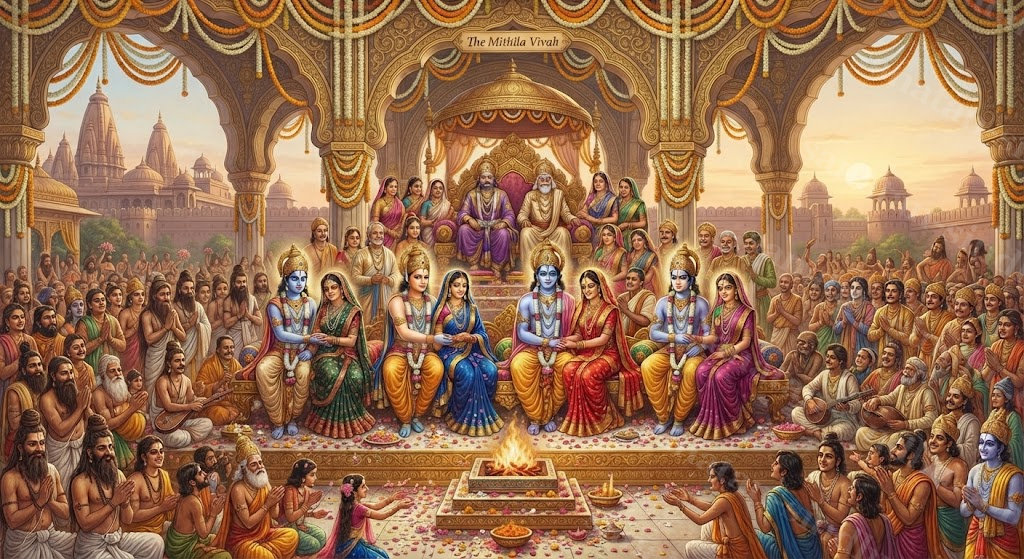
Vasiṣṭha is famously married to Arundhatī, and they are considered the ultimate paradigm of marital devotion. In traditional Indian astronomy, they are represented by a double star system in the Great Bear constellation (Ursa Major). Identifying these two stars — Mizar and Alcor — remains a customary part of many traditional Hindu wedding ceremonies today.