
The Storytelling Portal
Episodic lore, read slowly.
Stories from the Purāṇas, the Itihāsas, and the regional traditions — paginated for distraction-free reading, with names that open into the encyclopedia as you read.
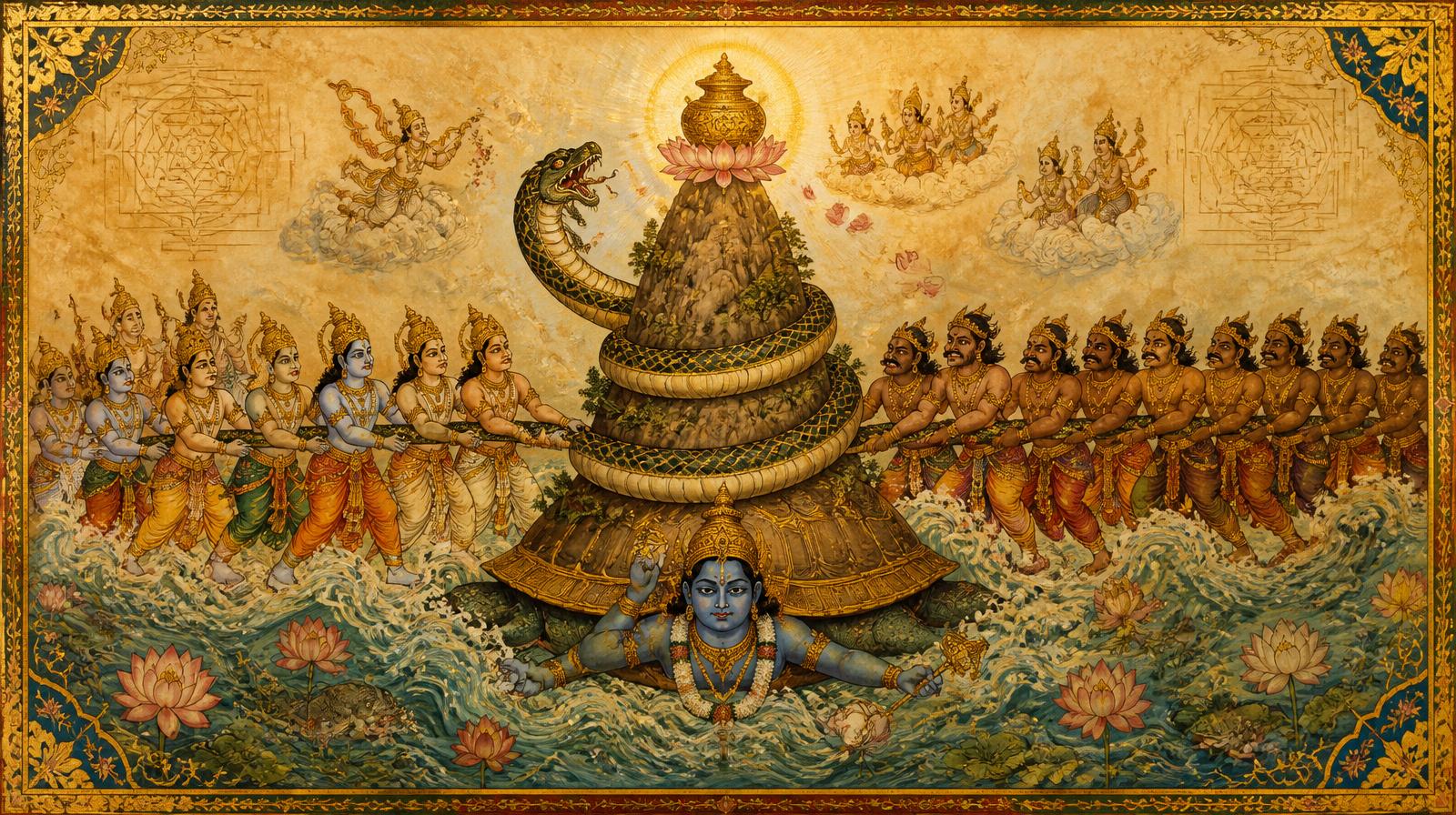
Vishnu Purana, Bhagavata Purana, Mahabharata
The Churning of the Cosmic Ocean
An epic cosmic event where the celestial Devas and the demonic Asuras form a temporary alliance to churn the primeval Ocean of Milk, extracting the nectar of immortality (Amrita) alongside multiple legendary treasures.
5 chapters · read →

Valmiki Ramayana, Shiva Purana
The Descent of Ganga: Earth's Sacred Flow
The epic saga of King Bhagiratha's monumental penance to bring the celestial river Ganga from the heavens down to Earth to liberate the restless souls of his incinerated ancestors.
3 chapters · read →
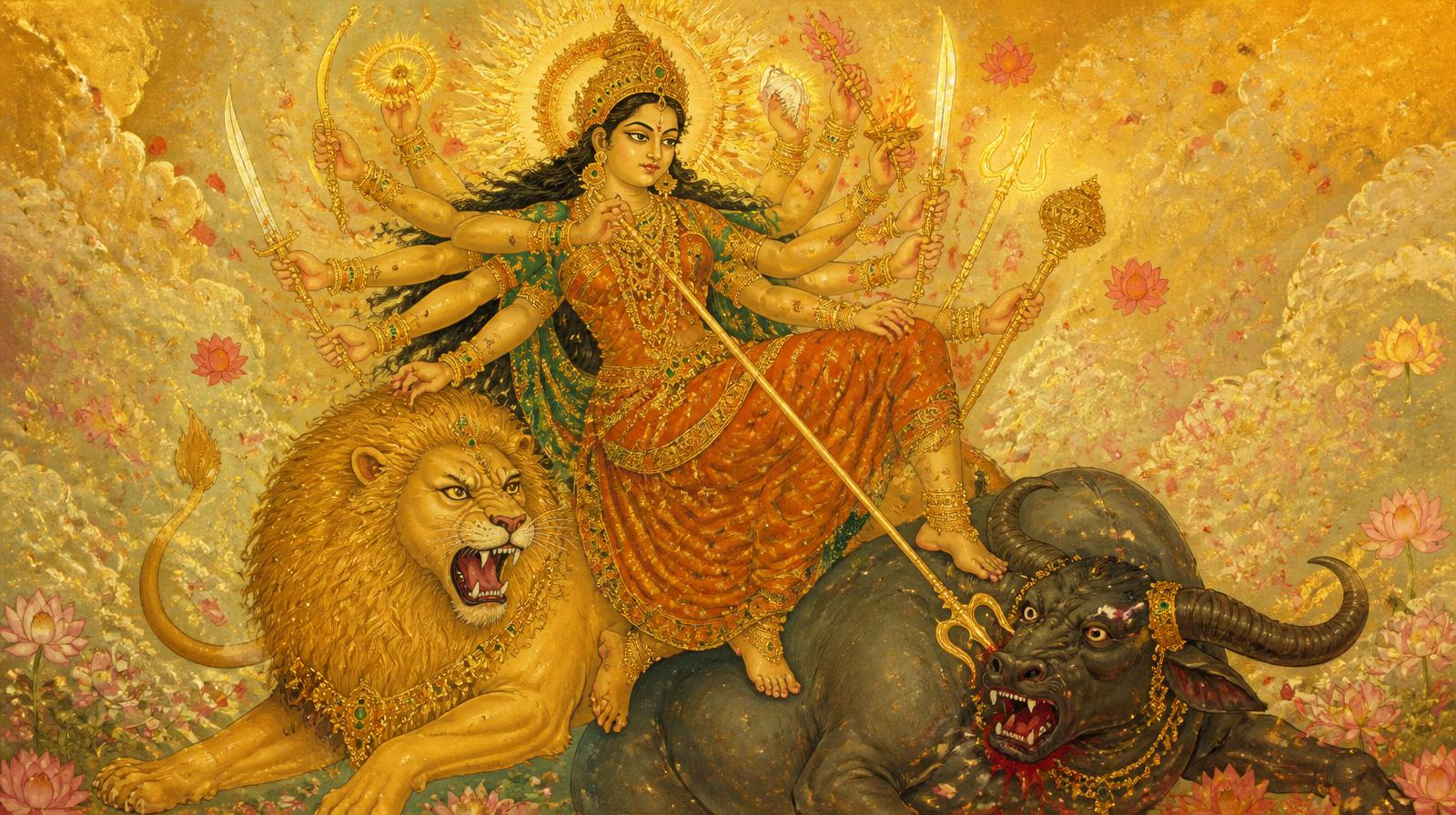
Markandeya Purana, Devi Bhagavata Purana
The Triumph of the Invincible Mother Durga
The spectacular manifestation of Goddess Durga from the combined fiery anger of the gods to defeat the shape-shifting buffalo demon Mahishasura, who held a boon of near-invincibility.
3 chapters · read →
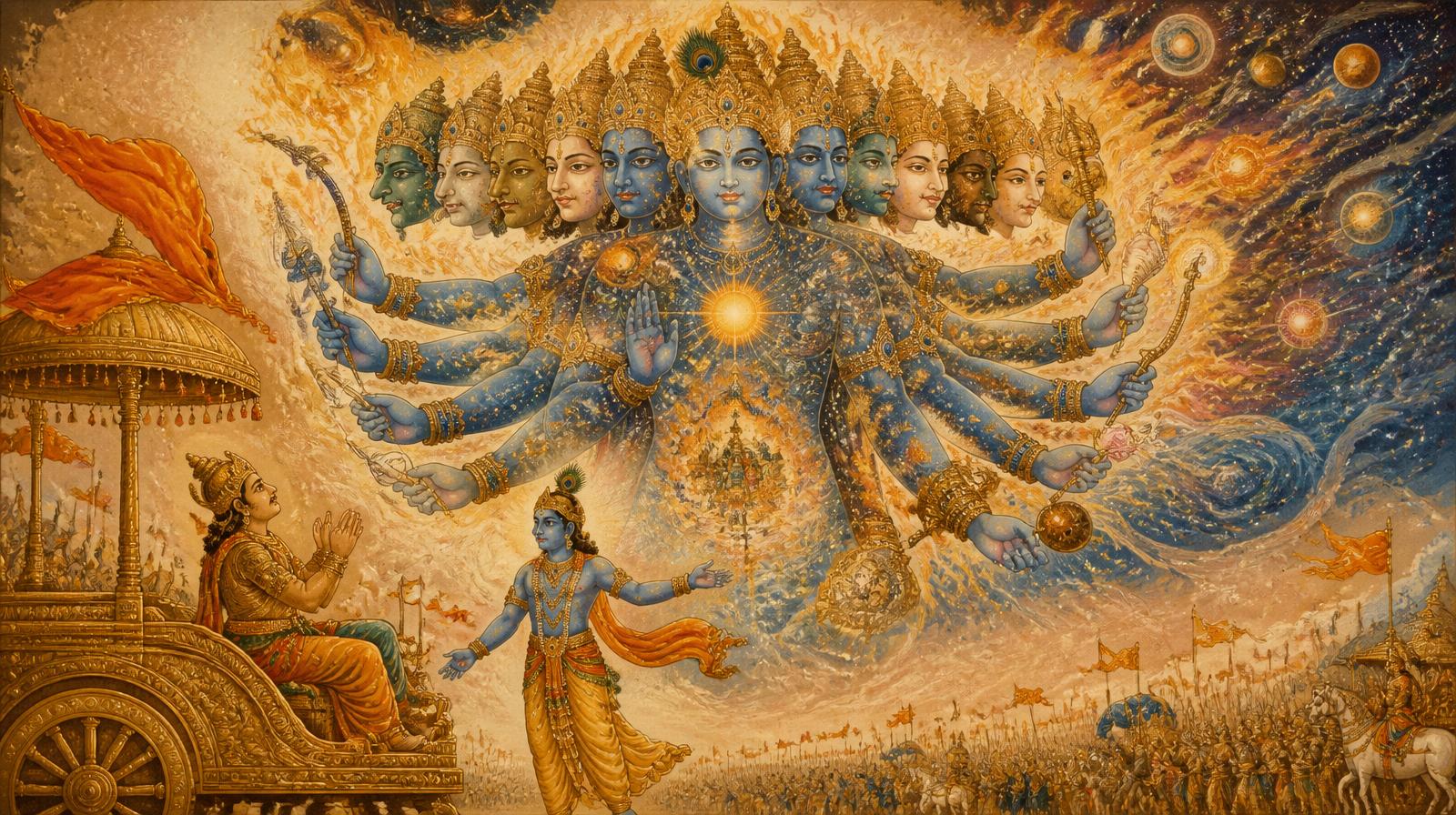
Bhagavad Gita, Mahabharata
The Revelation of the Vishwarupa: Universal Form of Krishna
On the battlefield of Kurukshetra, Lord Krishna resolves the moral crisis of the warrior prince Arjuna by revealing his awe-inspiring, infinite cosmic form that encapsulates all of time, space, and creation.
3 chapters · read →
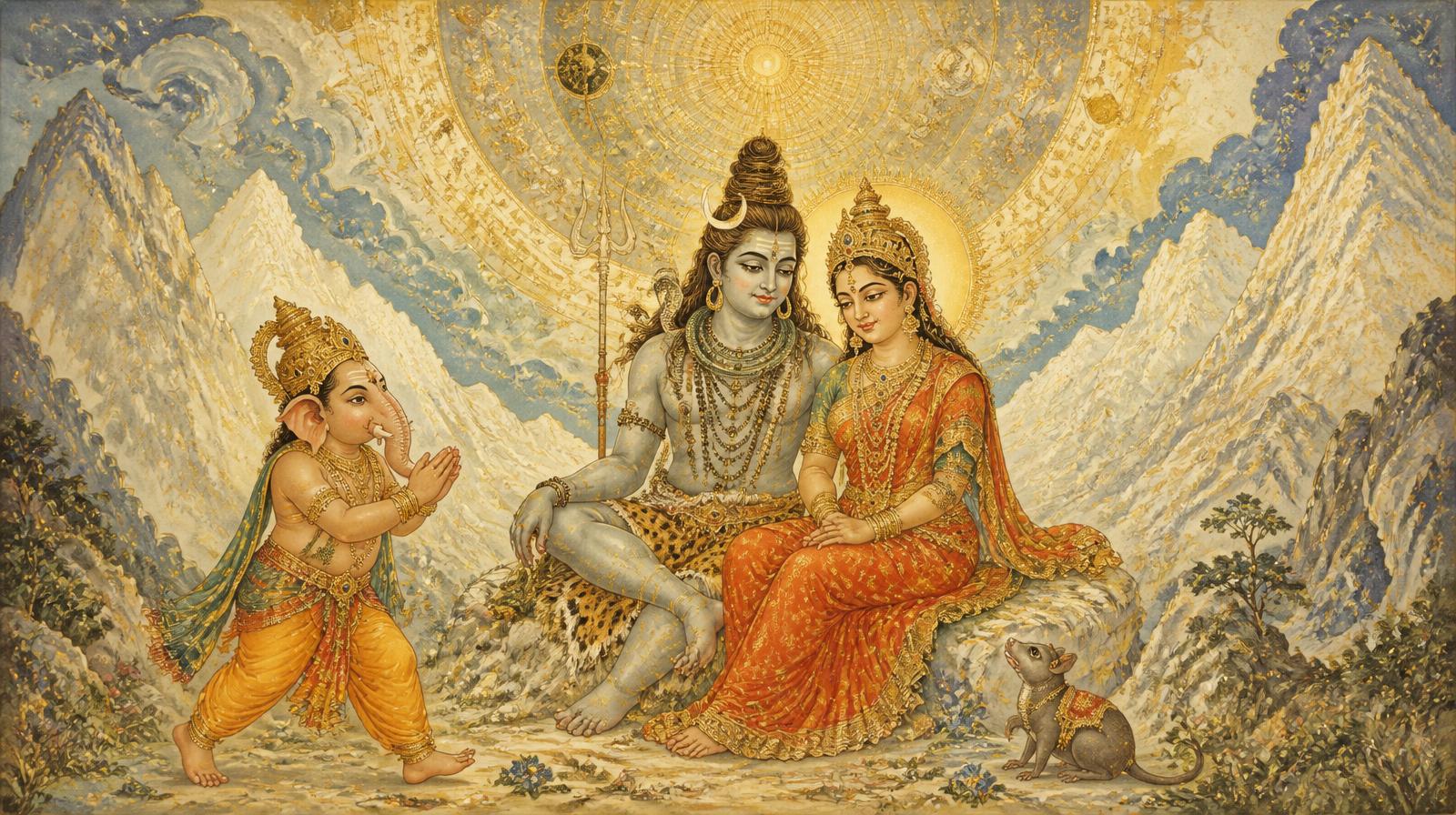
Shiva Purana, Ganesha Purana
The Great Cosmic Circumambulation of Ganesha
A charming and profound tale of wisdom where the brothers Ganesha and Kartikeya compete in a cosmic race for a divine fruit, illustrating the difference between outward effort and inner realization.
2 chapters · read →

Shiva Purana, Linga Purana, Kurma Purana
The Pillar of Fire: Lingodbhava
When Brahmā and Viṣṇu quarrelled over which of them was supreme, Śiva appeared between them as a limitless pillar of fire — neither could find its beginning or its end, and both came to know the transcendent ground from which they had been born.
3 chapters · read →
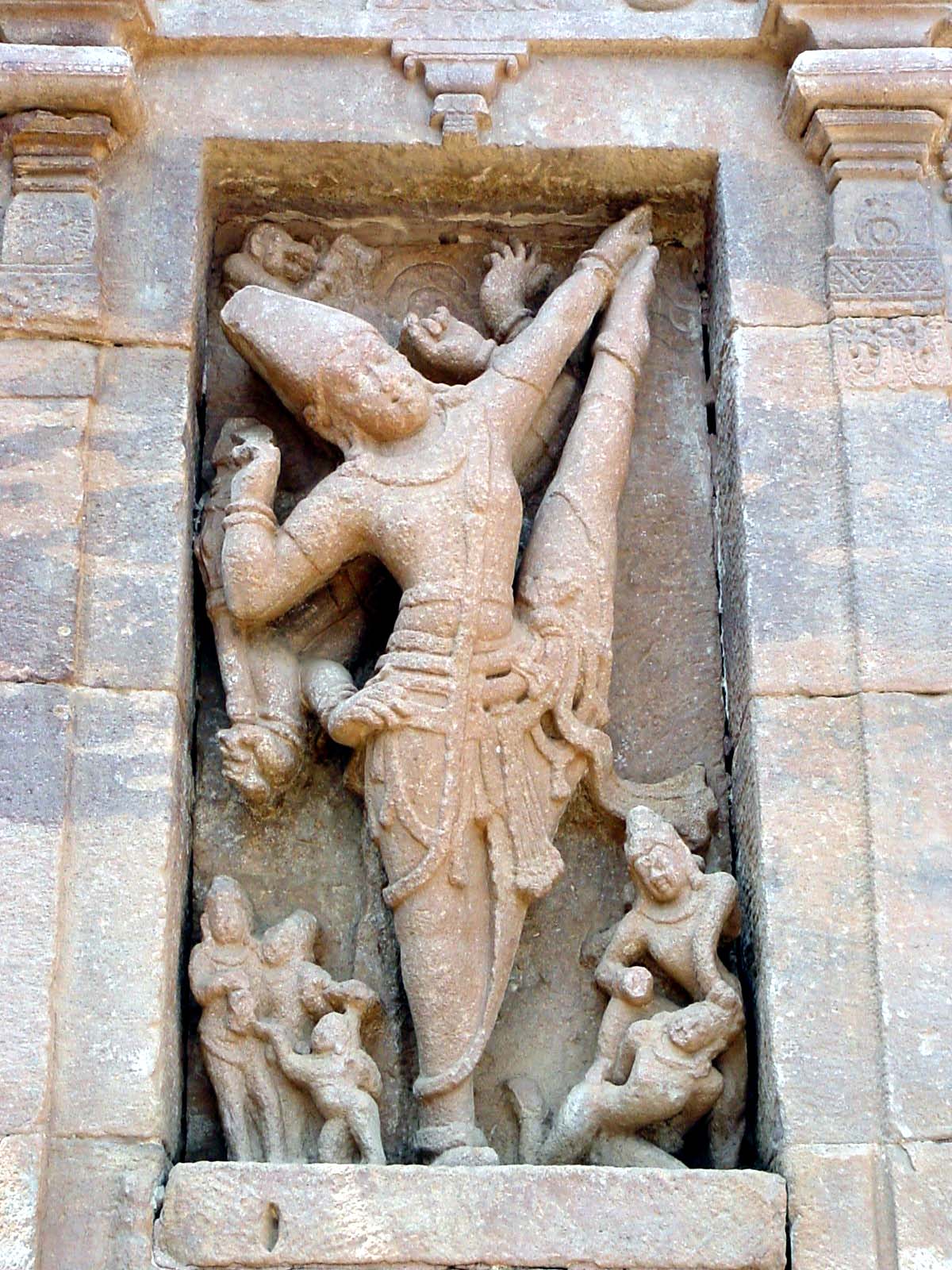
Rigveda 1.154, Bhagavata Purana, Vishnu Purana
The Three Strides: Vāmana and Trivikrama
The Ṛgvedic hymn celebrates Viṣṇu as the god who measured out the three worlds in three strides. The Purāṇas retell it as the story of Vāmana, the dwarf-brāhmaṇa, who humbles the noble Asura king Bali with three quiet steps.
3 chapters · read →
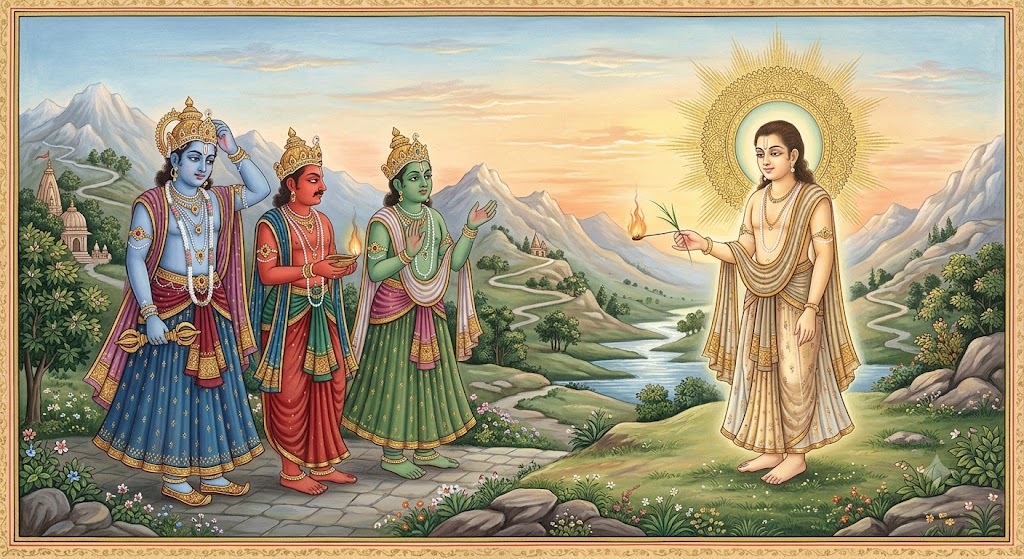
Kena Upanishad (Chapters 3 & 4), Shiva Purana (Shatarudra Samhita, Chapter 16)
The Cosmic Riddle: Yaksheshwara Avatar
To dissolve the growing pride of the Devas after their cosmic victory over the Asuras, Lord Shiva manifests as a mysterious, all-powerful spirit (Yaksha) to demonstrate that all individual power originates from the Supreme Brahman.
3 chapters · read →
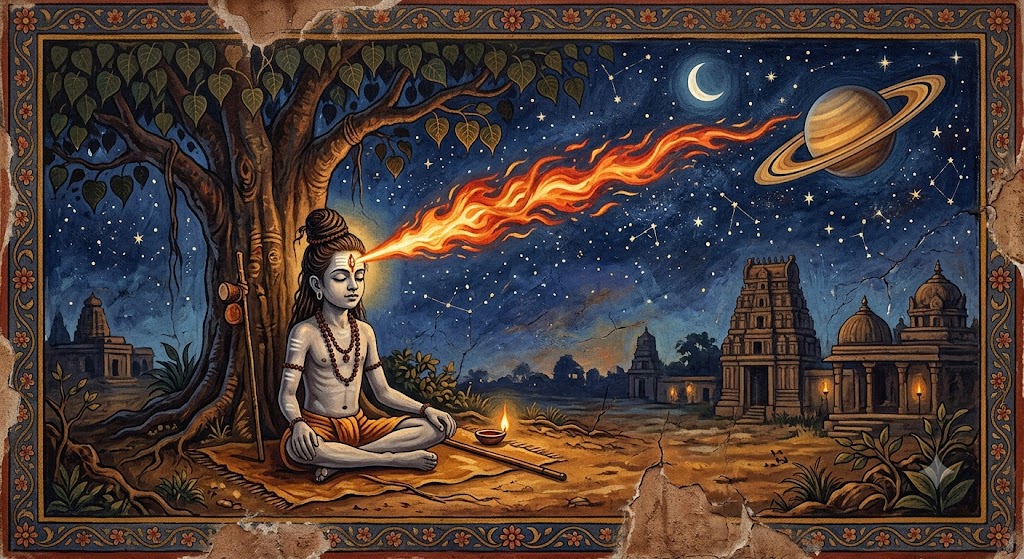
Shiva Purana (Shatarudra Samhita, Chapters 24 & 25), Prasna Upanishad
The Sage of the Peepal Tree: Pippalada Avatar
Born under the protection of a sacred Peepal tree after his father Sage Dadhichi's supreme sacrifice, Pippalada performs rigorous penances to confront Shani Dev, ultimately establishing a cosmic covenant to protect young children from severe planetary distress.
3 chapters · read →
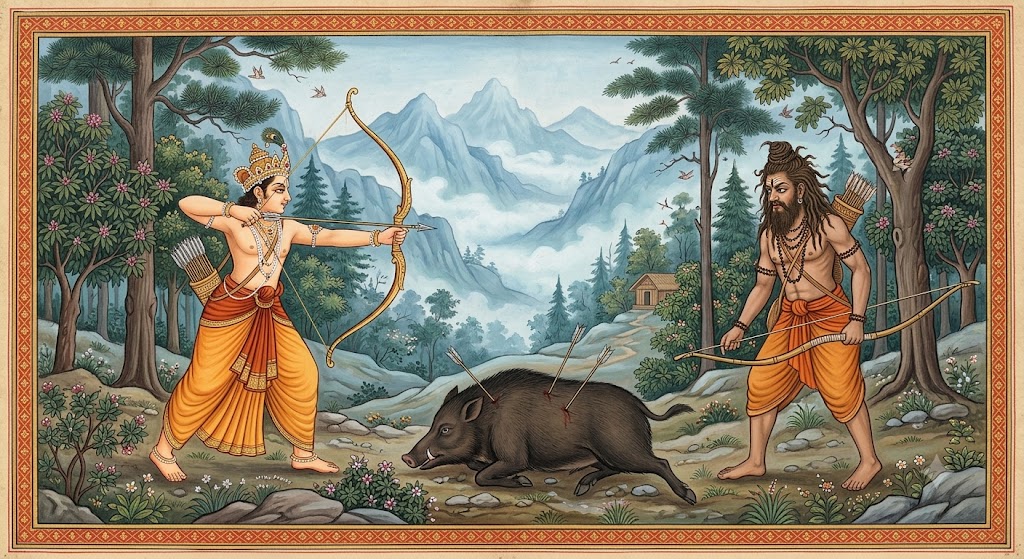
Mahabharata (Vana Parva, Chapters 38-41), Shiva Purana (Shatarudra Samhita, Chapters 37-41)
The Divine Hunter: Kirata Avatar
While performing severe penance in the Himalayas for celestial weapons, the Pandava prince Arjuna is tested by Lord Shiva and Goddess Parvati disguised as rugged tribal hunters, leading to the shattering of his warrior ego and the receipt of the invincible Pashupatastra.
3 chapters · read →
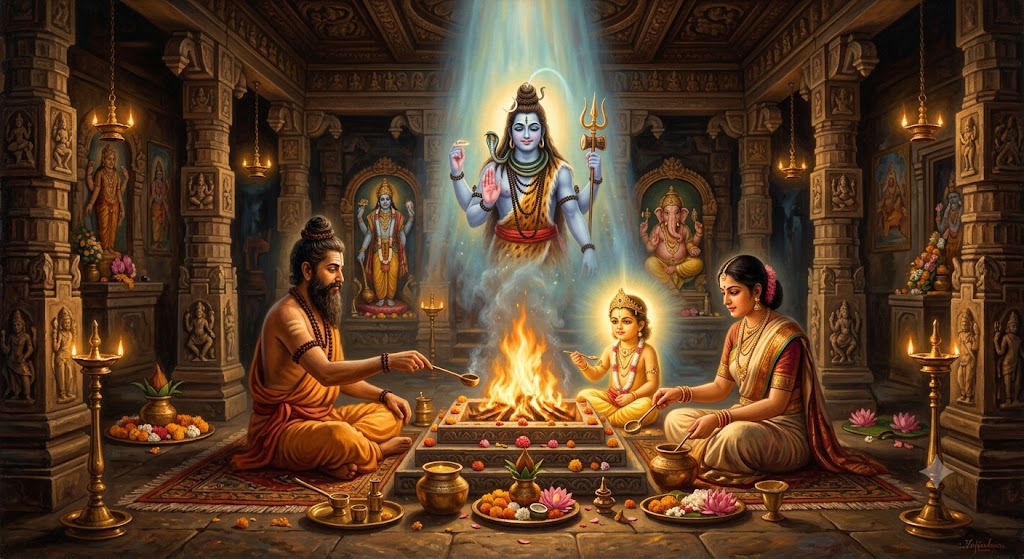
Shiva Purana (Shatarudra Samhita, Chapters 13-15)
The Lord of the Hearth: Grihapati Avatar
Born as a divine boon to a pious couple, the brilliant child Grihapati learns of an astrological prediction of an early death by fire. He surrenders himself completely to Lord Shiva in Kashi, overcoming both the fear of death and the wrath of Indra.
3 chapters · read →
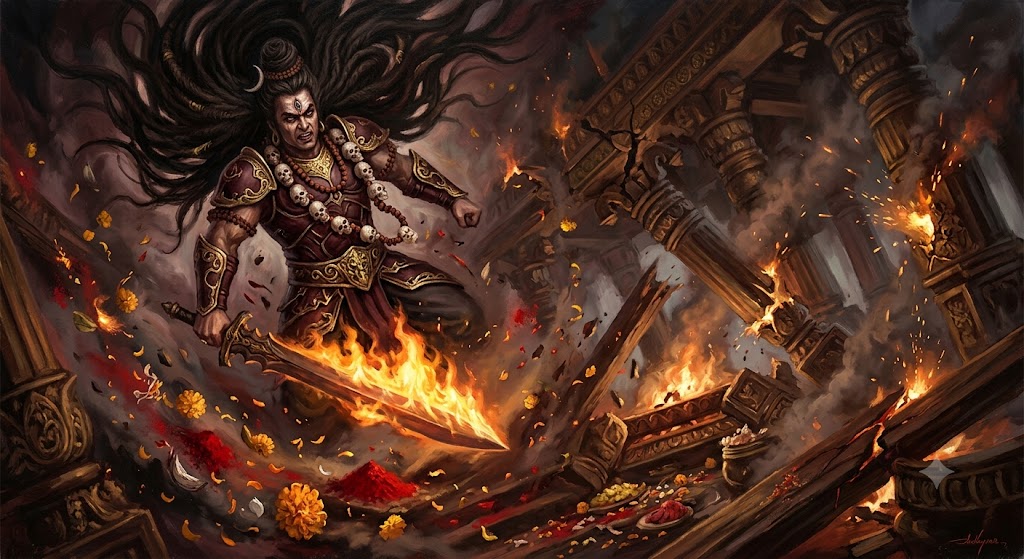
Shiva Purana (Rudra Samhita, Satikhanda, Chapters 31-43)
The Wrath of Justice: Veerabhadra Avatar
When Goddess Sati sacrifices her life following King Daksha's ego-driven insults, Lord Shiva's immense grief and wrath manifest as Veerabhadra to dismantle the unrighteous sacrifice and dissolve spiritual arrogance.
3 chapters · read →
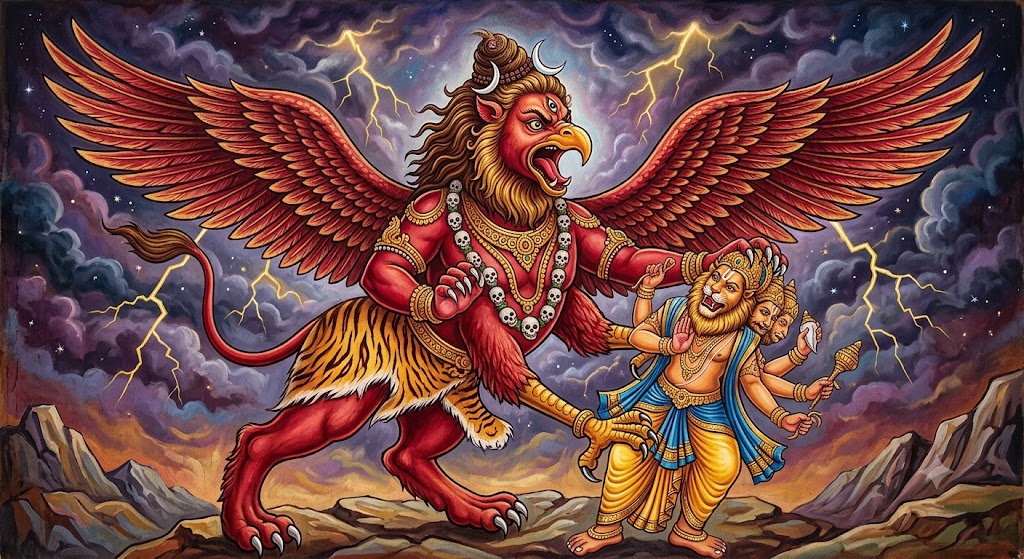
Shiva Purana (Shatarudra Samhita, Chapters 11-12), Sharabha Upanishad
The Great Pacifier: Sharabha Avatar
To pacify and balance the unstoppable, fiery fury of Lord Vishnu's Narasimha incarnation after the slaying of Hiranyakashipu, Lord Shiva manifests as the magnificent winged being Sharabha, illustrating the eternal unity of Hari and Hara.
3 chapters · read →
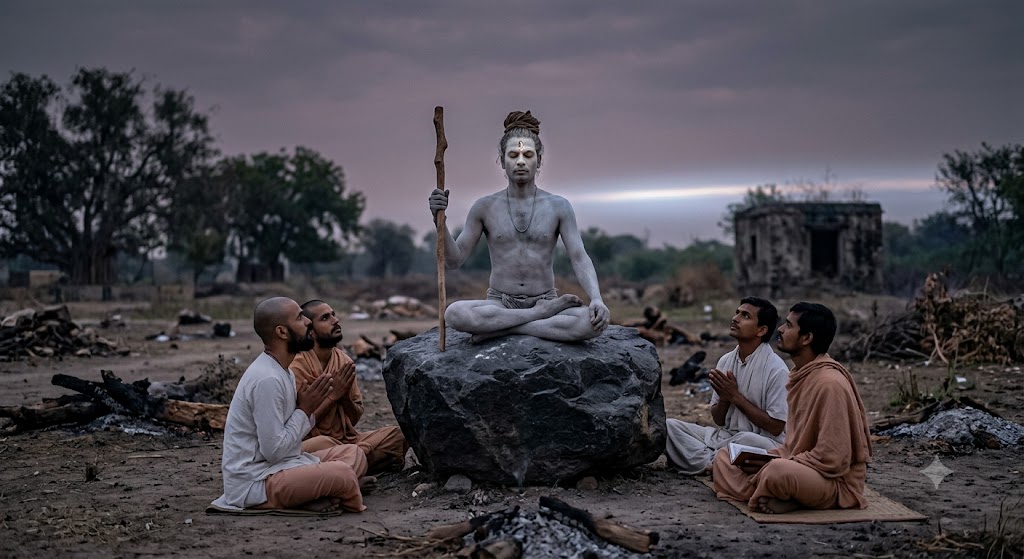
Linga Purana (Chapter 24), Vayu Purana (Chapter 23), Kurma Purana
The Master of Yoga: Lakulisha Avatar
Manifesting during the 28th Dvapara Yuga along the banks of the Narmada River, Lord Shiva as Lakulisha revives the ancient yogic sciences, establishing an unbroken lineage of teachers verified by modern archaeological records.
3 chapters · read →
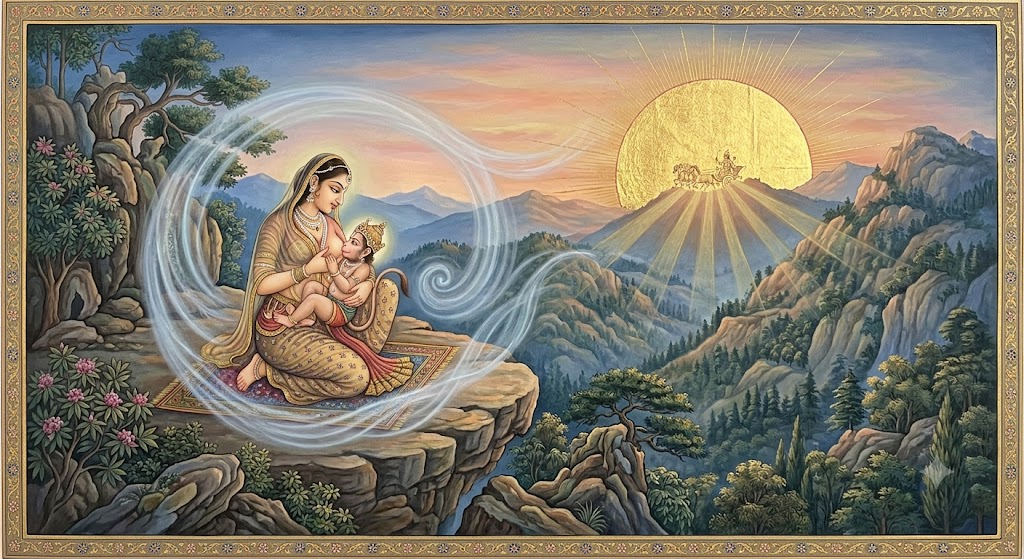
Valmiki Ramayana (Kishkindha Kanda), Shiva Purana (Shatarudra Samhita)
The Infinite Fruit: Birth and the Cosmic Leap
The divine birth of Hanuman as the Eleventh Rudra and son of Vayu, and his spectacular childhood leap toward the morning sun, which resulted in unmatched celestial boons from the gods.
3 chapters · read →
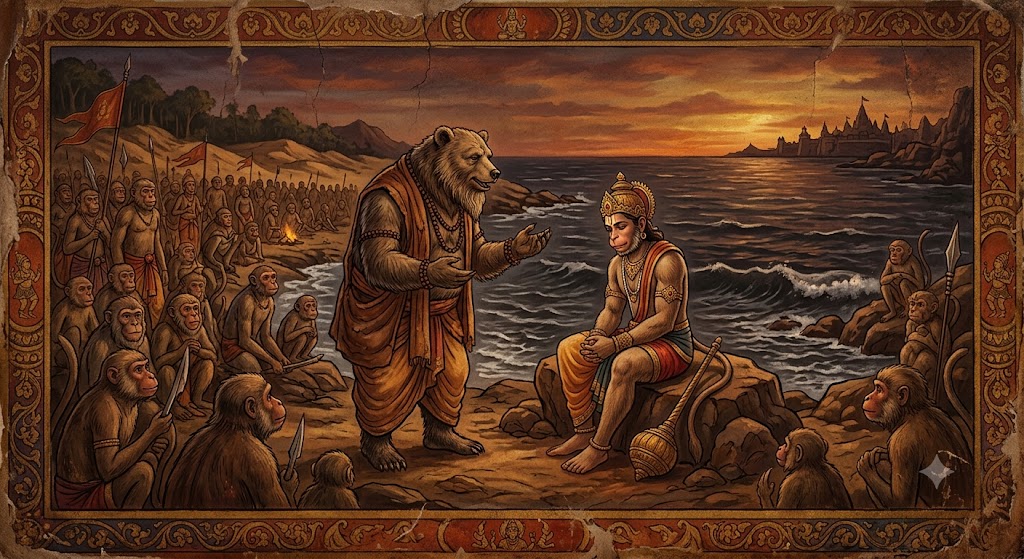
Valmiki Ramayana (Kishkindha Kanda, Sarga 66-67)
The Sleeping Giant: The Curse of Forgetfulness
How a playful childhood curse made Hanuman forget his immense powers until the wise bear-king Jambavan awakened his dormant strength at the edge of the roaring southern ocean.
3 chapters · read →
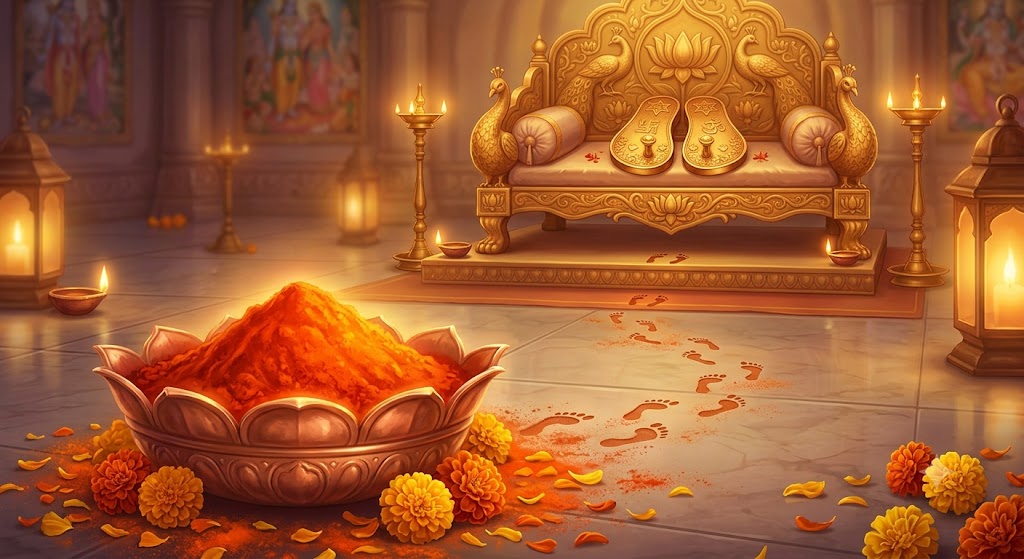
Sri Ramcharitmanas, Tulsi Prasanga
The Orange-Red Blessing of Love: The Origin of Sindoor
The charming and profound story of Hanuman coating his entire body in orange vermilion out of innocent, pure devotion to ensure the long life and prosperity of his master, Sri Rama.
3 chapters · read →
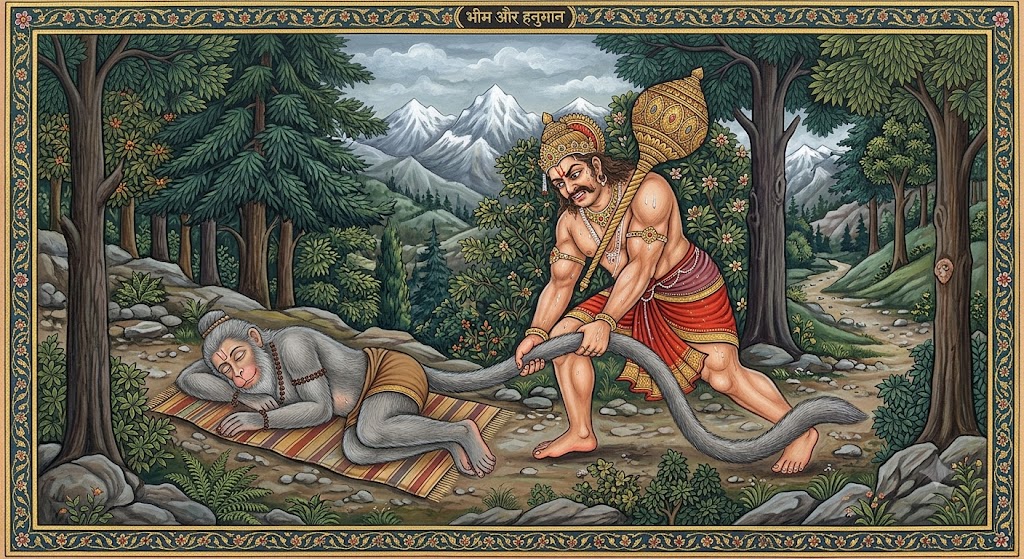
Mahabharata (Vana Parva, Chapters 146-151)
The Old Monkey and the Mighty Prince
Centuries after the Treta Yuga, the immortal Hanuman encounters his spiritual brother, the Pandava prince Bhima, on a mountain path in the Himalayas, teaching him a profound lesson in humility.
3 chapters · read →
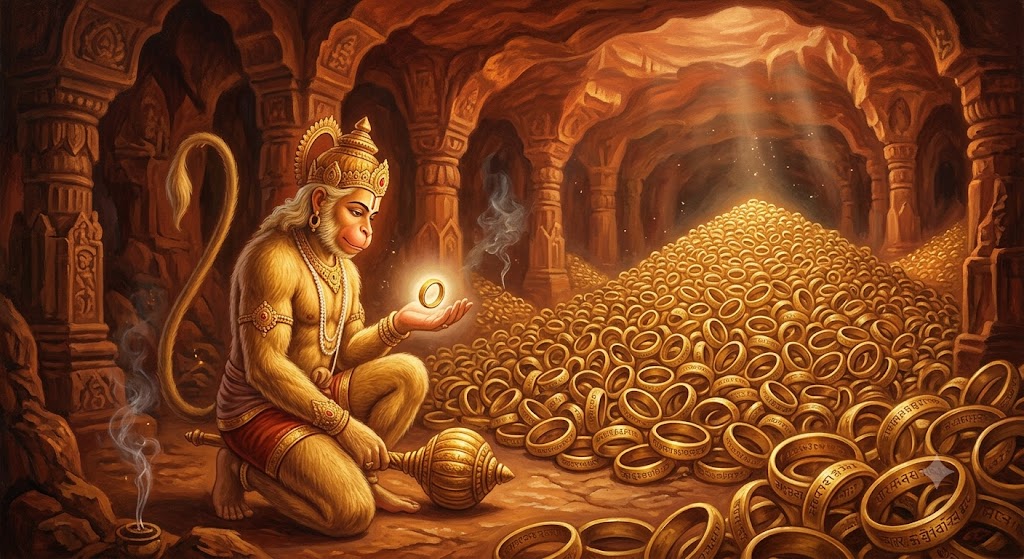
Ananda Ramayana, Puranic Oral Lore
The Secret of the Golden Rings: The Cyclical Nature of Time
A profound metaphysical tale where Sri Rama drops his ring into a crack on Earth, sending Hanuman to the underworld of Naga Loka to discover a mountain of identical rings, revealing the infinite, cyclical nature of cosmic time.
3 chapters · read →
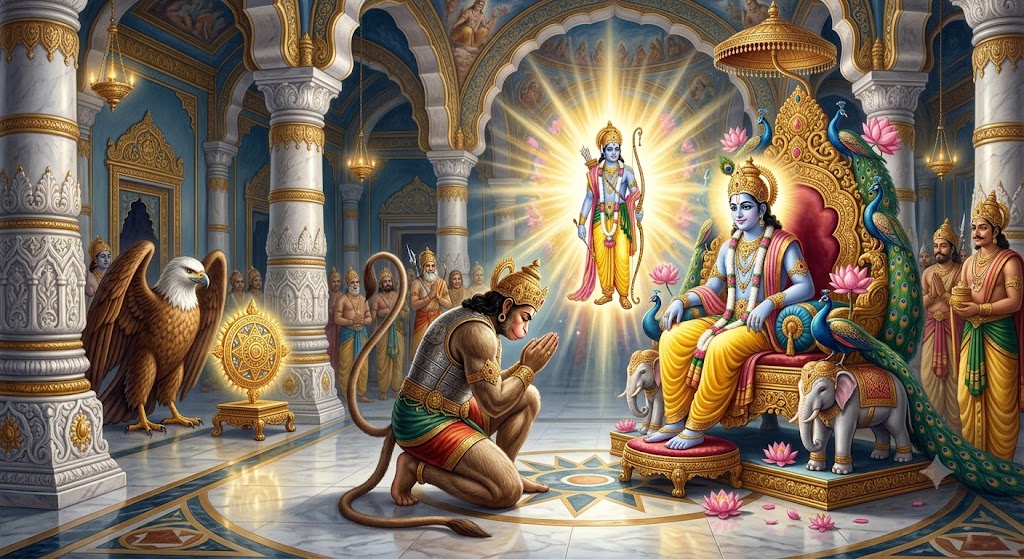
Skanda Purana, Dvapara Upakhyan
The Day Dwarka Learned Humility
Lord Krishna utilizes the pure, unshakeable devotion of the immortal Hanuman to gently correct the subtle spiritual pride residing in his queen Satyabhama, his mount Garuda, and his cosmic weapon Sudarshana Chakra.
3 chapters · read →
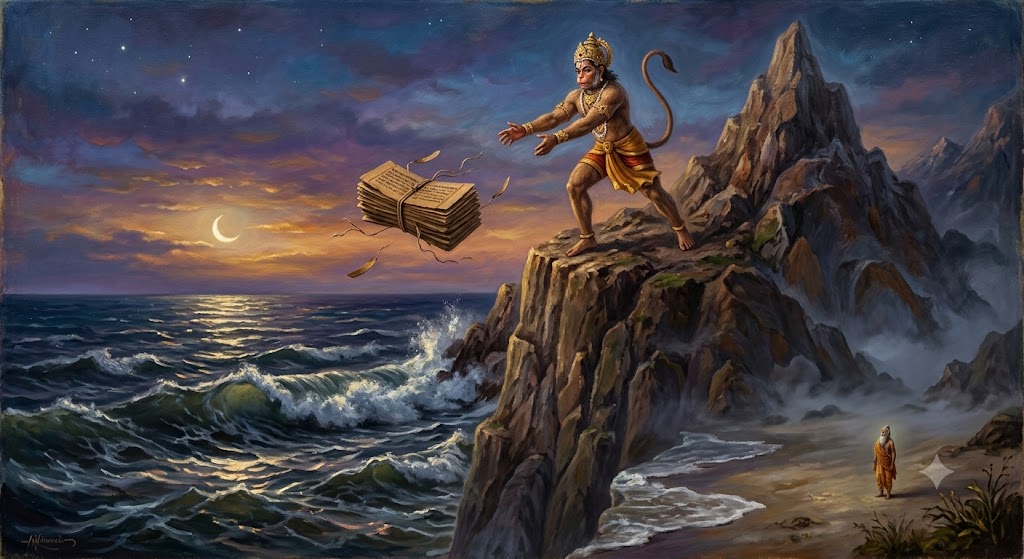
Ananda Ramayana, Puranic Literary Lore
The Masterpiece Thrown to the Waves
The touching and spiritually deep account of the Hanumad Ramayana, written by Hanuman on banana leaves using his claws, and why he deliberately sacrificed his own masterpiece to preserve Sage Valmiki's peace of mind.
3 chapters · read →
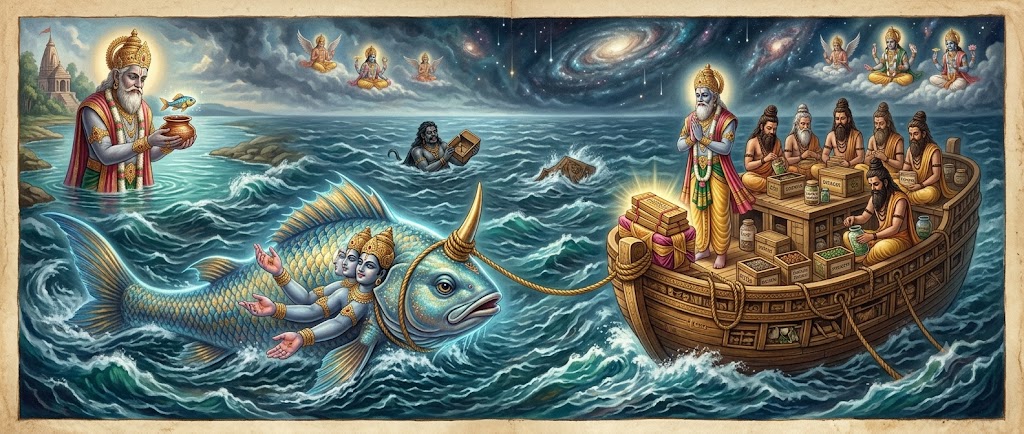
Shatapatha Brahmana 1.8.1, Matsya Purana, Bhagavata Purana Canto 8
The Fish, the Flood, and the Saved Vedas
The first descent of Viṣṇu — as a tiny fish who grows without limit, warns King Satyavrata of a coming cosmic flood, and then tows an ark holding the seven sages and the seeds of every species across the trackless ocean while recovering the stolen Vedas.
3 chapters · read →
Vishnu Purana, Bhagavata Purana Canto 3, Varaha Purana
The Boar Who Lifted the Earth
When the demon Hiraṇyākṣa dragged the goddess Earth (Bhūmi Devī) into the cosmic ocean, Viṣṇu descended as a colossal boar to plunge into the depths, defeat the demon, and lift the earth back into her orbit on his tusks.
3 chapters · read →
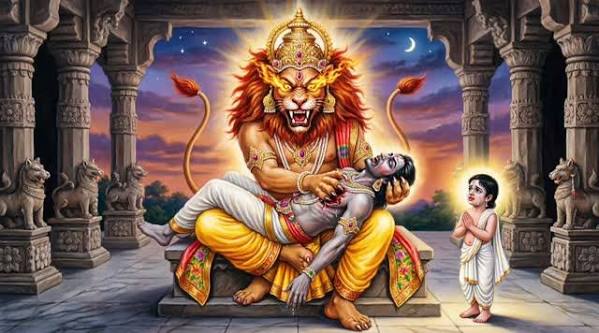
Bhagavata Purana Canto 7, Vishnu Purana
The Lion-Man from the Shattered Pillar
How Viṣṇu honoured every clause of the tyrant Hiraṇyakaśipu's impossible boon by emerging as Narasiṃha — half man, half lion — at twilight, on the threshold, across his lap, tearing with claws instead of weapons; and how the child devotee Prahlāda stood unshaken through it all.
3 chapters · read →
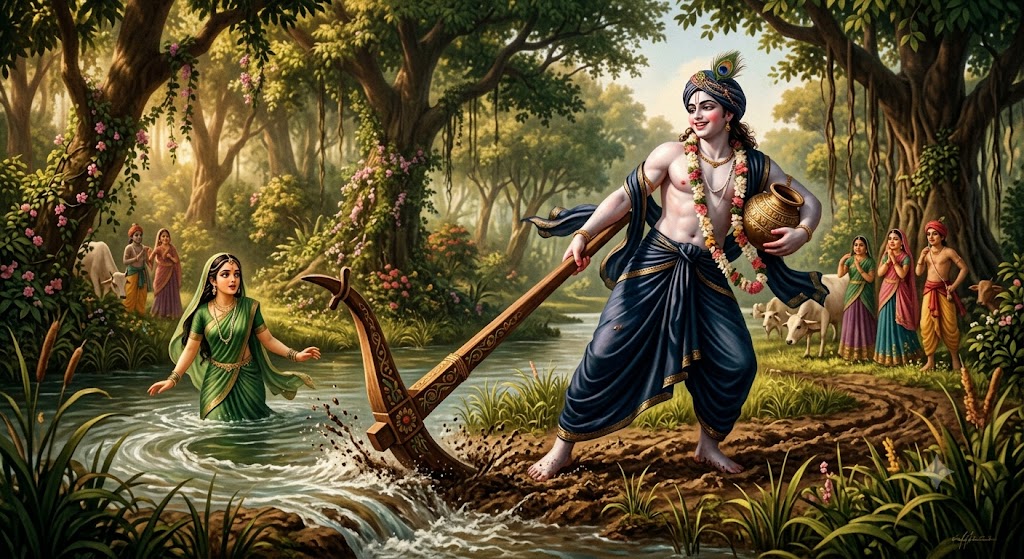
Bhagavata Purana Canto 10, Vishnu Purana Book 5
Balarāma Drags the Yamunā
A rare and startling episode in which the elder brother of Kṛṣṇa, in a mood of joyful intoxication in the forest of Vṛndāvana, commands the river Yamunā to come to him — and when she hesitates, plants his plough into her bank and drags her course itself to his feet.
3 chapters · read →
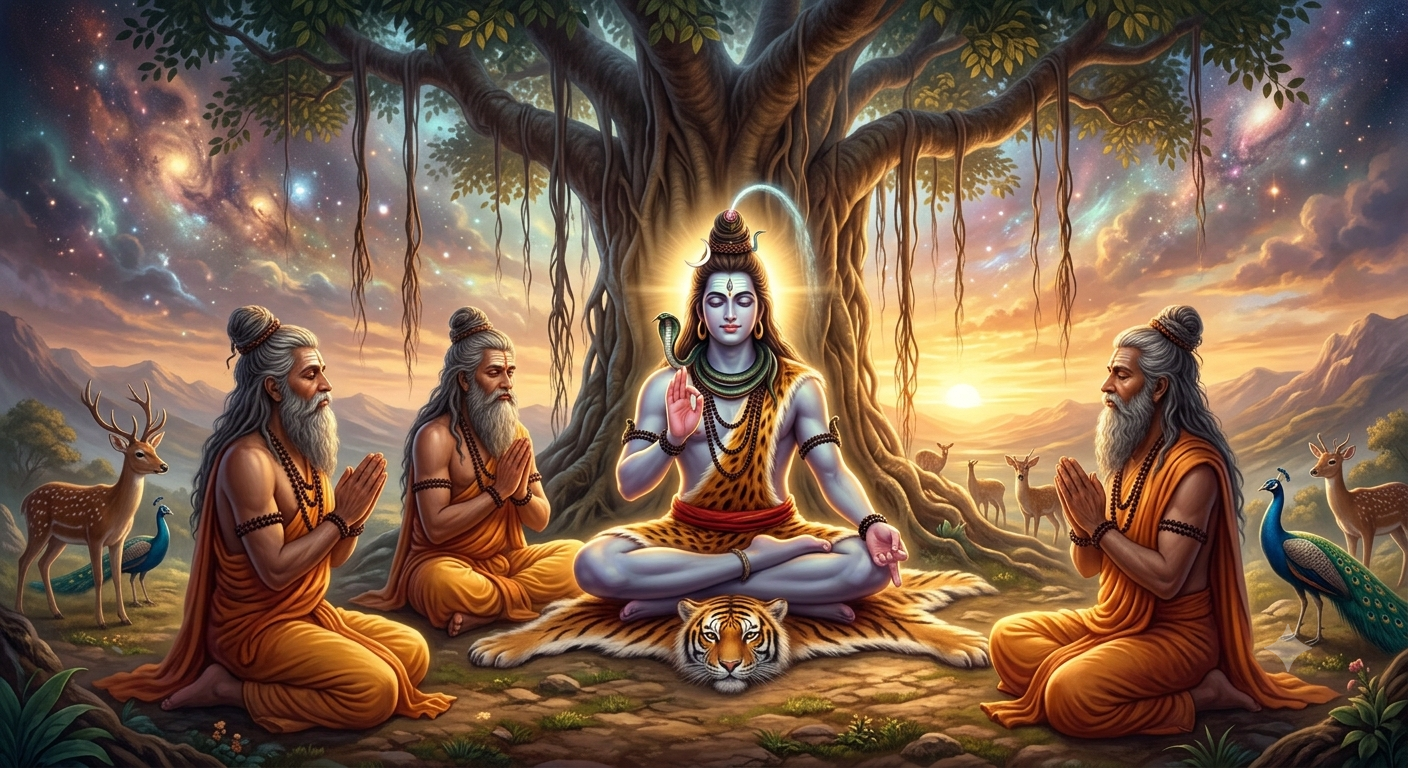
Dakṣiṇāmūrti Stotram, Skanda Purāṇa, Śiva Purāṇa
The Four Sages and the Silent Guru
At the dawn of creation, Brahmā's four mind-born sons — Sanaka, Sanandana, Sanātana and Sanatkumāra — wander the cosmos in search of the ultimate truth. Beneath an ancient banyan tree they meet a radiant young ascetic facing south. Without a single word, he answers every question they have carried for aeons — Śiva as Dakṣiṇāmūrti, the Guru who teaches through silence.
3 chapters · read →
Mahābhārata (Ādi Parva), Brahmāṇḍa Purāṇa
The Scribe of the Epic
Sage Veda Vyāsa needs a scribe who can keep pace with divine revelation. Brahmā sends him to Gaṇeśa — and a pact of wit is struck: the pen must never stop, but every verse must first be understood. When the stylus breaks mid-dictation, Gaṇeśa snaps off his own tusk rather than let the flow of knowledge pause.
3 chapters · read →
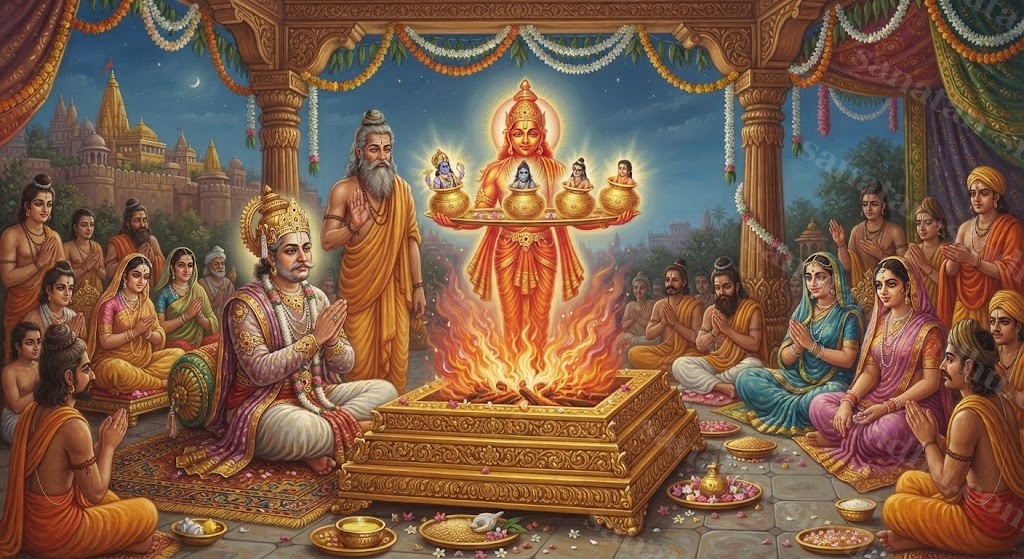
Valmiki Ramayana (Bala Kanda)
The Golden Payasam: Rama's Birth
King Dasharatha of Ayodhya, aging and without an heir, performs the great Putrakameshti yajna on his guru Vashishtha's counsel — and from its sacred fire comes a gift that gives him four sons, among them Vishnu himself, born as Rama.
3 chapters · read →
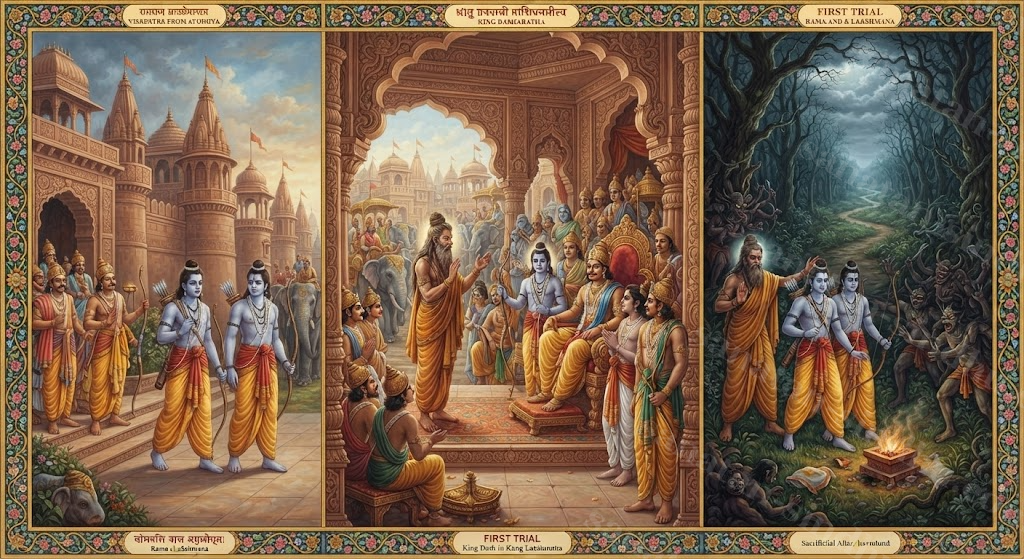
Valmiki Ramayana (Bala Kanda)
Guardians of the Sacred Fire: Vishwamitra's Yajna
The formidable sage Vishwamitra arrives at Ayodhya's court asking for young Rama's protection against demons haunting his forest sacrifice — and leads the two princes into the wilderness for their first trial far from home.
4 chapters · read →
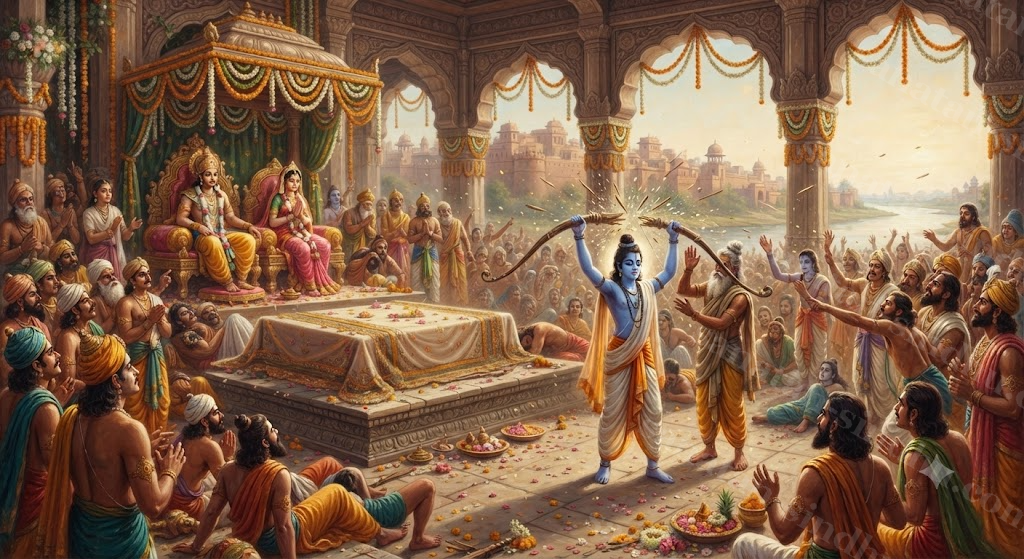
Valmiki Ramayana (Bala Kanda)
The Bow That Would Not Bend
At King Janaka's court in Mithila, princes and kings from across Bharata fail even to lift the massive bow of Shiva to win Sita's hand — until young Rama, guided by Vishwamitra, not only lifts it but breaks it in two.
3 chapters · read →
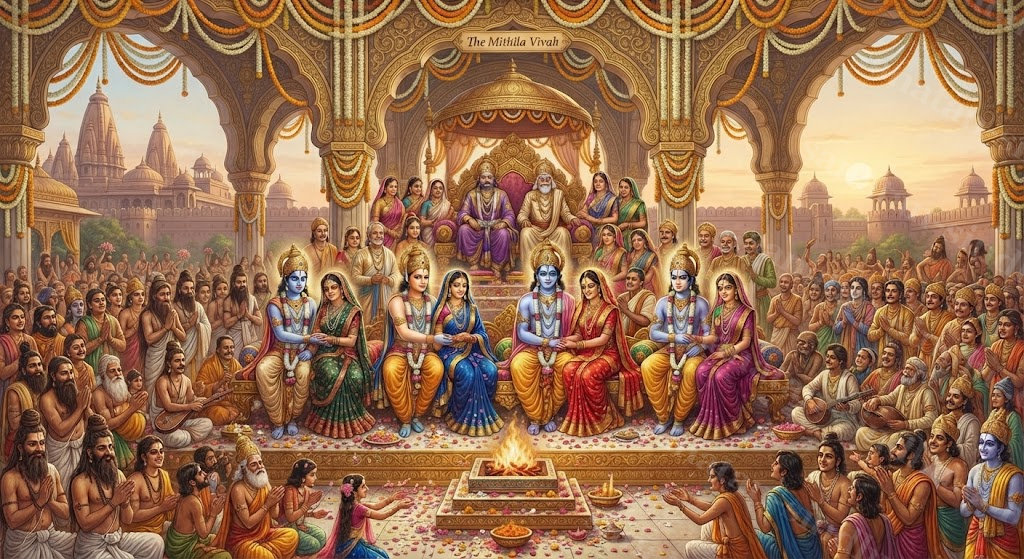
Valmiki Ramayana (Bala Kanda)
Four Princes, Four Brides
In a single, once-in-an-age ceremony at Mithila, the four sons of Dasharatha marry four daughters of the Videha royal house — Rama to Sita, Lakshmana to Urmila, Bharata to Mandavi, and Shatrughna to Shrutakirti — sealing two kingdoms into one family.
3 chapters · read →
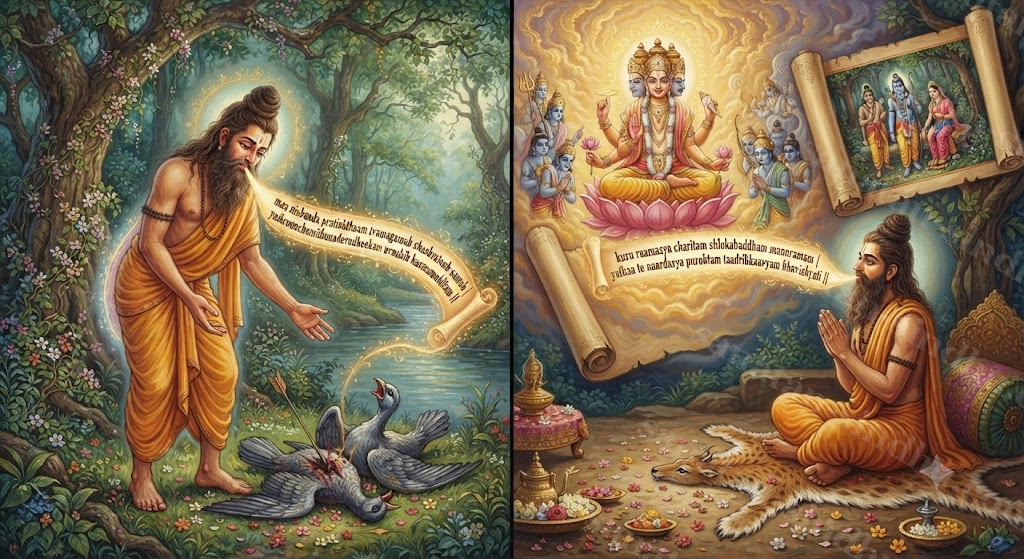
Valmiki Ramayana — the Adikavya tradition
The Grief That Became a Verse
Before Rama's story could be told, its very first verse had to be born — the tale of how the sage Valmiki, moved to spontaneous grief by the death of a bird, uttered the world's first shloka, and how the god Brahma then commissioned him to tell the whole Ramayana in that new meter.
3 chapters · read →

Krittivāsī Rāmāyaṇa (Bengali, c. 15th century); Adbhuta Rāmāyaṇa
The Fall of the Two Mahīrāvaṇas
Two demons, unrelated to each other, share one name across two different tellings of the Rama story: a Pātāla sorcerer felled by Hanumān's five-faced form, and Rāvaṇa's own hidden elder brother, defeated only when Sītā reveals the Goddess within her. Told here as the Bengali Krittivāsī tradition and the Adbhuta Rāmāyaṇa remember them — one after the other, not as one story.
4 chapters · read →
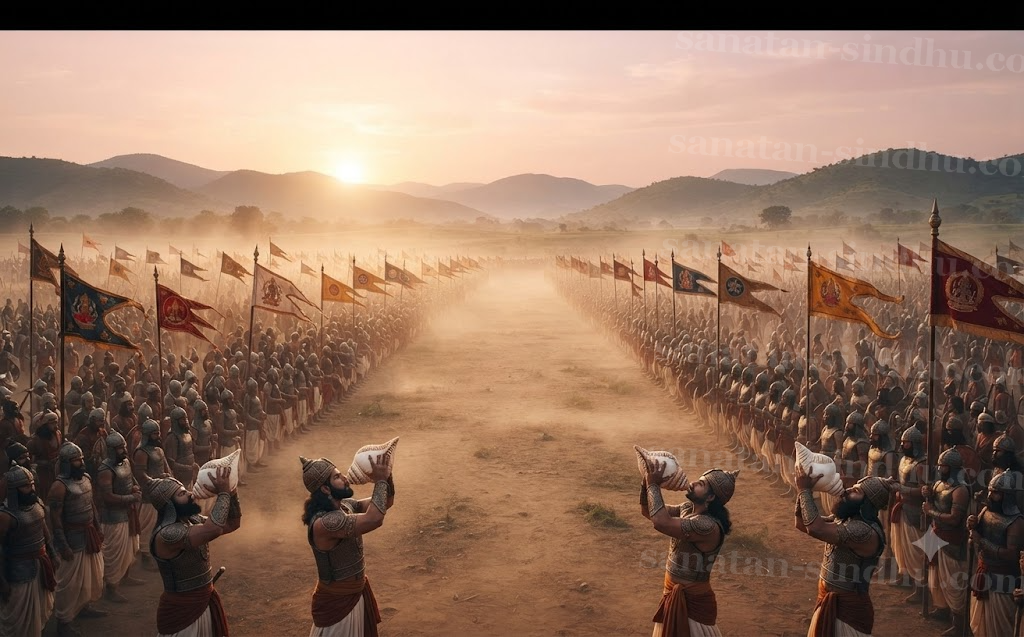
Bhagavad Gītā, Chapter 1 (Arjuna Viṣāda Yoga), Mahābhārata, Bhīṣma Parva
The Bow That Slipped From His Hand
Before a single word of the Gītā's teaching is spoken, its greatest archer sits down in his chariot and refuses to fight. This is the story of that hour — the conches, the survey of the field, the shaking hands, and the sentence that begins everything: 'I will not fight.'
5 chapters · read →

Bhāgavata Purāṇa, Canto 1, Chapters 4–7 (notably SB 1.5.11)
The Sorrow of the Man Who Wrote Everything
Vyāsa had divided the Vedas, composed the Mahābhārata and written the Purāṇas — and still sat by the Sarasvatī feeling that something essential had been left out. The sage Nārada arrives and tells him exactly what. The Bhāgavata Purāṇa is the book written in answer.
5 chapters · read →
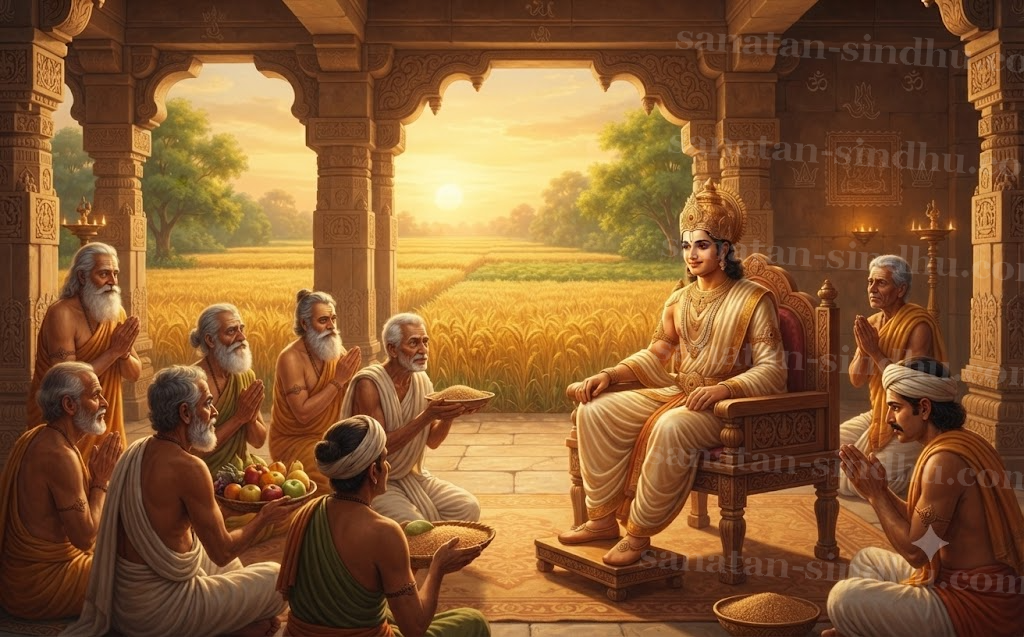
Bhāgavata Purāṇa, Canto 1, Chapters 16–19
Seven Days to Live
A good emperor, a thirsty afternoon, a meditating sage who does not answer, and a dead snake placed on his shoulders in a moment of irritation. The curse that follows gives Parīkṣit seven days — and gives the world the Bhāgavata Purāṇa.
5 chapters · read →
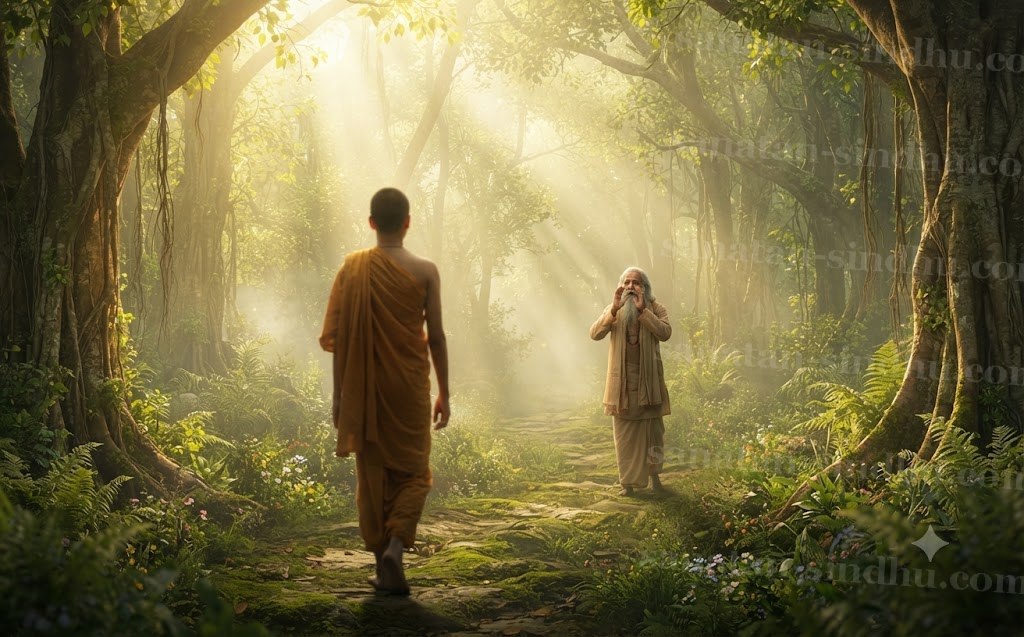
Bhāgavata Purāṇa, Canto 1, Chapter 19 (notably SB 1.19.25) and Canto 2
The Boy Who Would Not Stay
Vyāsa's son Śuka walked out of the house at birth and never looked back at the world. Yet it is this avadhūta — indifferent to clothes, food, praise and blame — who sits down beside a dying king and speaks the Bhāgavata Purāṇa for seven days.
5 chapters · read →

Bhāgavata Purāṇa, Canto 3 (Maitreya to Vidura), with Canto 2
The Lotus From the Navel
Viṣṇu asleep on the causal waters, a lotus rising from his navel, and Brahmā born on it with no memory of where he came from — the Bhāgavata's account of creation, and why it makes the creator search before it lets him build.
5 chapters · read →
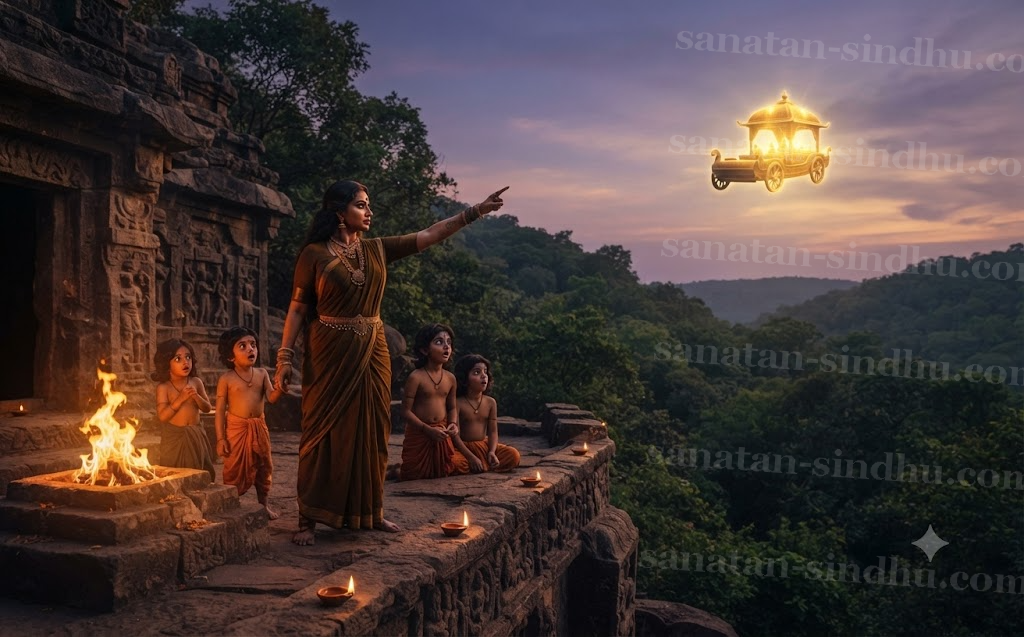
Vālmīki Rāmāyaṇa, Uttara Kāṇḍa (sargas 9–12), with the Padma and Kūrma Purāṇas
Ravana's Beginning
Four children of the same sage, the same forest, the same terrible discipline — and four boons that reveal what each of them actually wanted. The Rāmāyaṇa's own account of how its antagonist was made, and how one brother chose otherwise.
5 chapters · read →
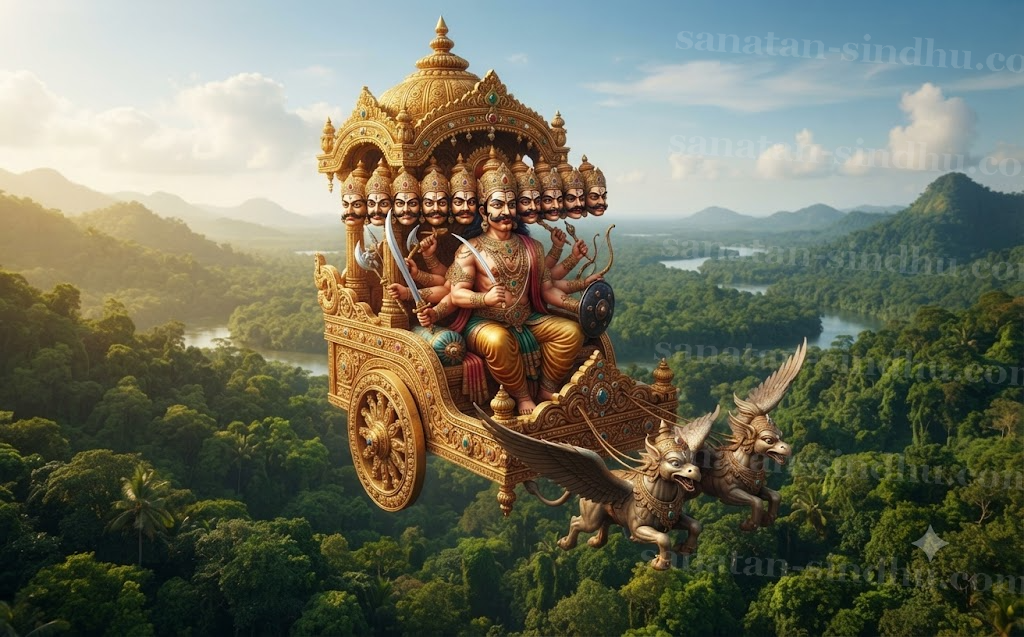
Vālmīki Rāmāyaṇa, Uttara Kāṇḍa (sarga 34), with Kiṣkindhā Kāṇḍa
The Vānara King Who Humbled Rāvaṇa
Before the war, Rāvaṇa went looking for one more king to defeat and found a monkey at his evening prayers. What happened next is the strangest humiliation in the Rāmāyaṇa — and it tells you who Vāli really was.
5 chapters · read →
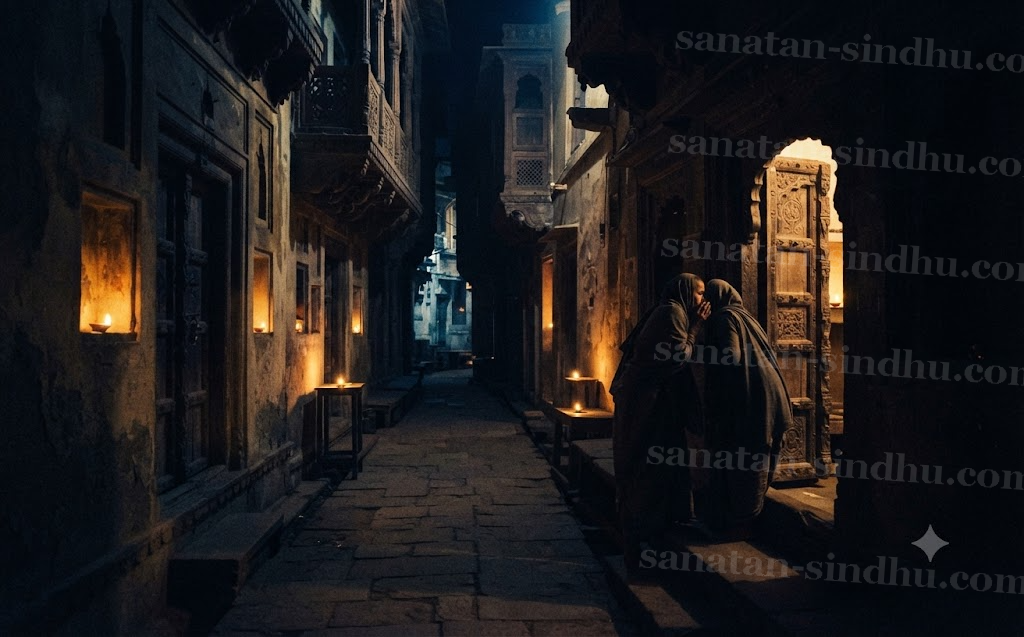
Vālmīki Rāmāyaṇa, Uttara Kāṇḍa (sargas 42–49, 88–97)
The Washerman's Doubt
A remark overheard in a lane at night, and a decision that the Rāmāyaṇa never justifies and never takes back. The epic's hardest chapter, told without smoothing the contradiction the text itself refuses to resolve.
5 chapters · read →
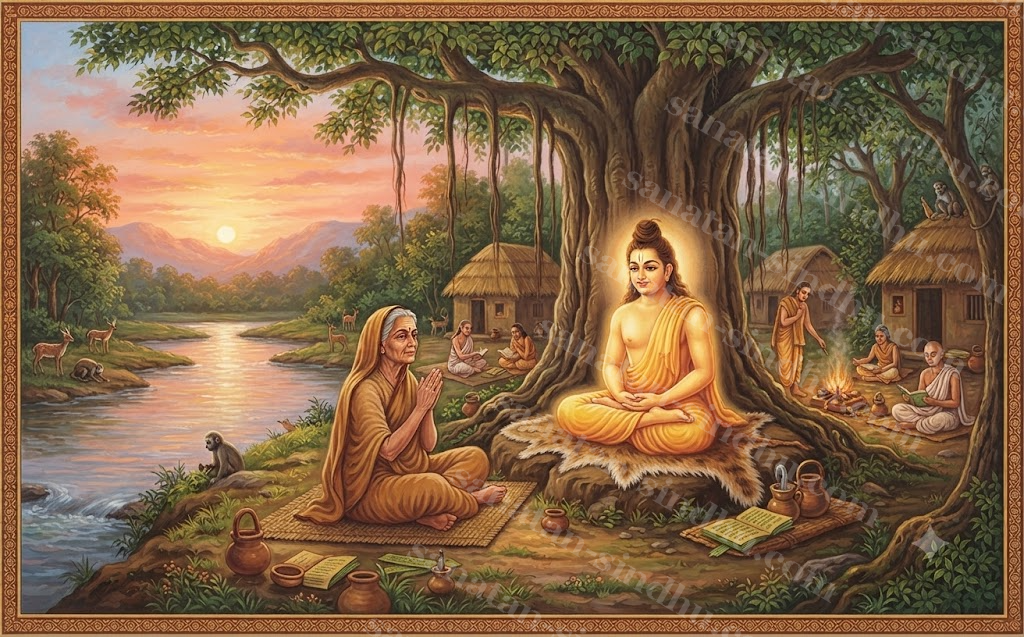
Bhāgavata Purāṇa, Canto 3, Chapters 25–33
Kapila Muni and Devahūti: The Mother Who Asked About God
When Devahūti, daughter of Manu and mother of the sage Kapila, asks her divine son how the soul can be freed from sorrow, he teaches her the complete science of Sāṅkhya and bhakti — a dialogue that became one of the great spiritual instructions of the Bhāgavata Purāṇa.
5 chapters · read →
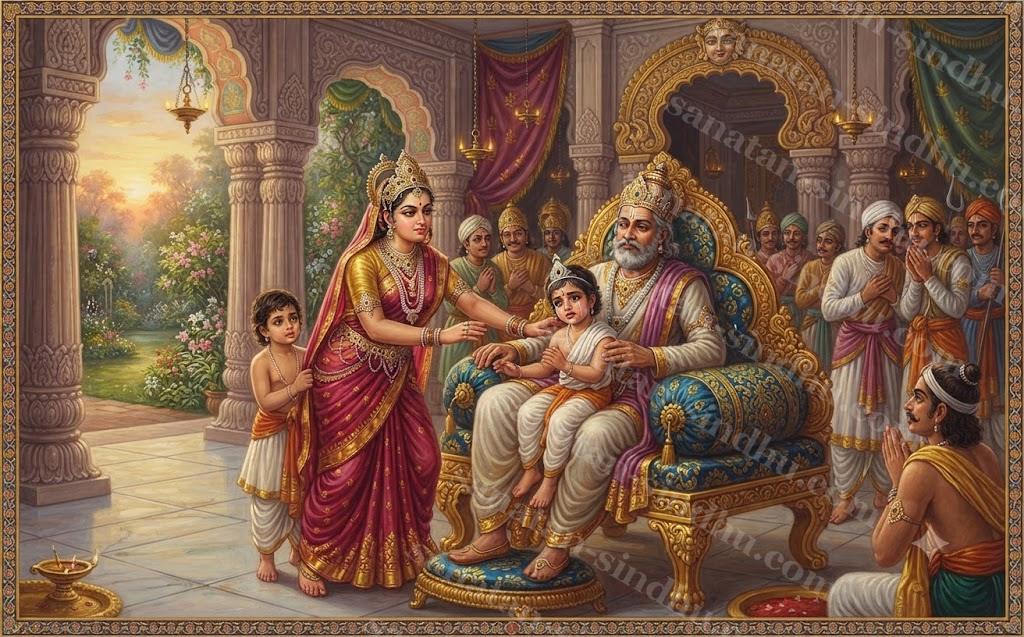
Bhāgavata Purāṇa, Canto 4, Chapters 8–12
The Boy Who Would Not Be Moved: The Story of Dhruva
Insulted by his stepmother and denied his father's lap, five-year-old Dhruva walks into the forest to find God Himself — and through six months of unshakable penance wins not only his father's kingdom but an immortal place among the stars.
5 chapters · read →
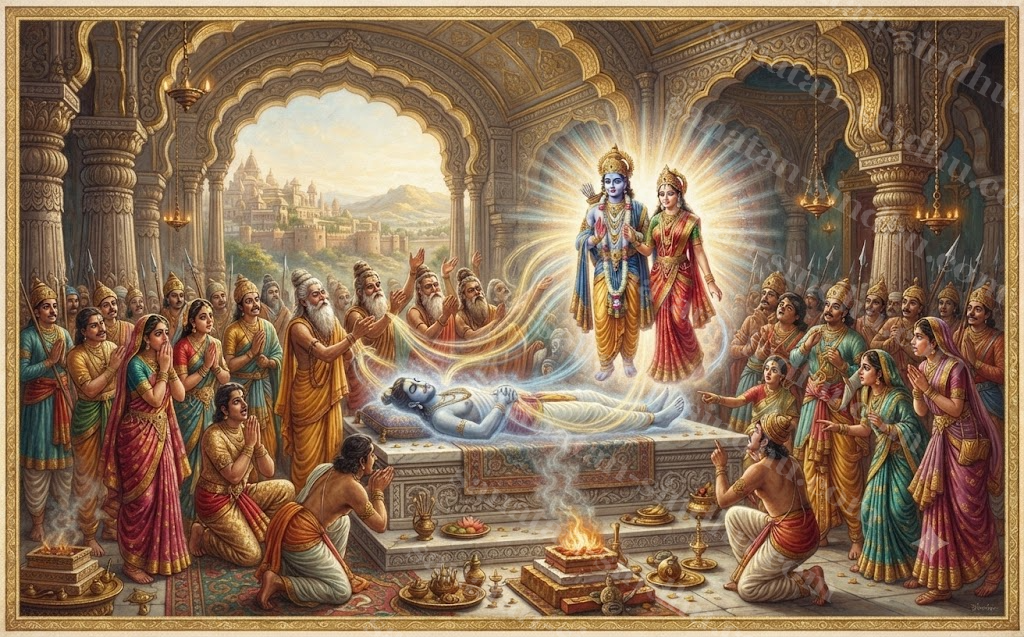
Bhāgavata Purāṇa, Canto 4, Chapters 15–23
King Pṛthu and the Earth Cow
Born from the body of the wicked King Vena, Pṛthu — the first true consecrated king and a partial avatāra of Viṣṇu — chases the earth itself when she flees from him in the form of a cow, and persuades her to feed all creatures; from him the earth takes her name Pṛthvī.
5 chapters · read →
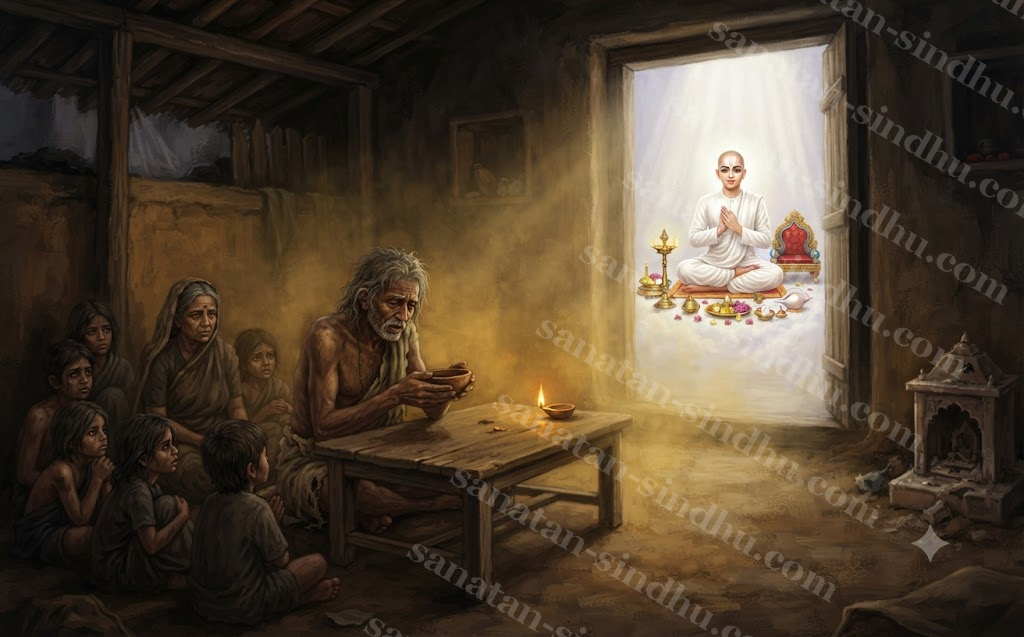
Bhāgavata Purāṇa, Canto 6, Chapters 1–3
Ajāmila and the Holy Name
Ajāmila, a brāhmaṇa who threw away a life of virtue, lay dying when the dreadful messengers of Yama came to drag him to judgment — until, calling his young son's name 'Nārāyaṇa', he accidentally spoke the name of God, and the messengers of Viṣṇu arrived to claim him.
5 chapters · read →
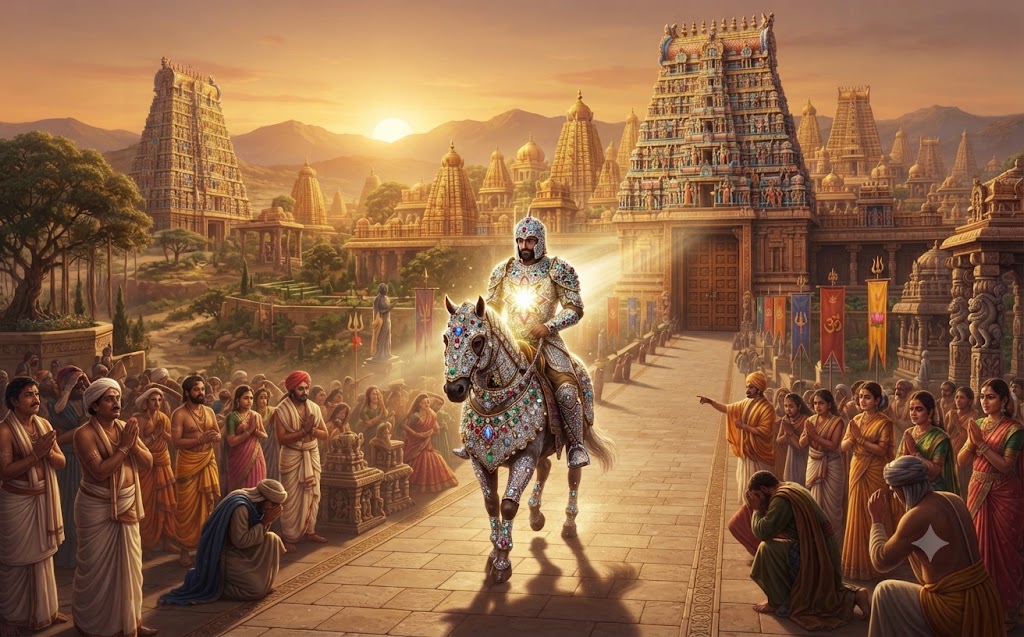
Bhagavata Purana (Canto 10, chapters 56-57), Vishnu Purana (Book 4, chapter 13)
The Jewel That Accused a God
A gem that could not be worn by the unworthy, a disappearance that put Krishna himself under suspicion, and a twenty-eight-day battle in a mountain cave against a warrior far older than the Yadavas themselves — the story of the Syamantaka jewel is a detective story wearing the shape of a Puranic legend, ending in two marriages and a debt owed since the Ramayana.
5 chapters · read →
Ganesha Purana (primary account of Mushikasura's defeat and surrender)
The Mouse Who Carried a God
A demon named Mushika grows as big as a hill on a boon he never learns to control, and tramples the world beneath him — until Ganesha meets him not with a killing blow, but with an offer: give up the fight, and carry something bigger than your own hunger.
5 chapters · read →
Matsya Purana (Krauncha's curse and refuge with Ganesha) — a companion piece to "The Mouse Who Carried a God" (Ganesha Purana's Mushikasura account), a different lineage for the same vahana
The Musician Who Became a Mouse
Krauncha was not a demon. He was a gandharva, a musician of the heavens, who made one careless mistake at a crowded feast — and a sage's curse turned him into a mouse in an instant. This is the story of what he did next: not fight, but ask for shelter.
5 chapters · read →