
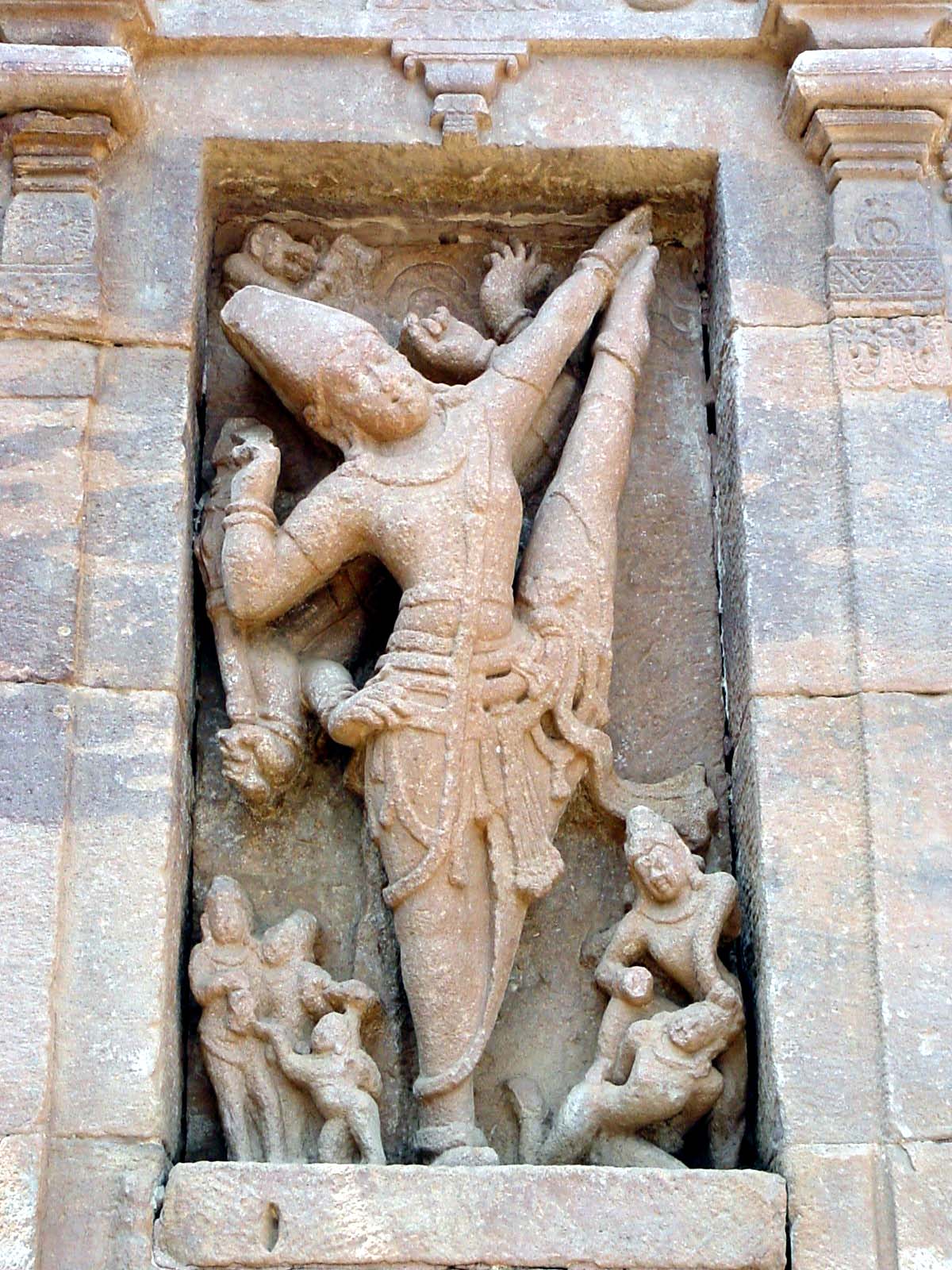
The Vedic Trivikrama

In the oldest layer of the hymns, Viṣṇu is not yet the reclining Preserver but a striding god of light and space. 'I will now declare the heroic deeds of Viṣṇu,' sings the Ṛṣi in Ṛgveda 1.154, 'who measured out the earthly regions, who established the upper dwelling place, striding threefold — the wide-paced explorer.' Yāska, in his Nirukta, reads the three steps as the sun's traversal of earth, atmosphere and the high heavens. The very name Viṣṇu is drawn from the root viṣ — to pervade — a gloss confirmed centuries later by Ādi Śaṅkarāchārya in his commentary on the Viṣṇu Sahasranāma. Long before he was pictured on the serpent Ananta, Viṣṇu was already the god whose stride encompassed everything.
✦ Visual cue — A luminous solar figure stepping across a stylised cosmos — one foot on earth of dawn-lit hills, one foot in a cloud-strewn atmosphere, and one foot vanishing into a field of stars.
Related essays
Essay · Cosmogony
Trimūrti — Scriptural Origins
A comparative study of Brahmā, Viṣṇu and Śiva — Vedic antecedents, Upanishadic identifications, Purāṇic narratives, and the non-dual paradigm of Kashmiri Trika Shaivism.
Essay · Vaiṣṇava Cosmology
The Ten Descents — Daśāvatāra and the awakening of consciousness
Viṣṇu's ten avatāras read as a parallel to biological and social evolution — from Matsya the fish to Kalki the future rider — with the Vedāntic twist that the Lord *descends* (avatāra) so the soul (jīva) can *ascend* (pariṇāma).