
Ṛṣis · ṛṣikās · scholars · scientists
Luminaries
मनीषीमनीषी — the thoughtful ones. Three currents of a single tradition: the ṛṣis who saw the Veda and shaped dharma, the ṛṣikās — women named as seers of Ṛgvedic hymns and as philosophers of the Upaniṣads — and the scholars who codified language, mathematics, astronomy, medicine and statecraft.
Ṛṣis & Ācāryas
Vedic seers, poets, and teachers — the ṛṣis of śruti, itihāsa, and the guru-śiṣya lineages who transmitted dharma.
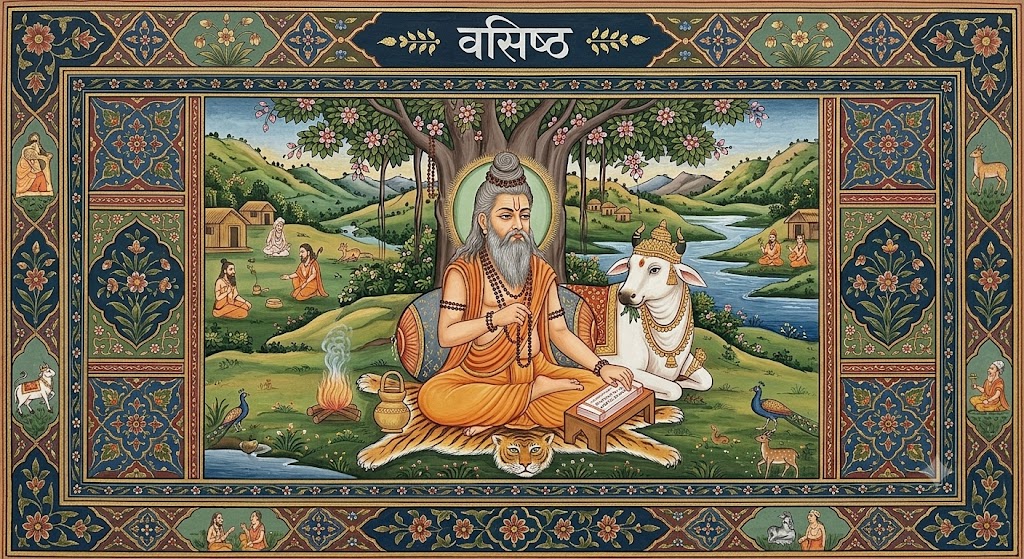
Kulaguru of the Ikṣvāku dynasty; one of the Saptarṣis
The archetypal Vedic guru: seer of Ṛgvedic hymns, kulaguru of the Ikṣvākus, and the voice through whom the Yoga Vāsiṣṭha instructs Rāma in the non-dual nature of the world.
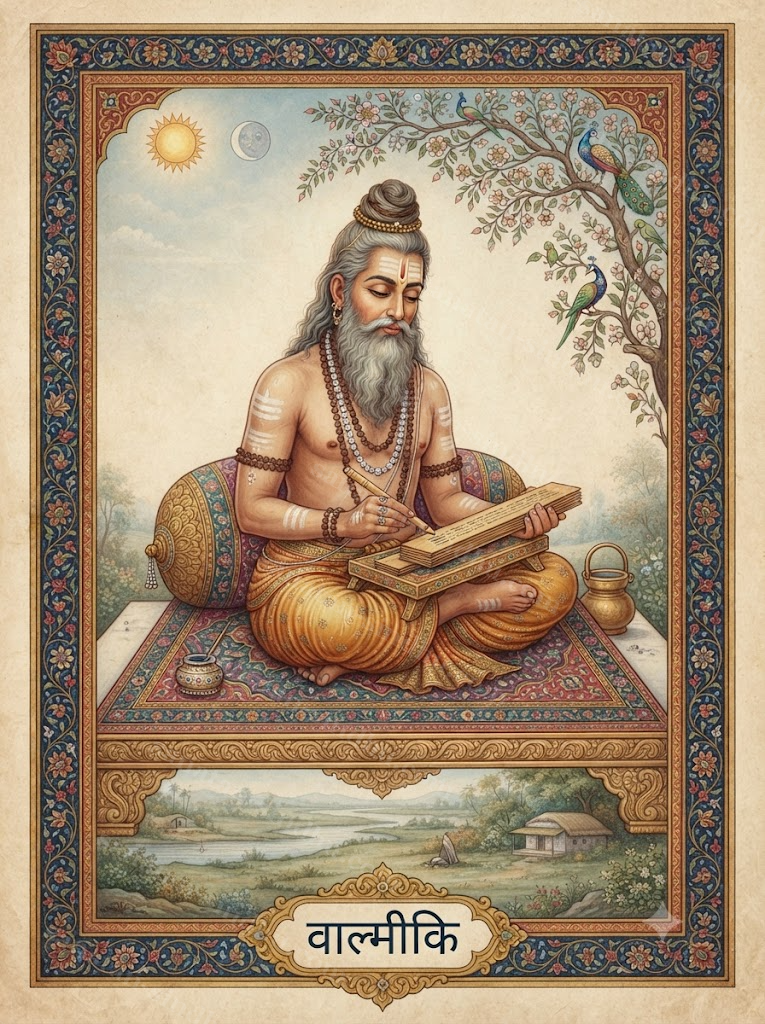
Ādi Kavi — the first poet; author of the Rāmāyaṇa
Vālmīki is remembered as the ādi-kavi — the first poet — whose Rāmāyaṇa gave Indian civilisation its enduring template of dharma, kingship, and devotion.
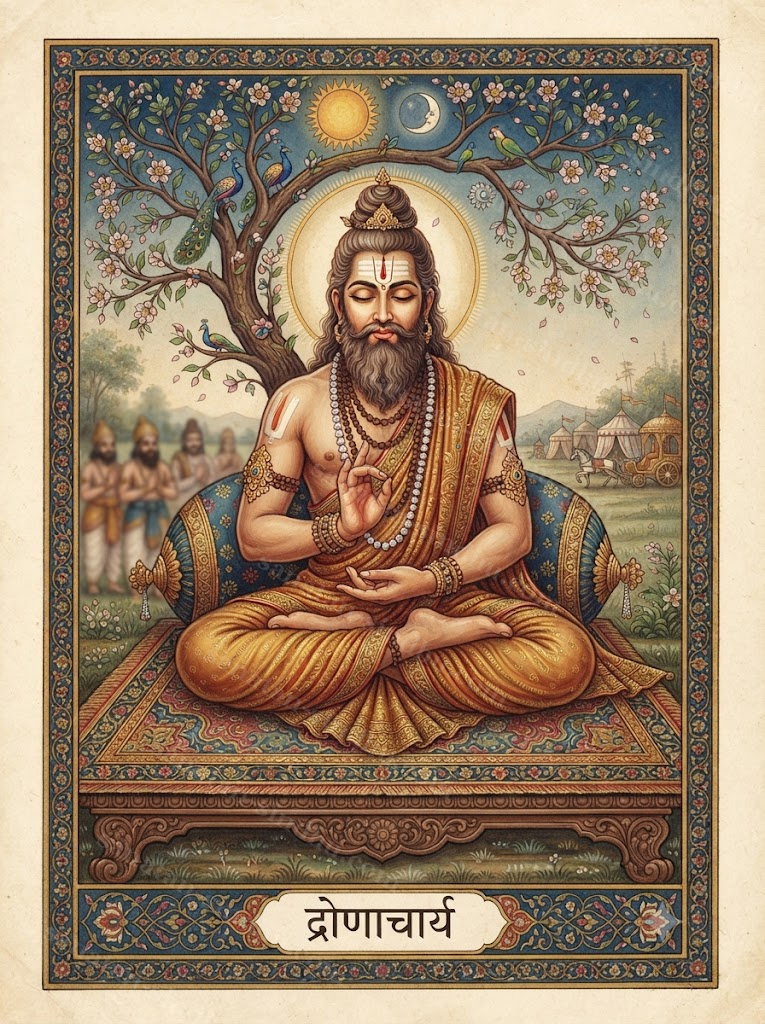
Master of arms; preceptor of the Kaurava and Pāṇḍava princes
Droṇācārya stands as the archetype of the martial teacher — a brāhmaṇa turned commander whose classroom shaped both sides of the Mahābhārata.
Ṛṣikās — Women Seers
The brahmavādinīs of the Ṛgveda and the philosophers of the Upaniṣads — women who saw mantras, argued in the courts of kings, and were named as authors of śruti.
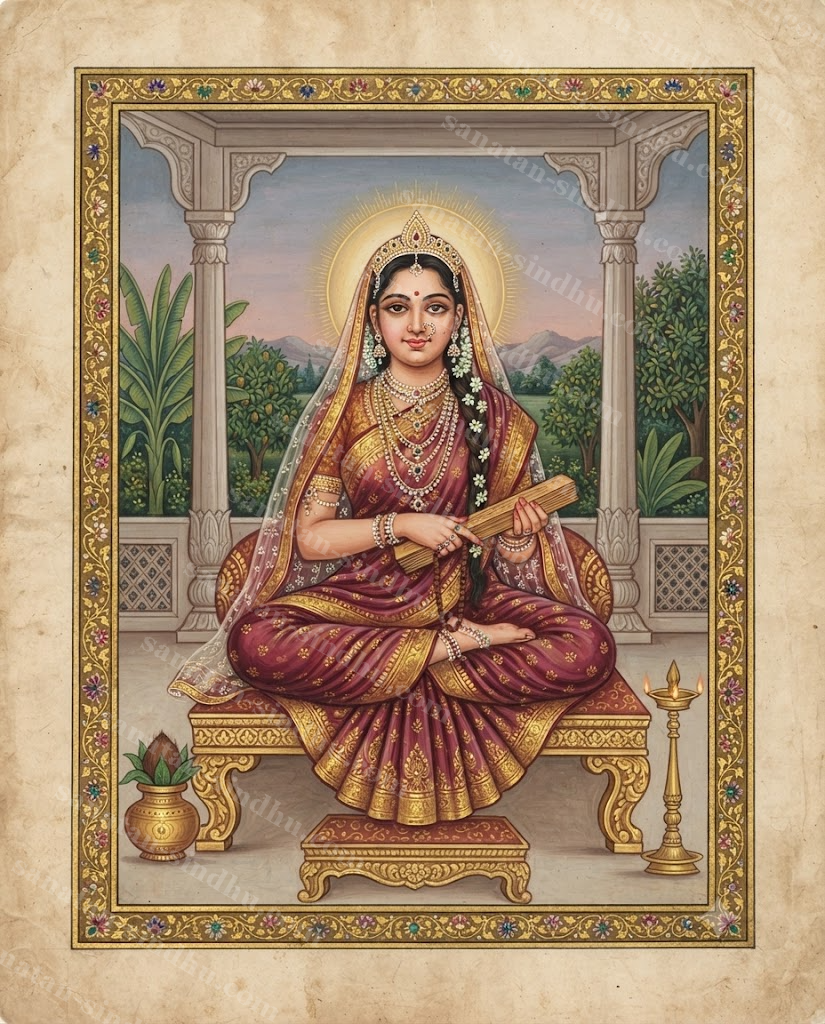
Brahmavādinī of Ṛgveda 1.179; wife and co-seer of Agastya
Lopāmudrā speaks in her own voice inside the Ṛgveda, pressing Agastya to balance askesis with the life of the householder. Her hymn is among the clearest examples of a woman named as seer of a Ṛgvedic sūkta.
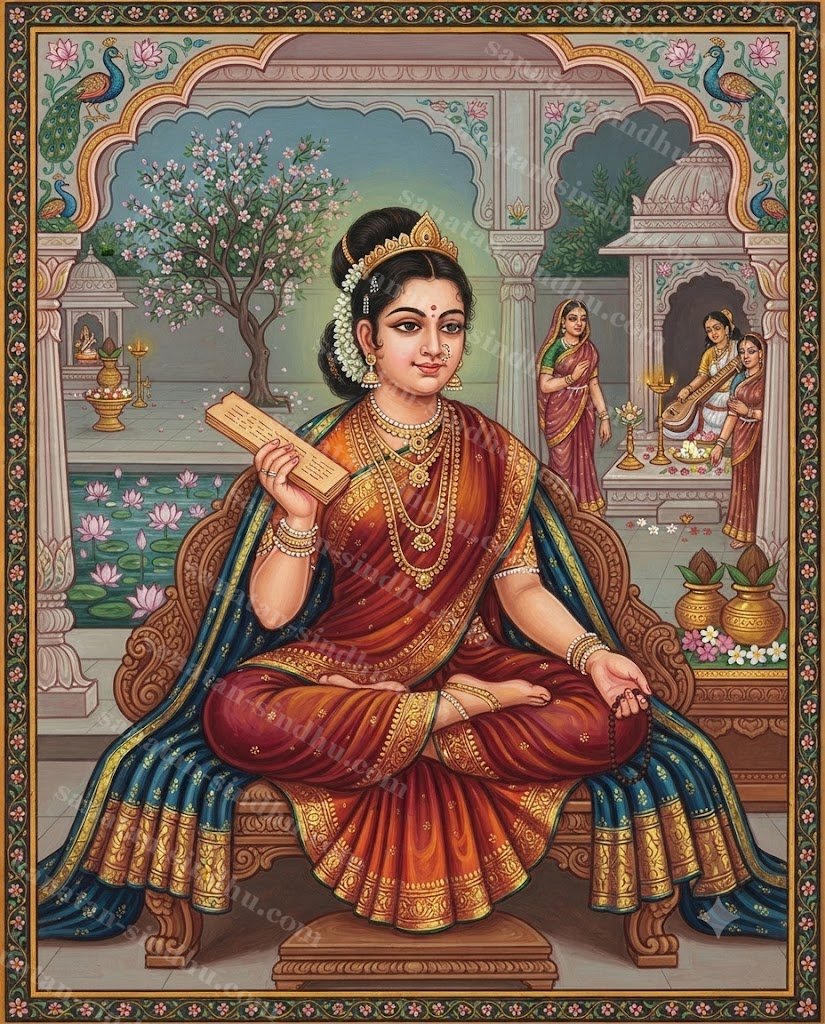
Seer of two full hymns to the Aśvins
Ghoṣā is credited with two complete Ṛgvedic hymns to the physician-twins, the Aśvins. Their unusually autobiographical tone — a plea for healing and for a husband — makes her the most personal voice among the women seers.
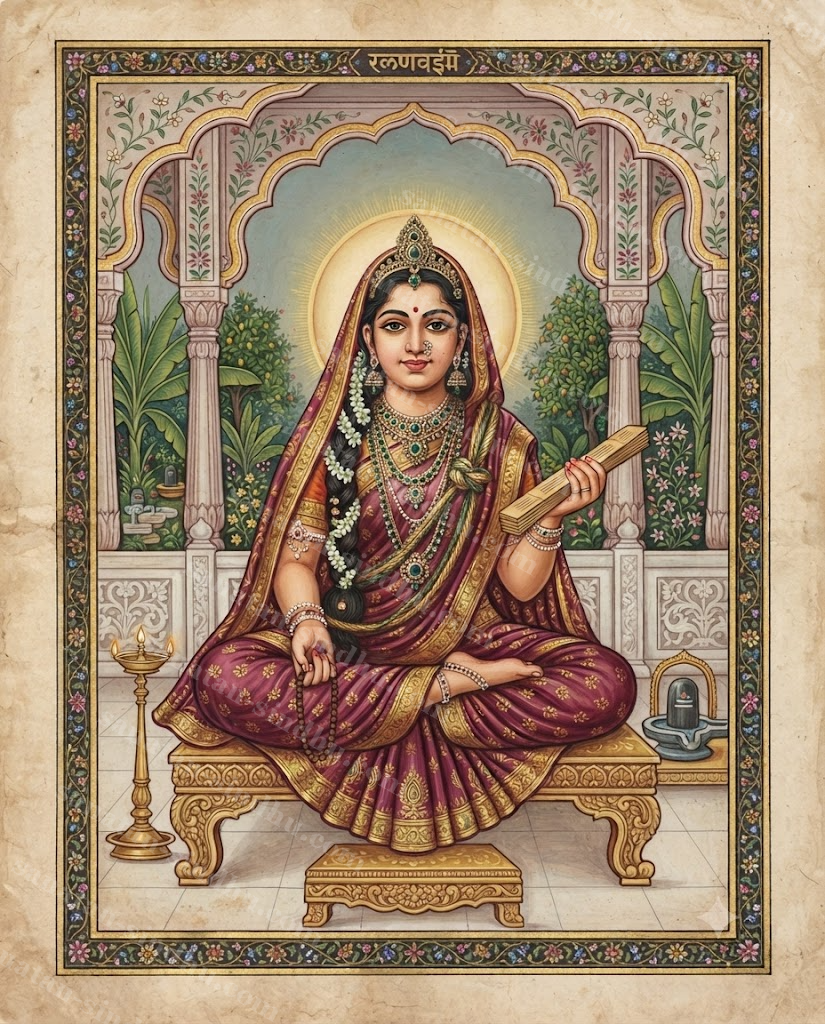
Speaker of a verse within the gift-hymn Ṛgveda 1.126
Romaśā is remembered for a single verse of Ṛgveda 1.126, spoken as a wife within a hymn of praise for a patron's gifts. Tradition treats that verse as hers rather than merely as reported speech.
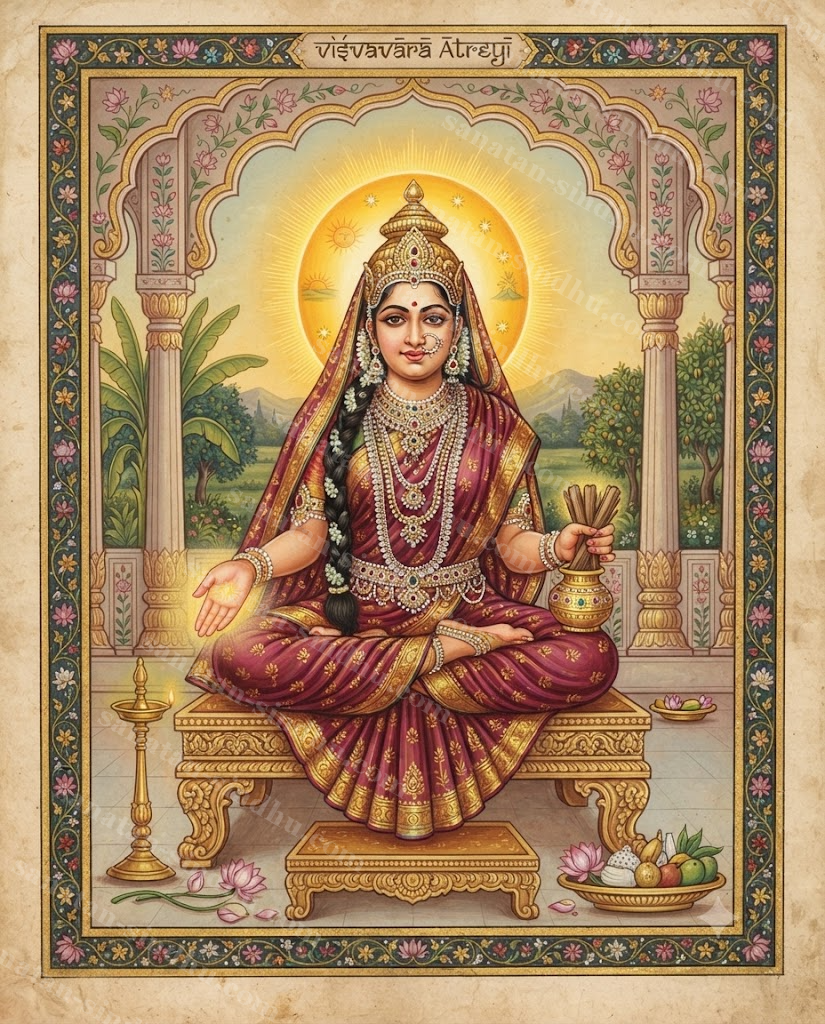
Ṛṣikā of the dawn-fire hymn Ṛgveda 5.28
Viśvavārā composed the short dawn hymn Ṛgveda 5.28, invoking Agni as the fire kindled at daybreak. Of the Atri lineage, she is among the ṛṣikās whose hymn remains in liturgical use.
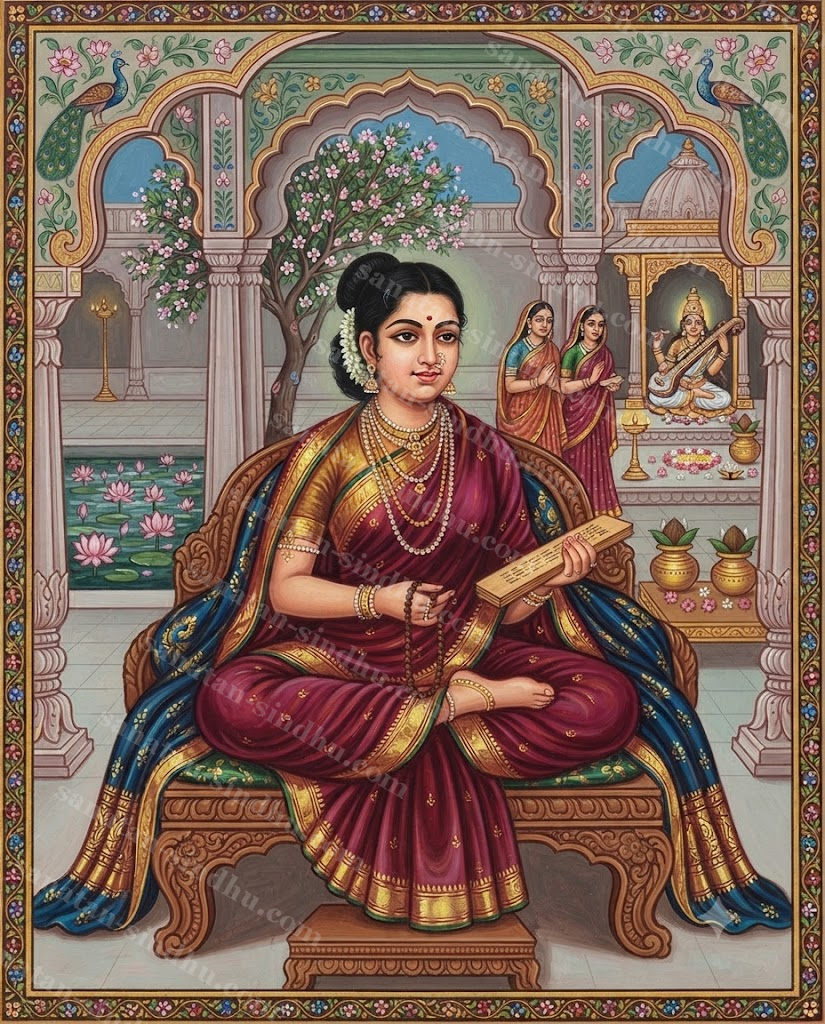
Ṛṣikā of Ṛgveda 8.91; the Soma-presser healed by Indra
Apālā's hymn is at once liturgy and narrative: she presses Soma with her teeth, wins Indra's attention, and is healed of a skin affliction. It is the most vividly storied of the ṛṣikā hymns.
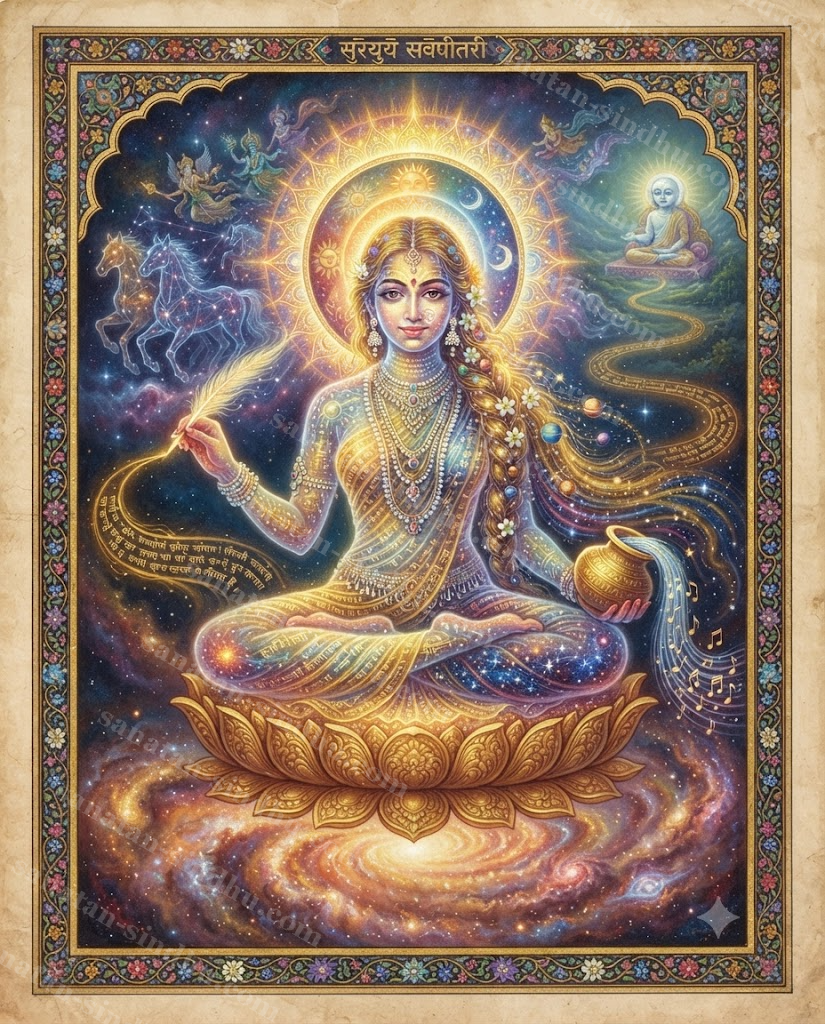
Bride-seer of the marriage hymn Ṛgveda 10.85
Sūryā Sāvitrī is the bride of Ṛgveda 10.85, the hymn from which the mantras of the Hindu wedding are still drawn. Tradition names her as speaker and seer of the sūkta in which she is wed.
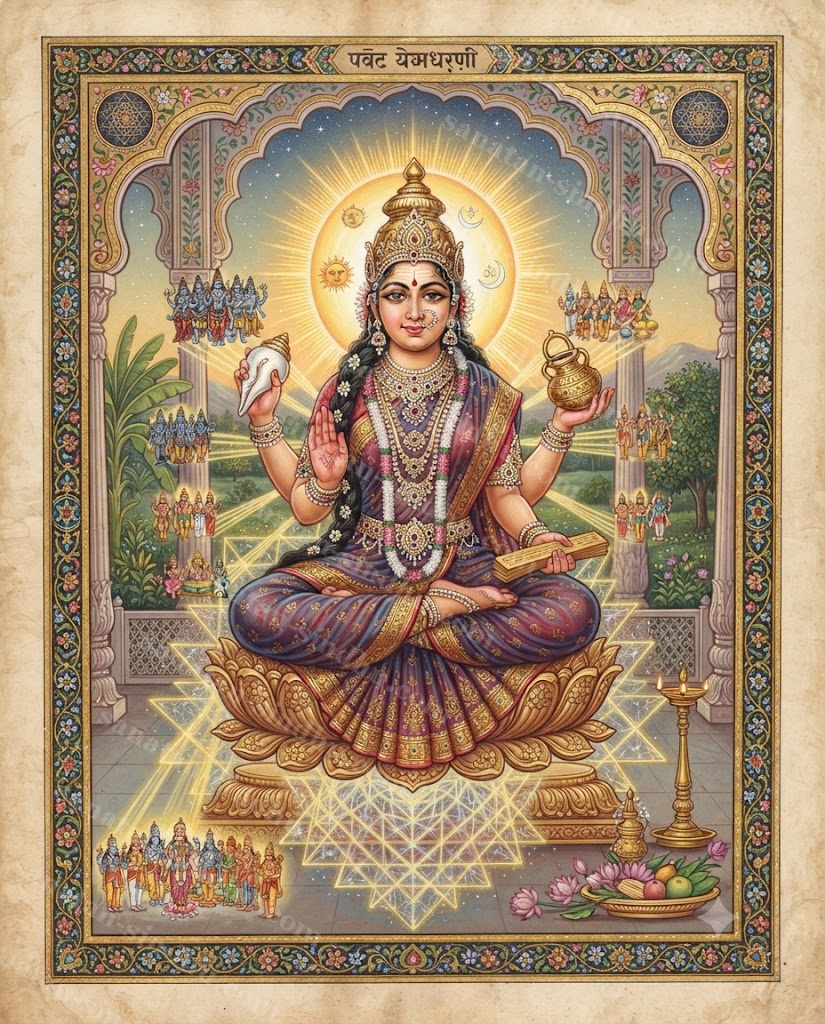
Seer of the Devī Sūkta, Ṛgveda 10.125
Vāc Āmbhṛṇī's Devī-sūkta is the most philosophically consequential hymn attributed to a woman: Speech herself declares that she pervades and carries all the gods. Śākta tradition reads it as the Goddess's own self-disclosure.
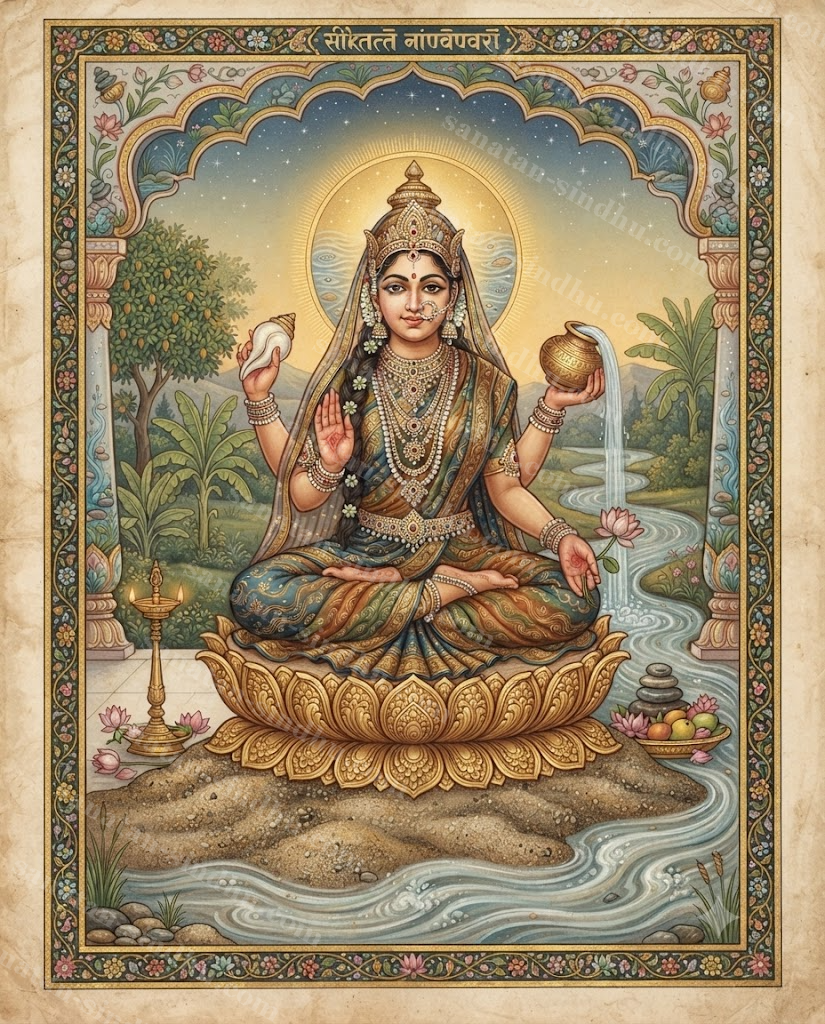
Ṛṣikā of verses in the Soma-Pavamāna hymns
Sikatā Nivāvarī is a minor ṛṣikā credited with a handful of verses in the ninth maṇḍala's Soma hymns. Almost nothing beyond the attribution survives, which is itself typical of the shorter entries in the Anukramaṇī.
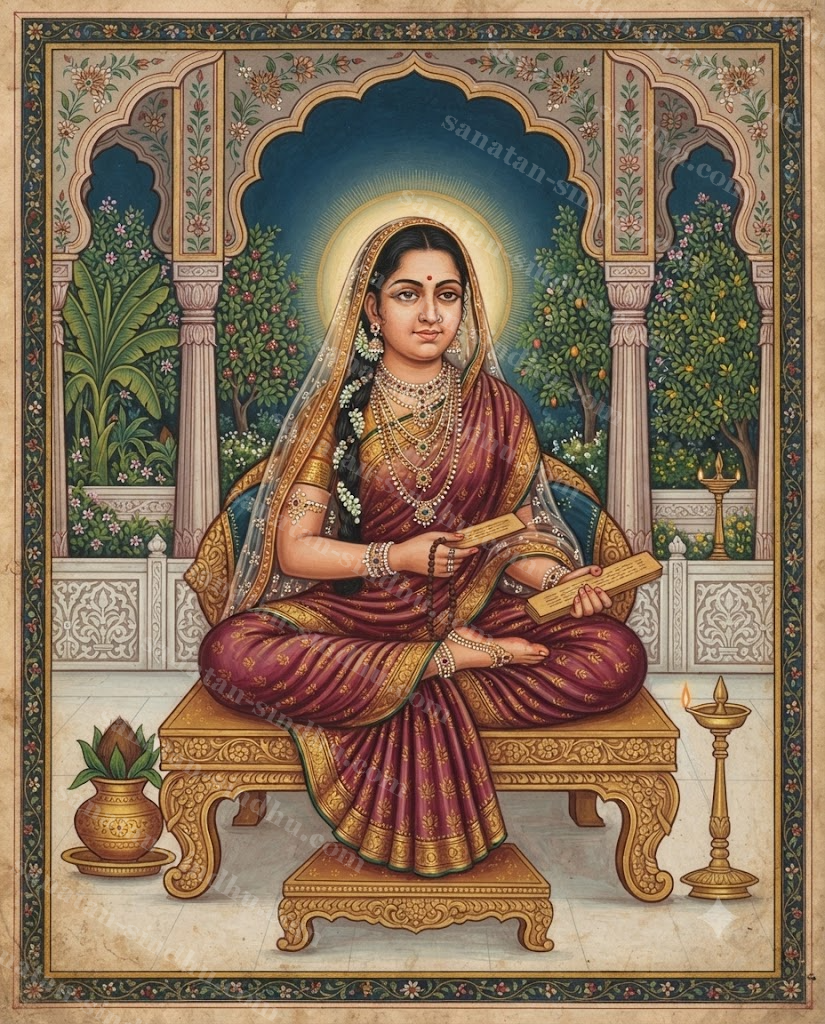
Ṛṣikā named in the traditional indices to Maṇḍala 10
Godhā is among the least textually secured of the ṛṣikās, surviving as a name in the traditional lists with only a contested verse attribution. She is included here because the tradition itself counts her.
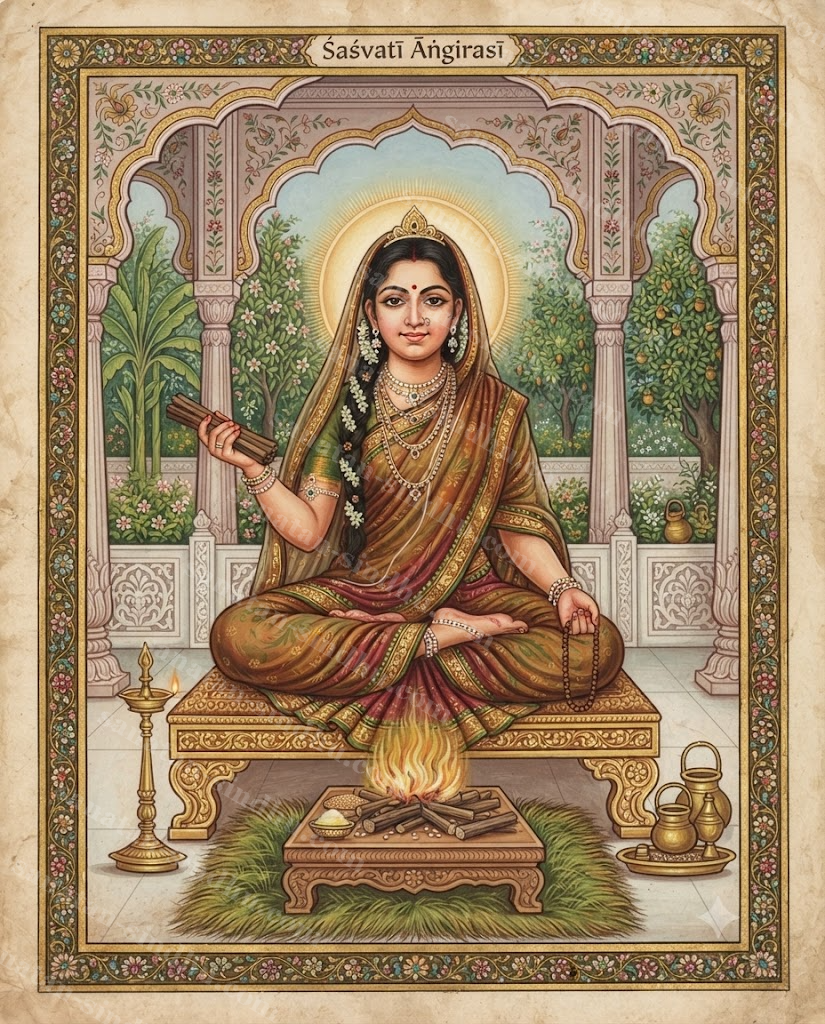
Ṛṣikā of verses in Ṛgveda 8.1
Śaśvatī of the Āṅgirasa line is credited with verses inside Ṛgveda 8.1. Her case illustrates how hymns were attributed across a whole seer-family, women included.
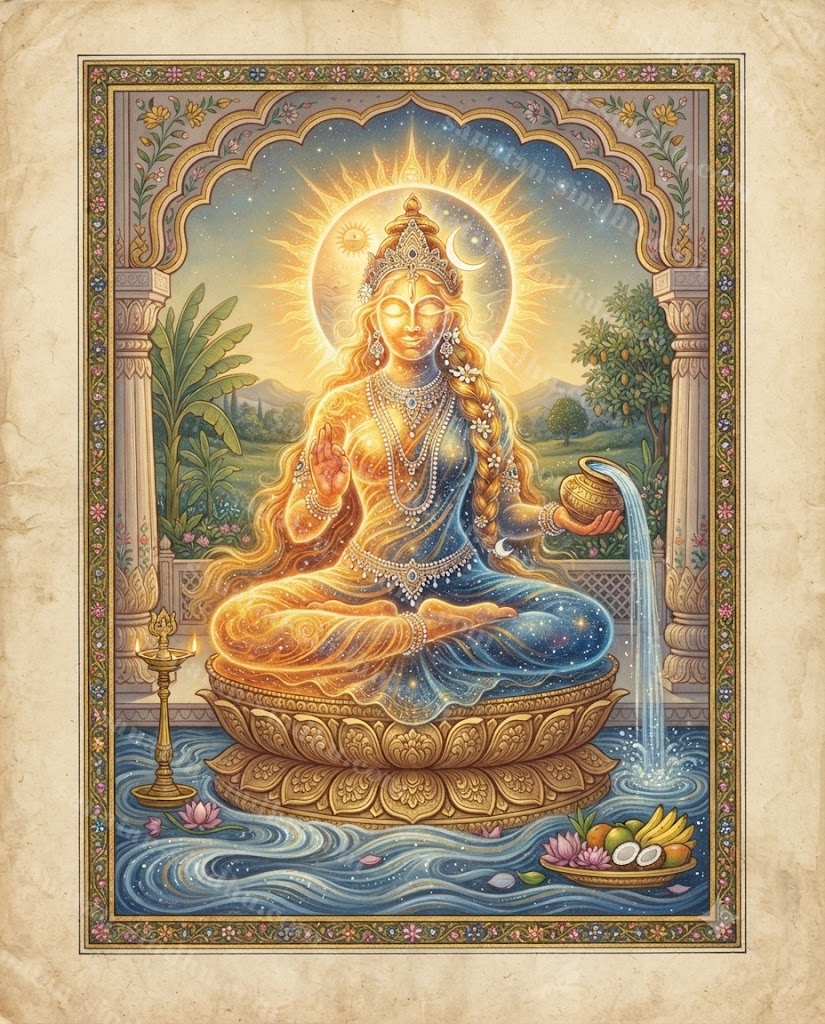
Female voice of the Yama–Yamī dialogue, Ṛgveda 10.10
Yamī argues with her twin Yama across the whole of Ṛgveda 10.10 — a hymn built entirely as dialogue about kinship, refusal and mortality. Her verses are among the earliest sustained ethical arguments in Indian literature.
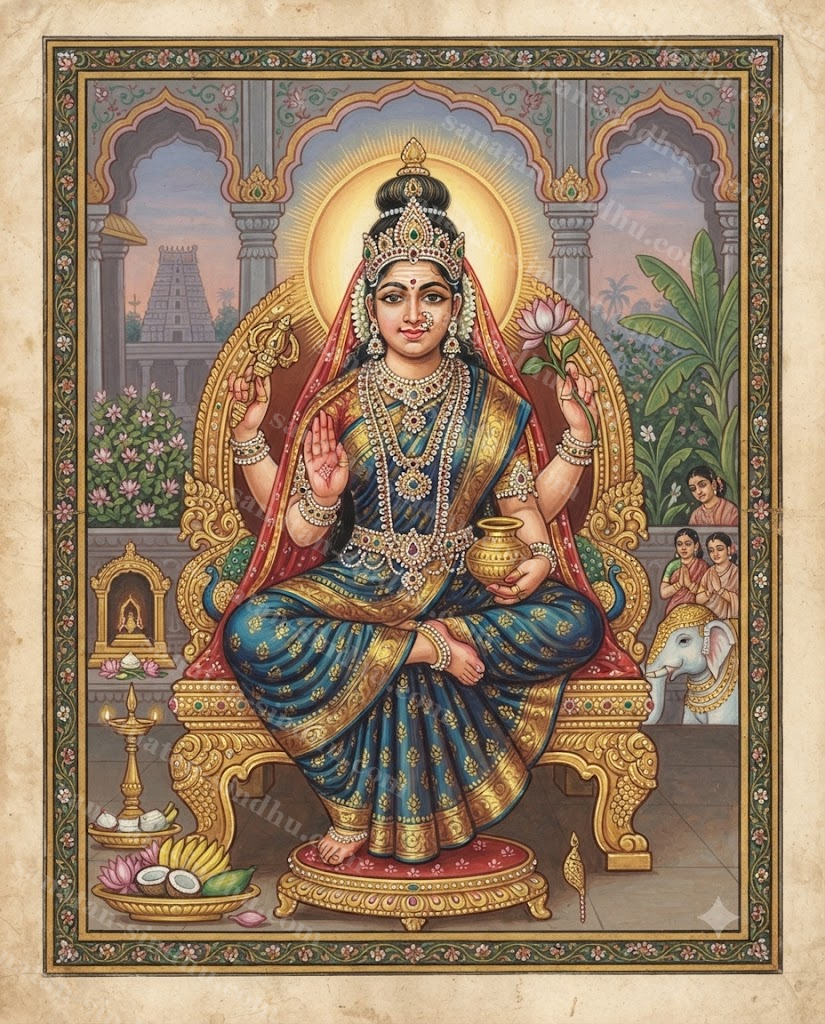
Consort-goddess and speaker of the Vṛṣākapi hymn
Indrāṇī, also named Śacī Paulomī, is both goddess and named speaker: in Ṛgveda 10.86 she trades sharp verses with Indra and Vṛṣākapi. The hymn is the Saṃhitā's most openly satirical exchange.
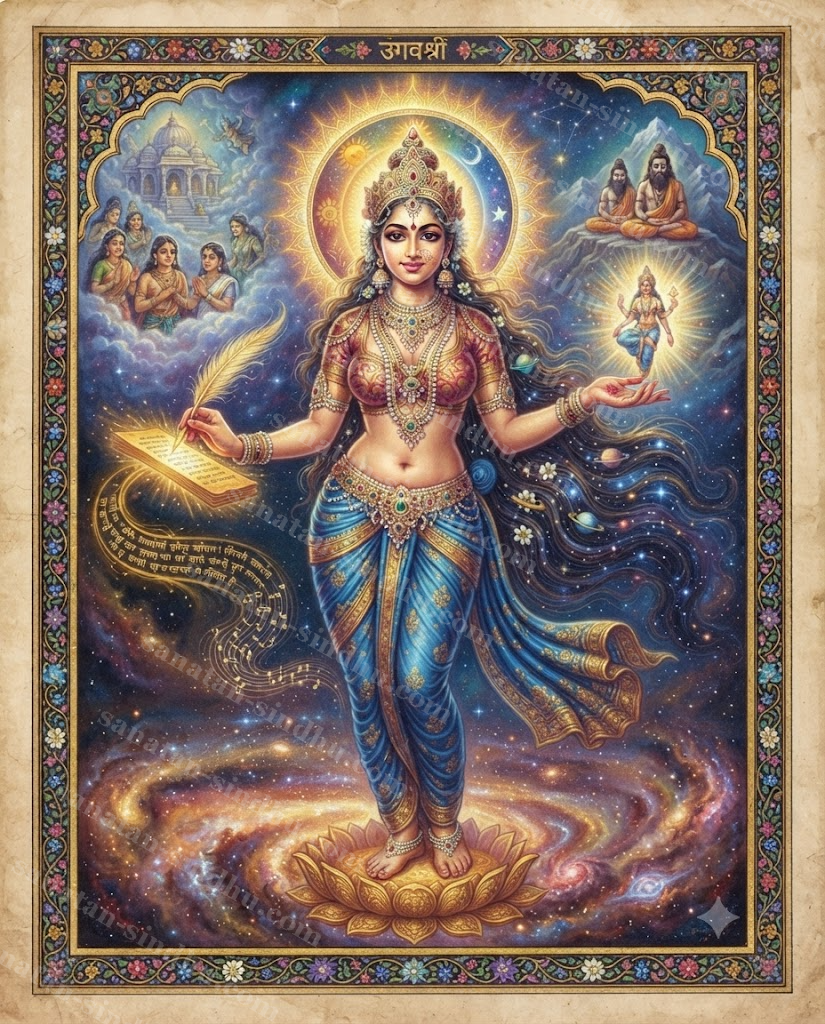
Apsaras interlocutor of Purūravas in Ṛgveda 10.95
Urvaśī's exchange with Purūravas in Ṛgveda 10.95 gave Sanskrit drama one of its enduring plots. She is counted among the ṛṣikās for the verses she speaks, though tradition places her in Svarga rather than an āśrama.
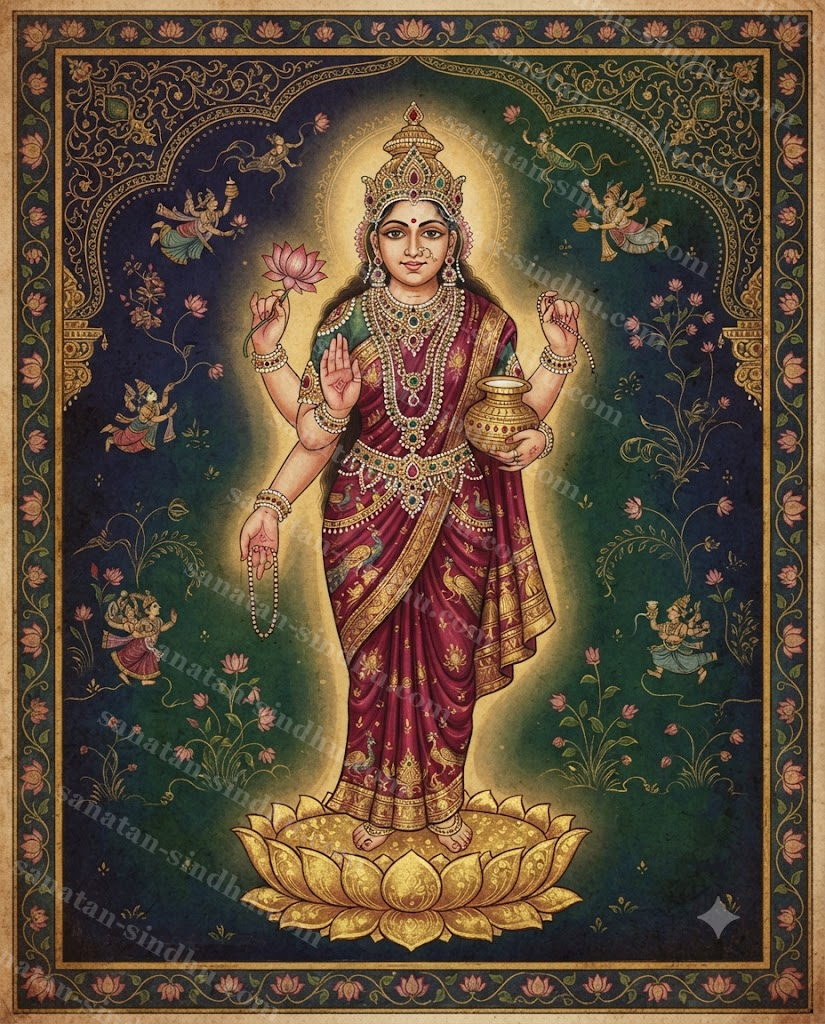
Boundless mother of the Ādityas, invoked across the Ṛgveda
Aditi is the boundless one, mother of the Ādityas and a pervasive presence in Ṛgvedic cosmogony. Traditional lists of women seers include her as the primal feminine principle rather than as composer of a hymn.
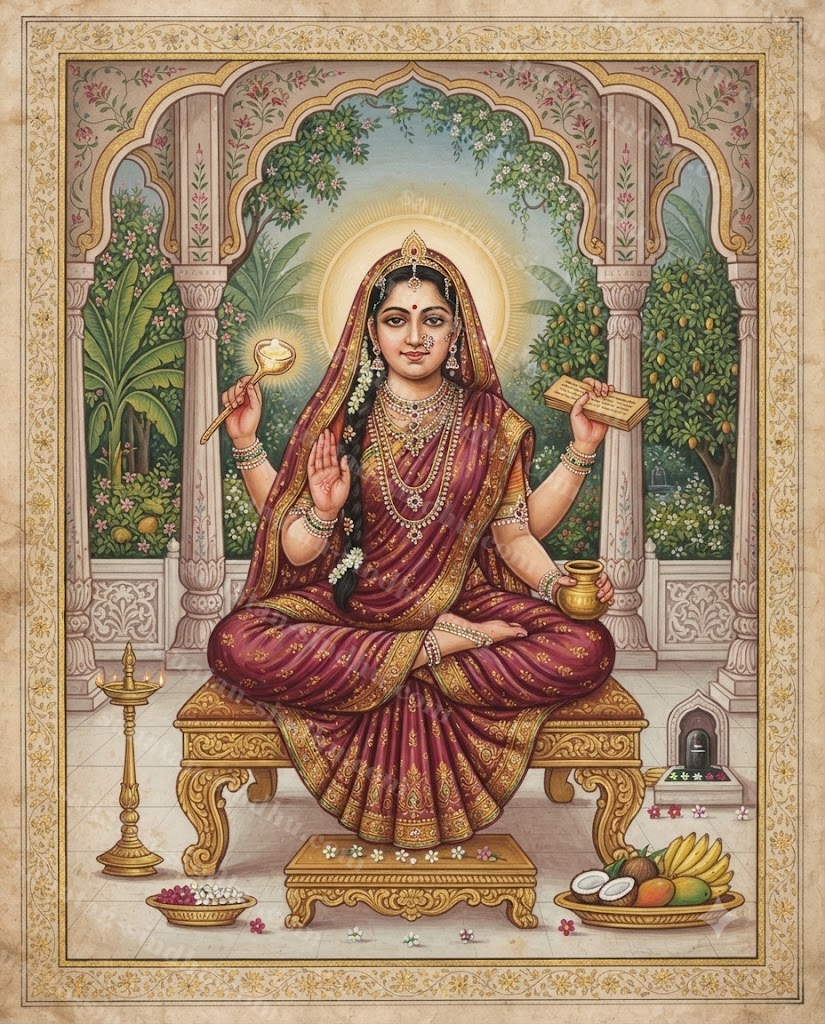
Ṛṣikā associated with Ṛgveda 10.109
Juhū is named as ṛṣikā of Ṛgveda 10.109, a hymn on the sanctity of a brāhmaṇa's wife. Her name doubles as that of the sacrificial ladle, one of several places where implement and seer share an identity.
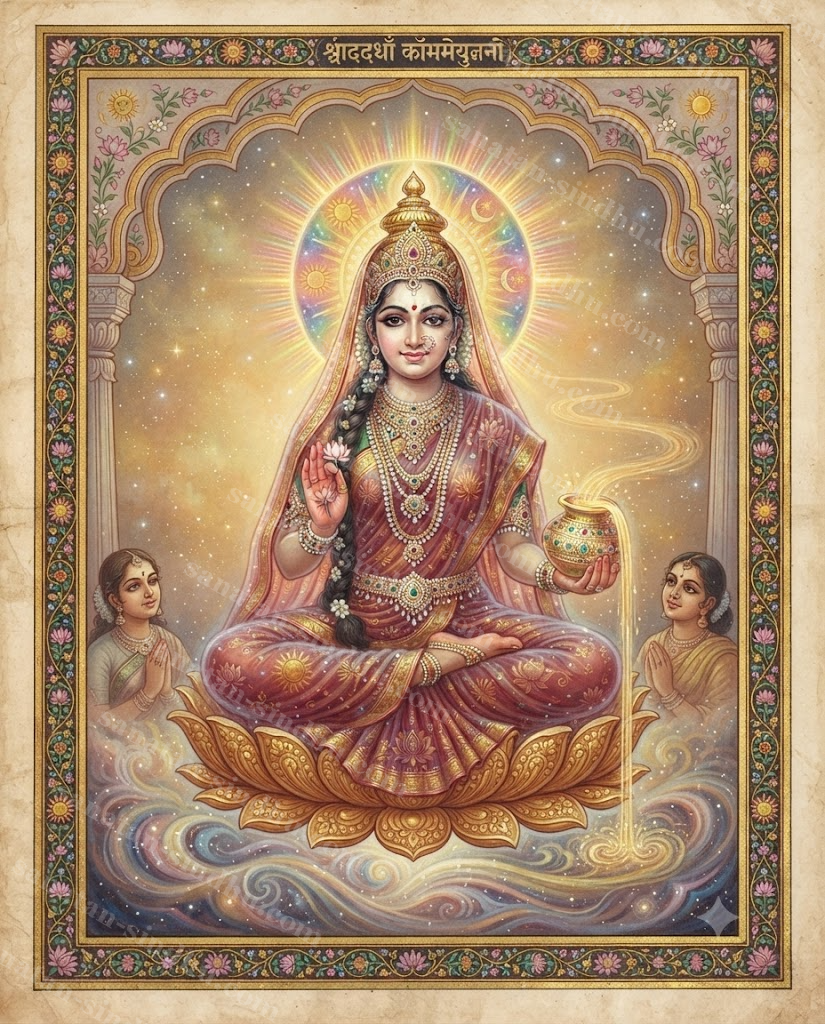
Seer of the Śraddhā Sūkta, Ṛgveda 10.151
Śraddhā Kāmāyanī's short hymn made faith itself an object of invocation, asking that śraddhā be present at dawn, at noon and at sunset. It became the scriptural anchor for śraddhā as a technical religious category.
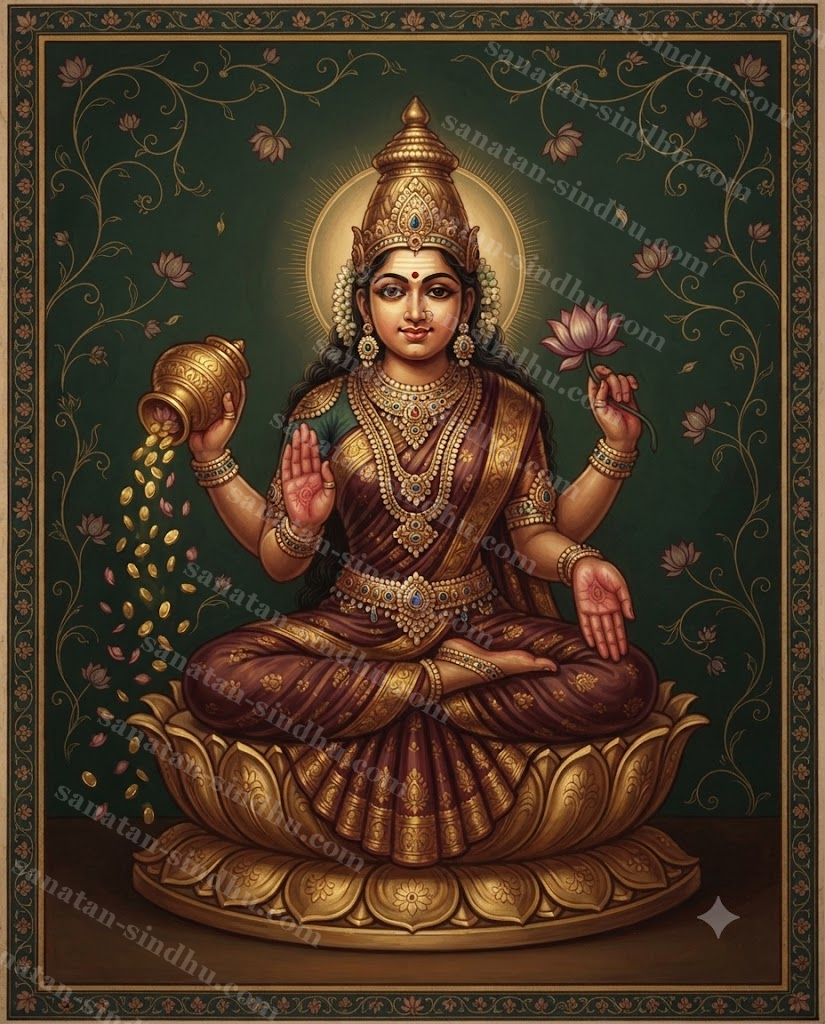
Personified sacrificial gift of Ṛgveda 10.107
Dakṣiṇā is the personified priestly gift praised in Ṛgveda 10.107, a hymn that makes generosity a form of sacrifice. Traditional lists count her among the women seers on the strength of that personification.
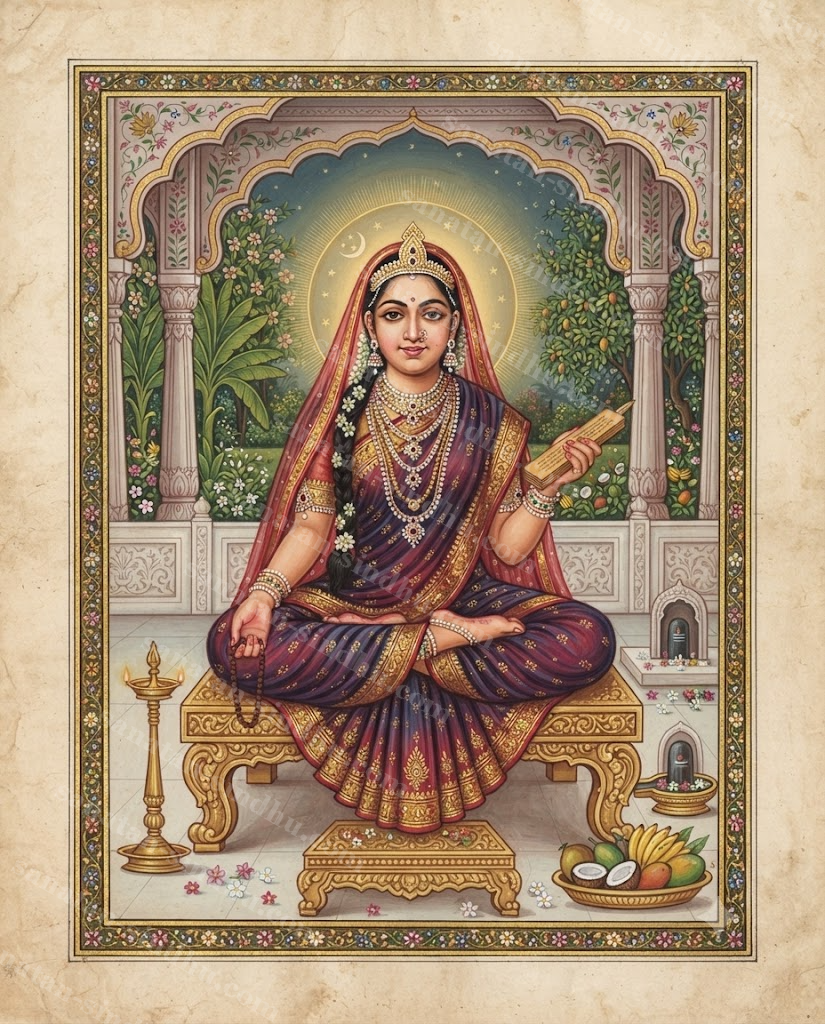
Seer of the Rātri Sūkta, Ṛgveda 10.127
Rātri Bhāradvājī's hymn asks Night, filling every quarter with stars, to keep the singer safe until dawn. It remains one of the most quietly beautiful pieces of Vedic poetry and is still used at twilight.
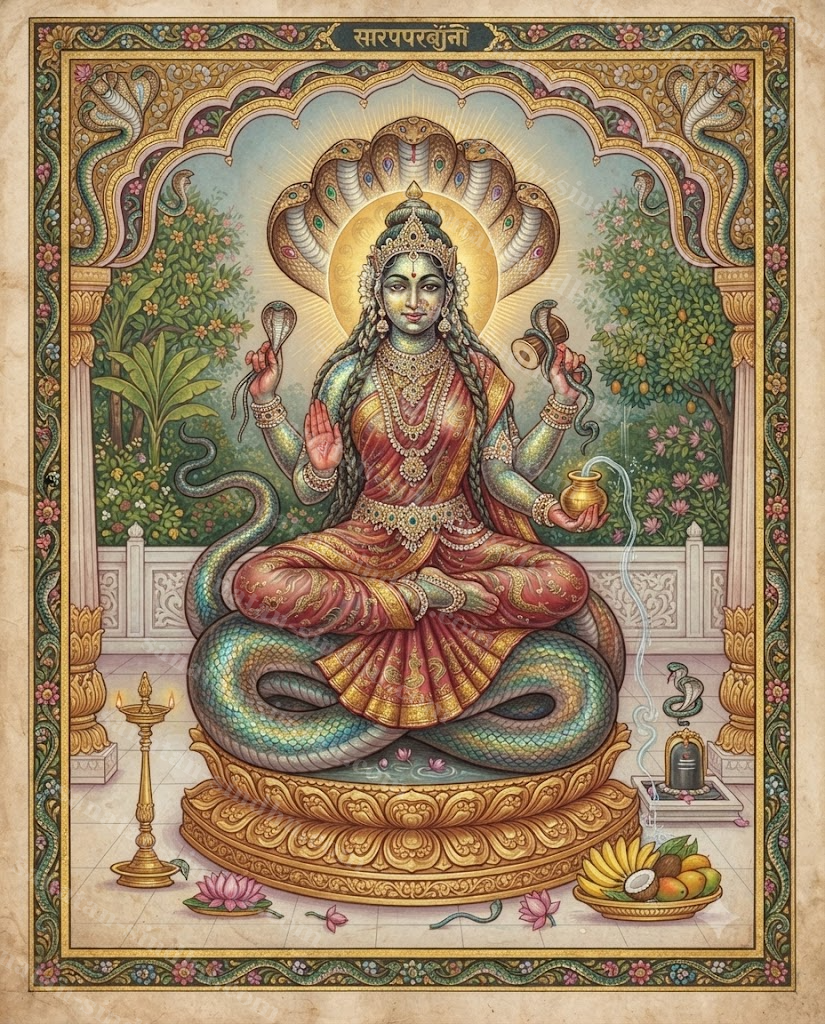
Ṛṣikā of Ṛgveda 10.189, the serpent-queen hymn
Sarparājñī is the seer of the brief Ṛgveda 10.189, whose serpent imagery ties the breath of the singer to the movement of the sun. Its compactness has attracted commentary far out of proportion to its length.
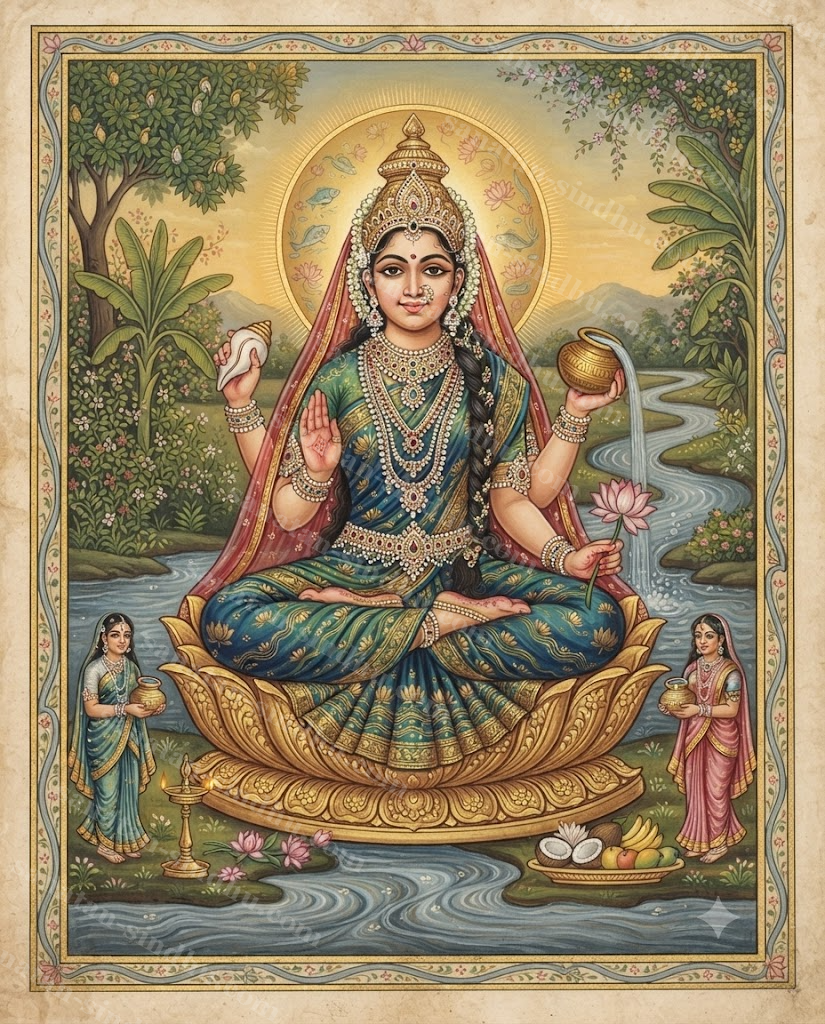
Personified rivers in dialogue with Viśvāmitra
In Ṛgveda 3.33 the rivers themselves answer Viśvāmitra, agreeing to lower their waters so his people may cross. Their verses are the reason the traditional lists include the Nadyaḥ among the women who speak in śruti.
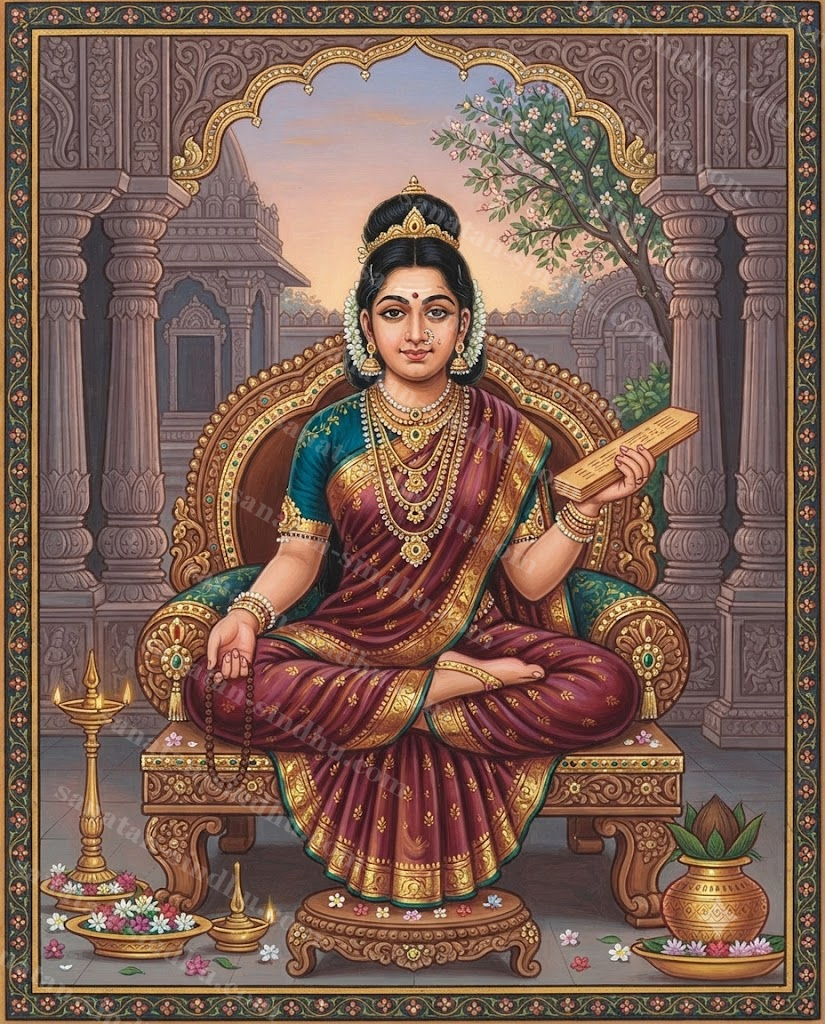
Brahmavādinī who twice questioned Yājñavalkya
Gārgī Vācaknavī is the archetypal woman philosopher of the Upaniṣads: she interrogates Yājñavalkya on what underlies water, air and the worlds, and does not stop until he warns her to. Her second round elicits the Bṛhadāraṇyaka's description of the imperishable, akṣara.
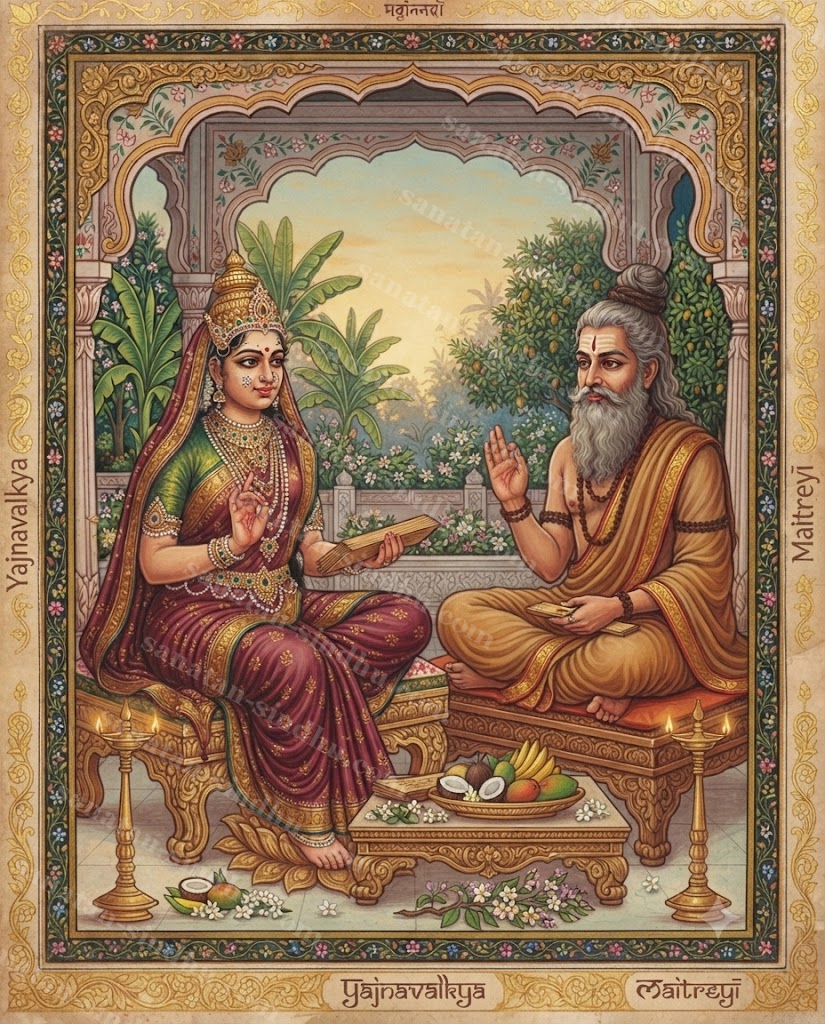
Brahmavādinī who chose the Self over inheritance
When Yājñavalkya prepared to renounce the world and divide his property, Maitreyī asked whether wealth would make her immortal; hearing that it would not, she asked for his knowledge instead. The discourse that follows — that all love is love of the Self — is one of Vedānta's founding texts.
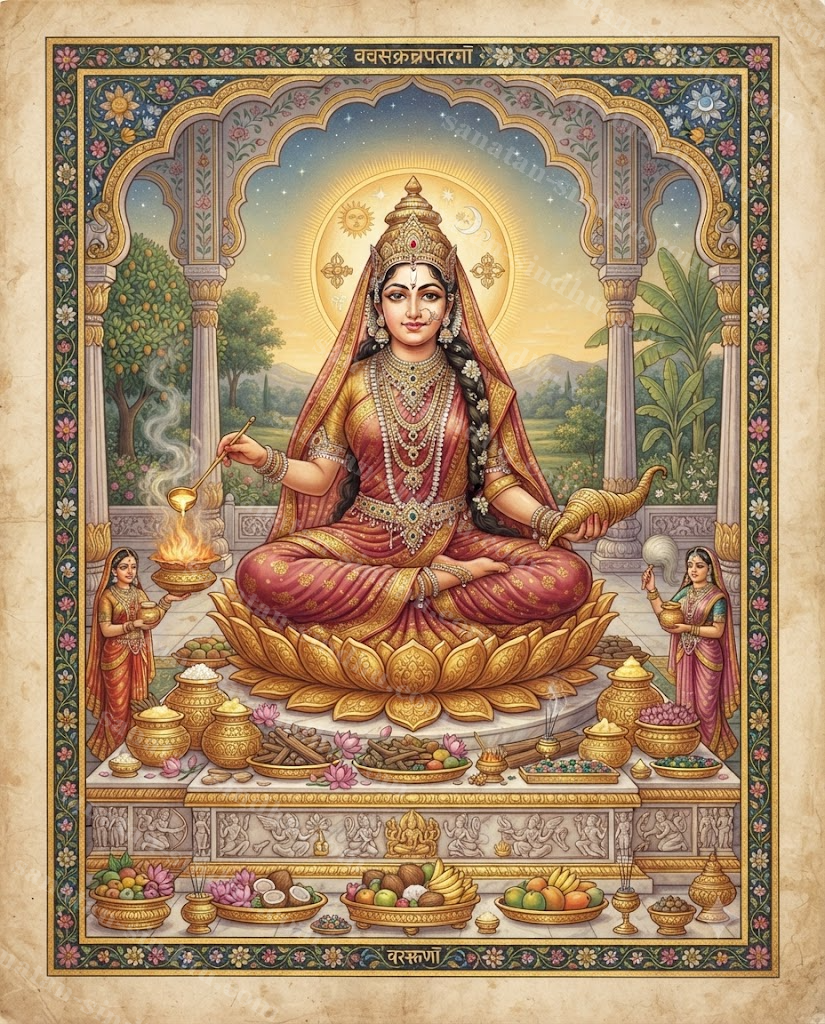
Seer of the dialogue verses of Ṛgveda 10.28
Vasukrapatnī, the wife of Vasukra, is named as seer of the dialogue hymn Ṛgveda 10.28, where speech passes between a mortal householder and Indra.
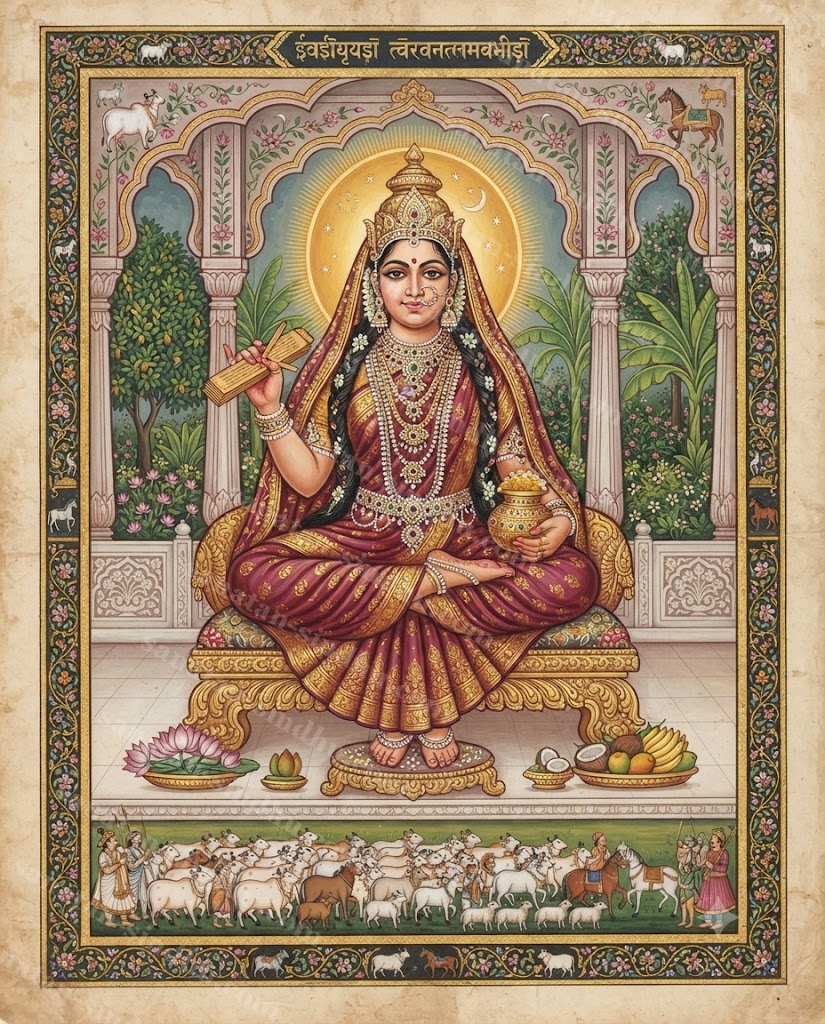
Queen-seer of the gift-verses of Ṛgveda 5.61
Śaśīyasī, queen of Taranta, is remembered in tradition as the voice behind verses of Ṛgveda 5.61 praising generosity to the seers — a woman of the court speaking in the Saṃhitā.
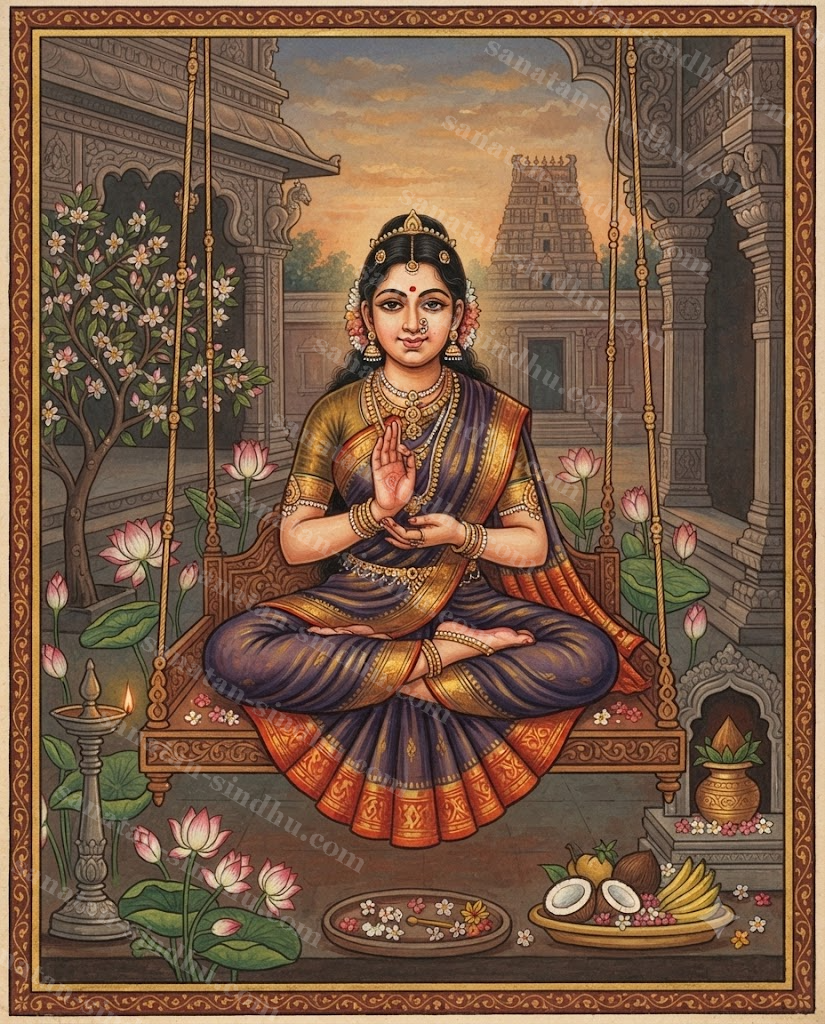
The sister of Agastya, named seer of Ṛgveda 10.60.6
Known simply as Agastya's sister, she is credited with a verse of Ṛgveda 10.60, a hymn for restoring life and health. Her personal name was never recorded.
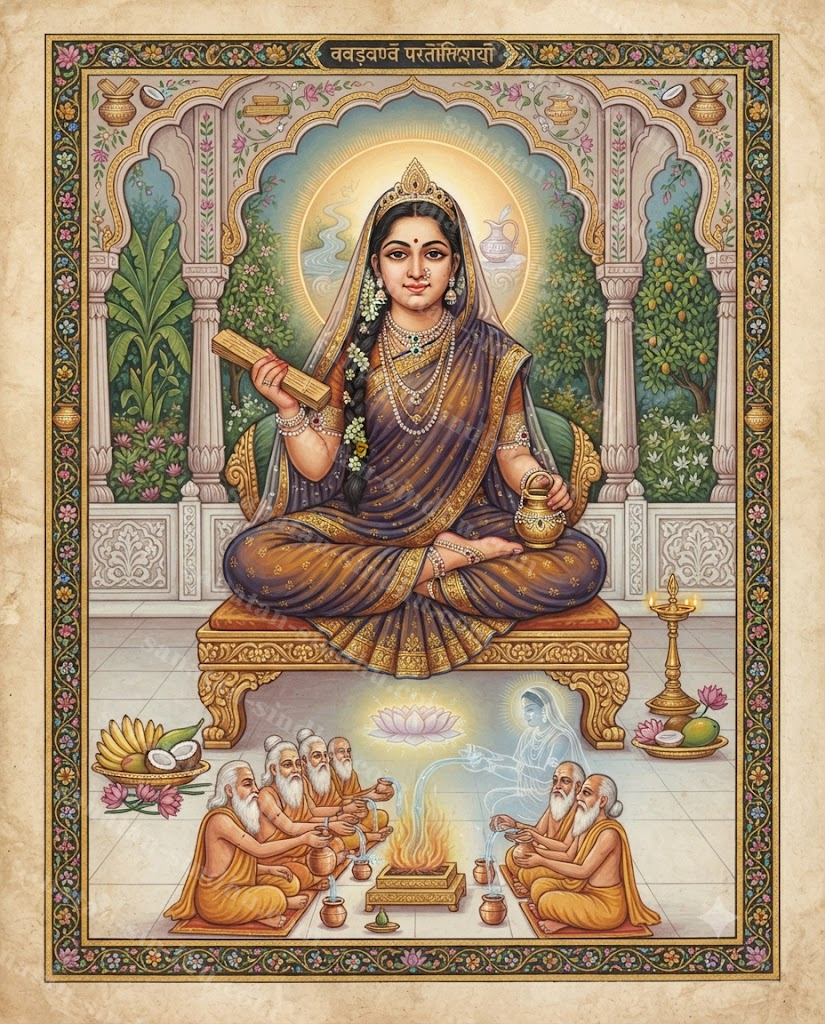
Woman seer named in the Bṛhaddevatā list
Vaḍavā Prātitheyī appears in the Bṛhaddevatā's list of women seers. No hymn survives clearly under her name, but the tradition kept her among the brahmavādinīs.
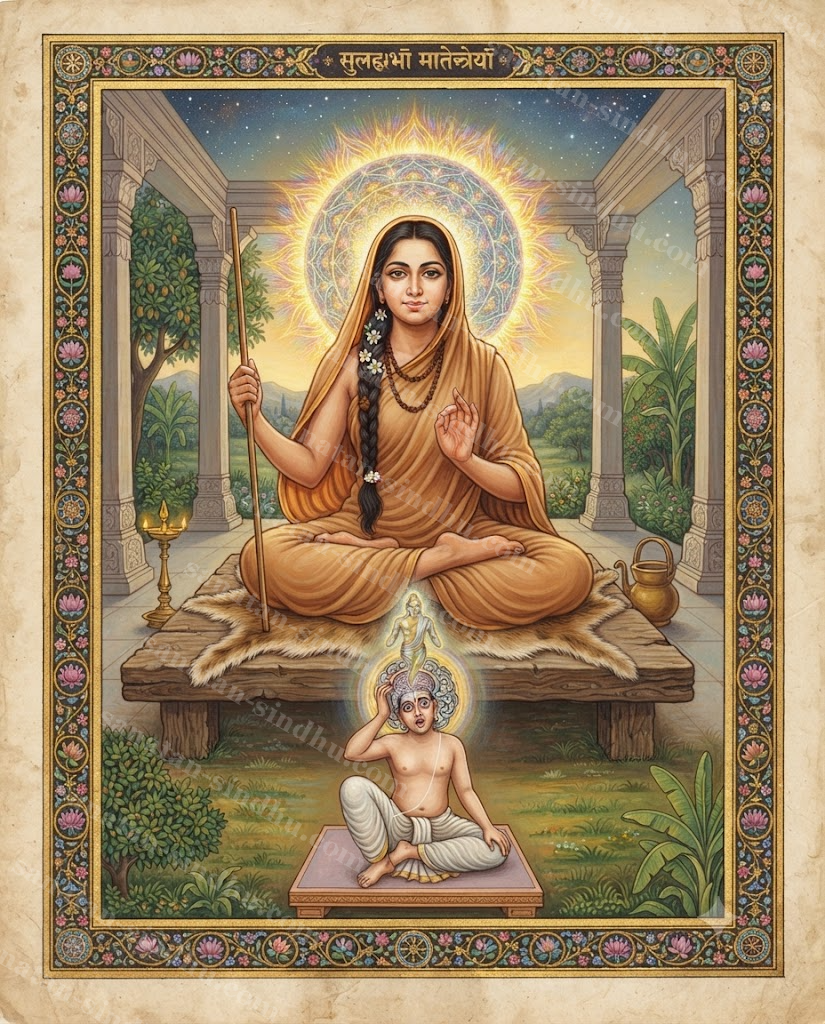
Wandering woman philosopher who debated King Janaka
Sulabhā, a wandering woman ascetic of the Mahābhārata, tests King Janaka's claim to liberation and dismantles it in a long, closely argued speech on the inwardness of renunciation.
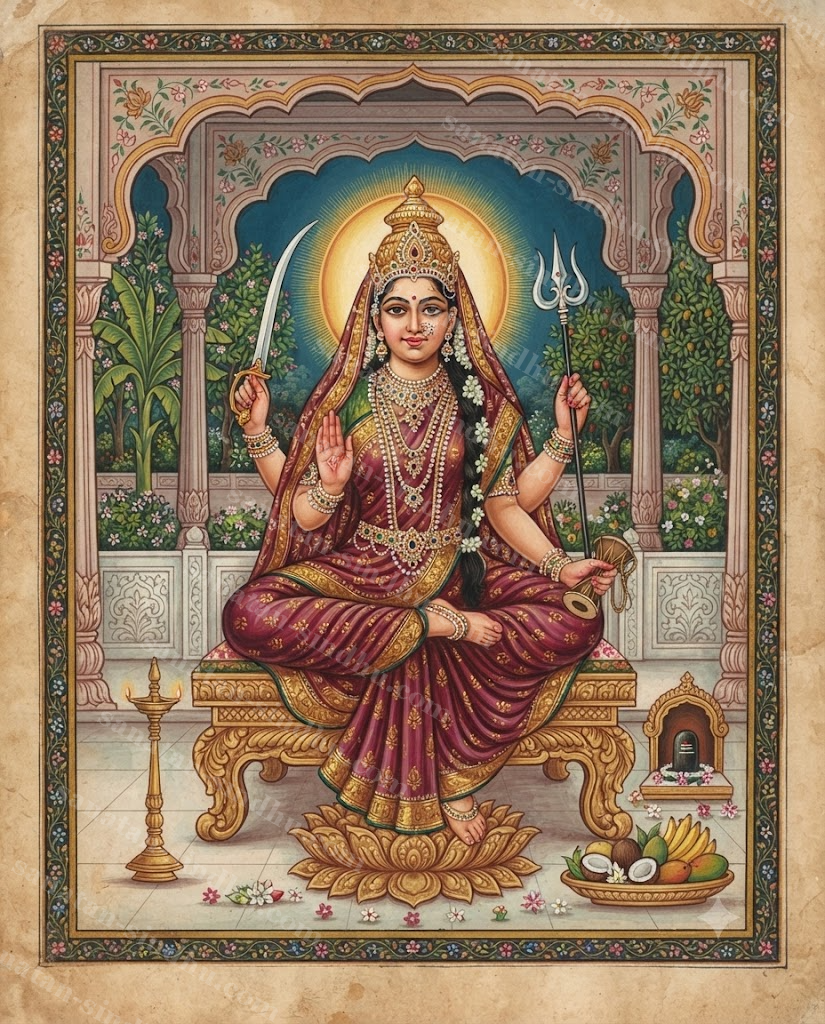
The householder wife of Yājñavalkya
Kātyāyanī stands beside Maitreyī in the Bṛhadāraṇyaka Upaniṣad as the other wife of Yājñavalkya. Her brief mention became a fault-line in later debates over women and Vedic learning.
Scholars & Scientists
The mathematicians, astronomers, physicians, grammarians and strategists whose treatises anchor India's scientific tradition.
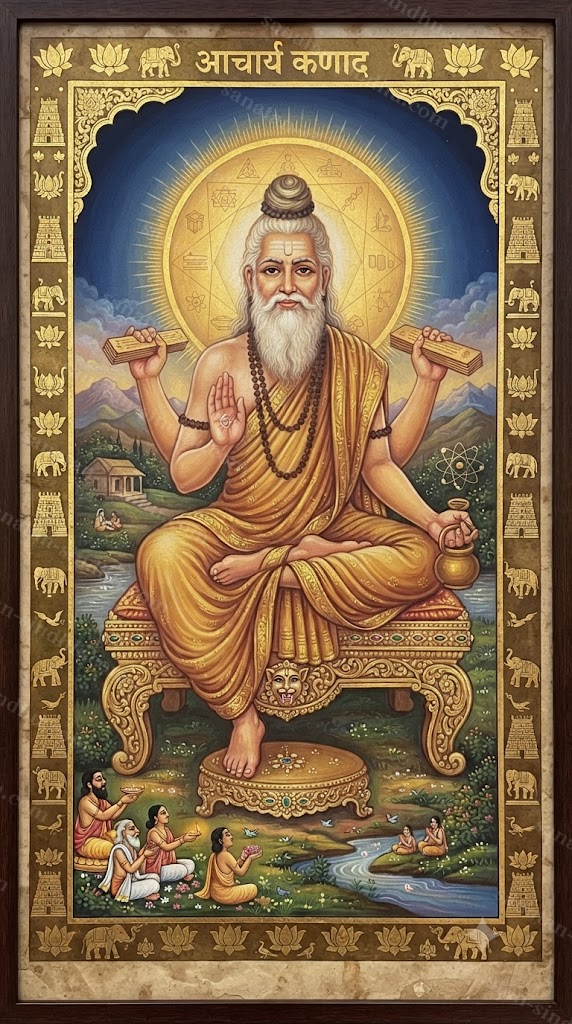
Founder of Vaisheshika and the Indian Atomic Theory
The classical Indian atomist whose Vaisheshika Sutra posits an eternal, indivisible particle (paramāṇu) as the building block of all matter — a remarkably modern intuition framed in 6th-century BCE metaphysics.
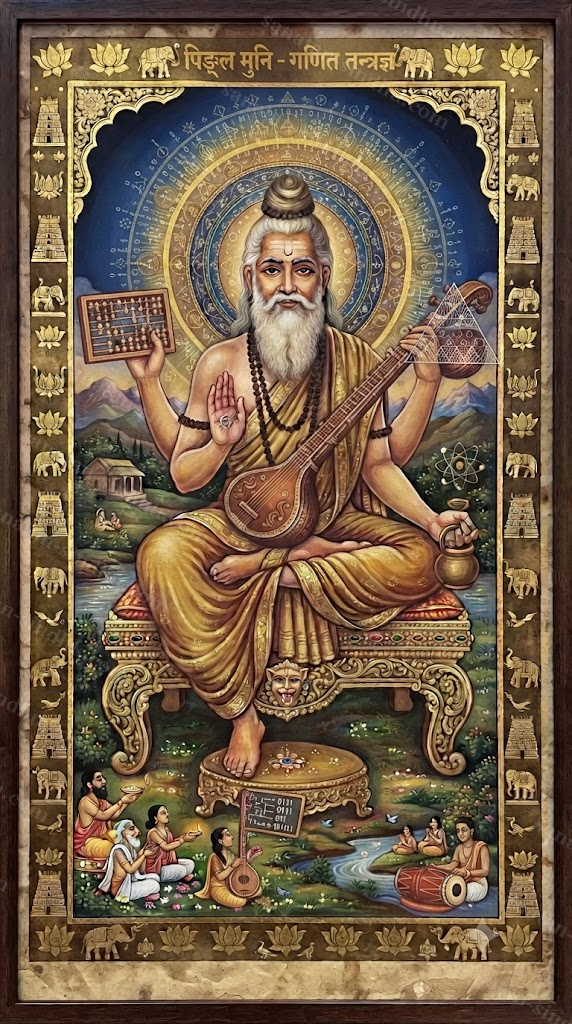
Author of the Chandahsastra and Father of Binary Combinatorics
Pingala's treatise on metre encodes the first known systematic use of binary numbers, the rules of combinatorics, and recursive series — over two millennia before they re-entered European mathematics.
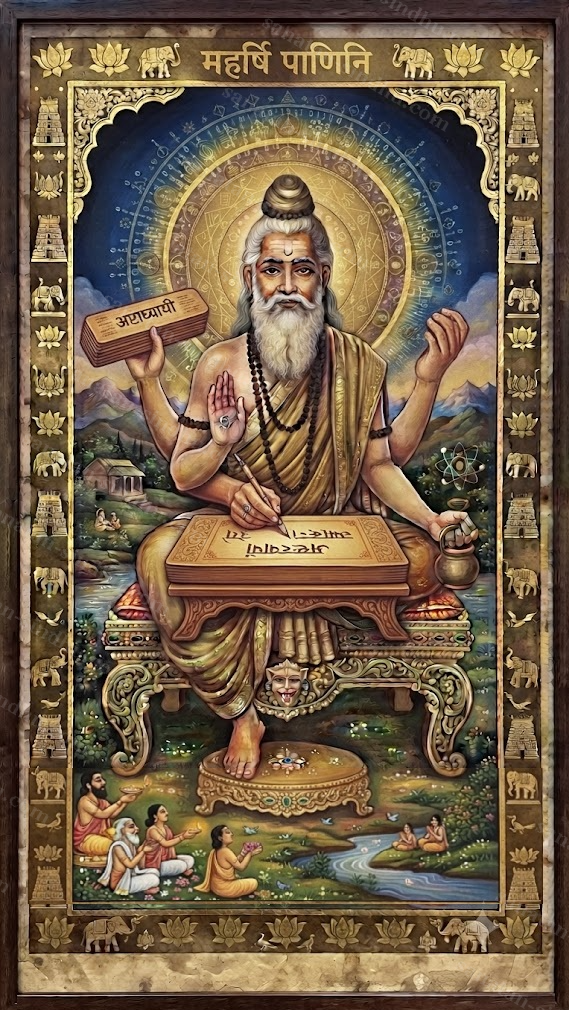
Author of the Ashtadhyayi and Father of Formal Grammar
Panini's Ashtadhyayi is considered the first surviving generative grammar of any language, anticipating the formalism that Chomsky would describe over twenty-three centuries later.
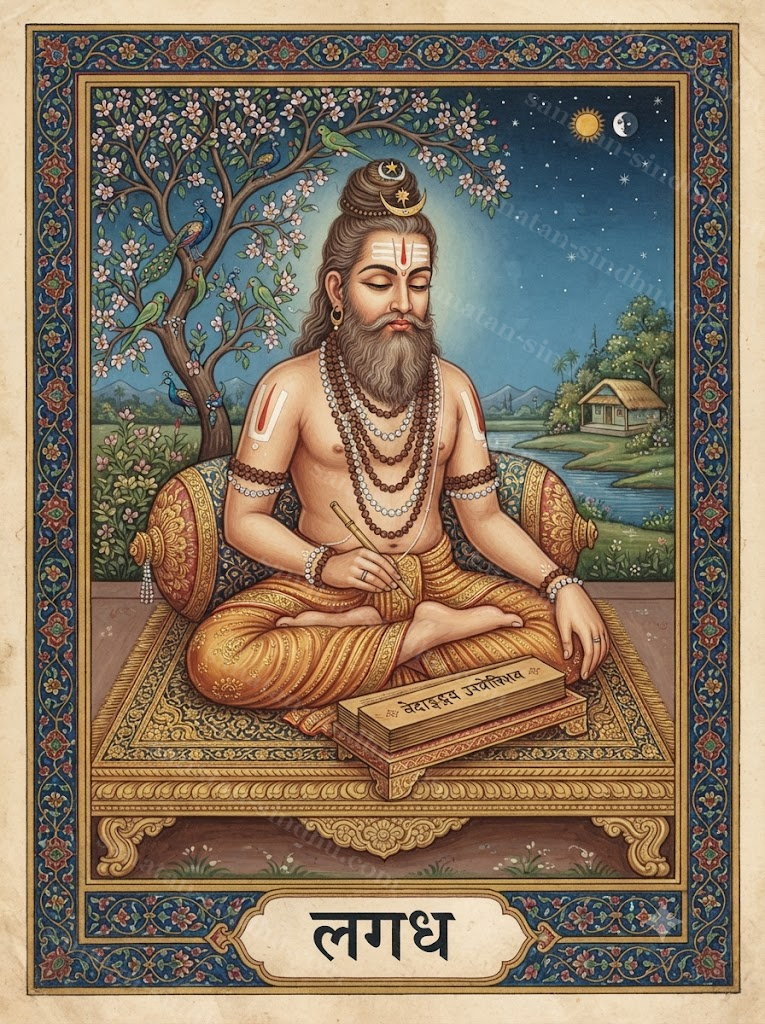
Compiler of the Vedanga Jyotisha
Lagadha codified the earliest surviving Indian astronomy, anchoring the Vedic calendar to observable lunar and solar cycles.
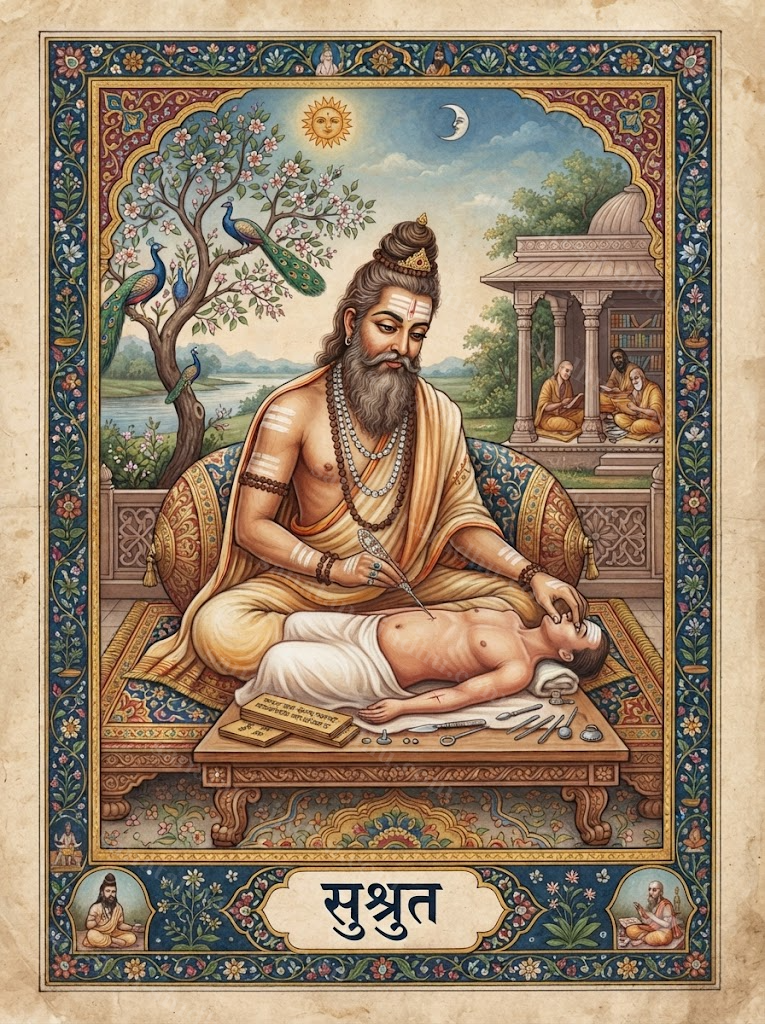
Father of Surgery and Author of the Sushruta Samhita
Sushruta's Samhita codifies a fully formed surgical tradition — from instrument design to plastic reconstruction — many centuries before the comparable European schools.
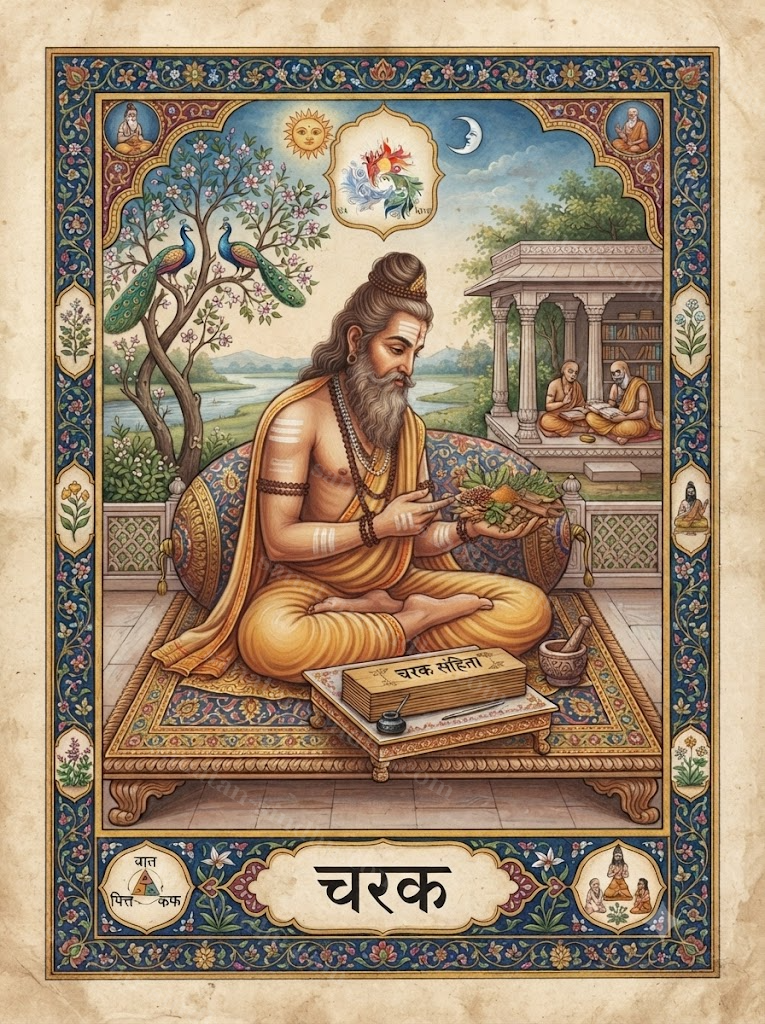
Codifier of Internal Medicine in the Charaka Samhita
Charaka's Samhita is the foundational treatise of Ayurvedic internal medicine, fusing rigorous clinical observation with a holistic theory of body and mind.
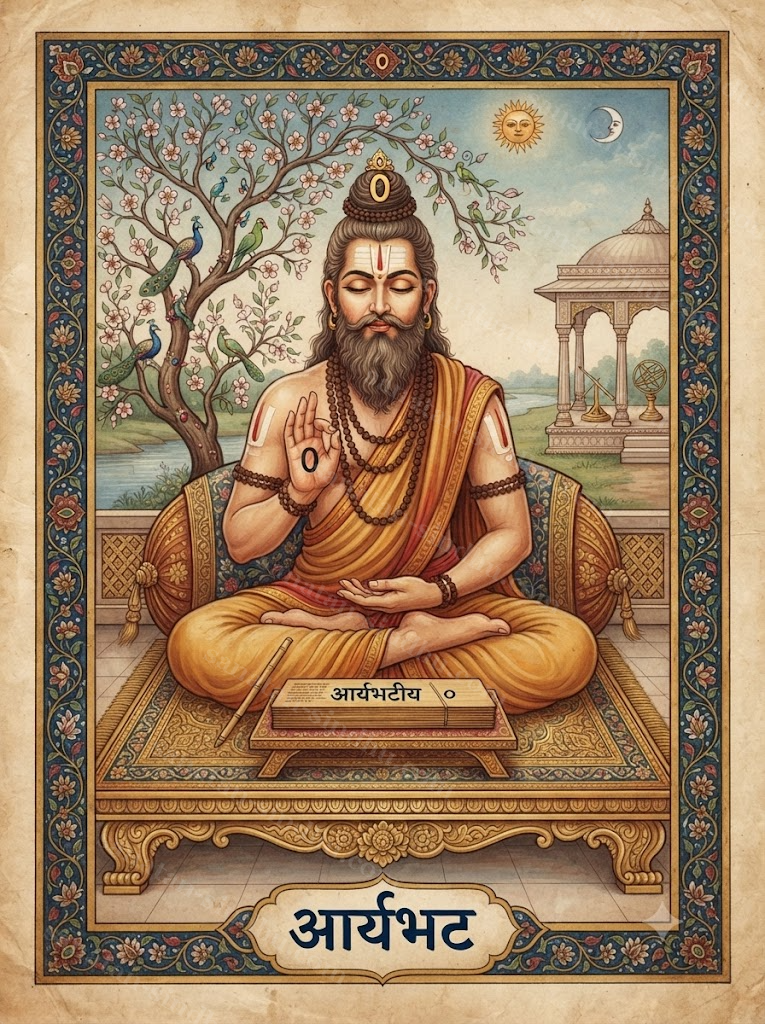
Mathematician-Astronomer of Kusumapura
Aryabhata's Aryabhatiya is among the most influential scientific works of the first millennium — the first to propose a rotating Earth in a fully mathematical framework.
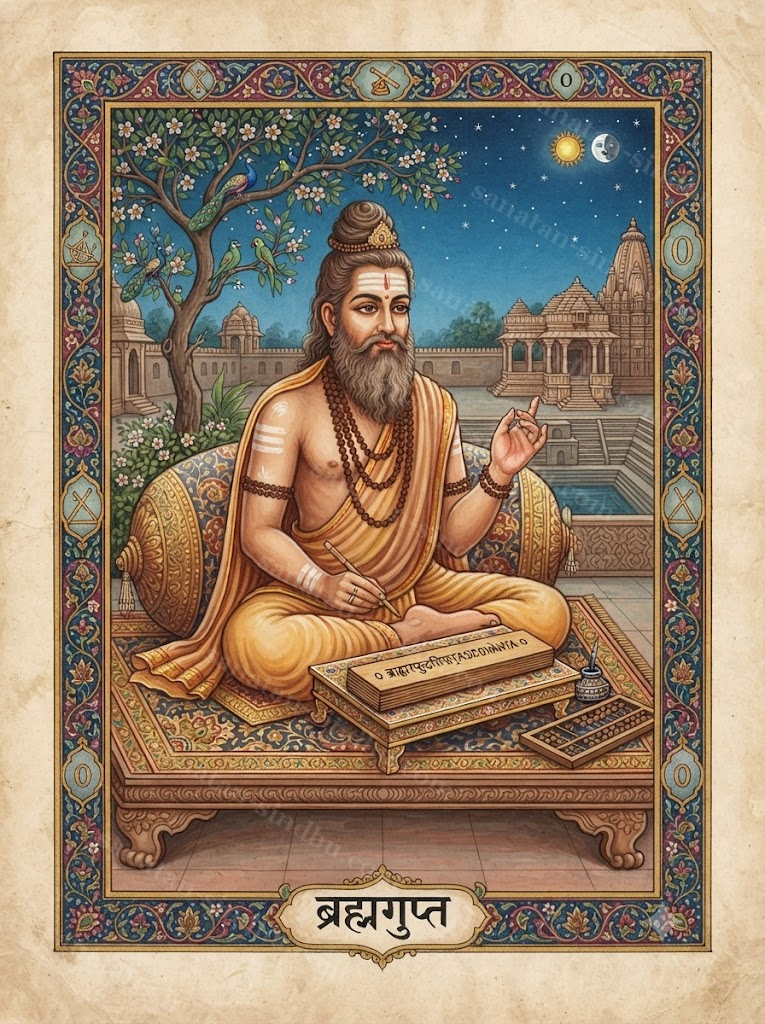
Algebraist and Founder of the Arithmetic of Zero
Brahmagupta's Brahmasphutasiddhanta gave the world zero and negative numbers as first-class arithmetic citizens — the bedrock of all modern algebra.
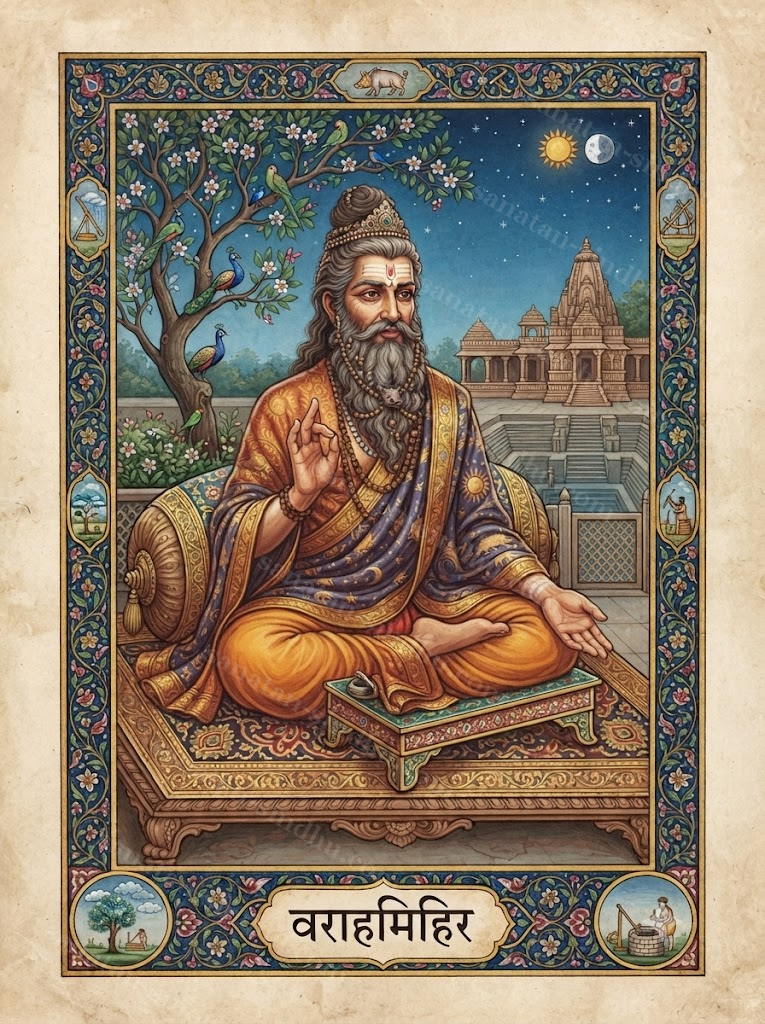
Astronomer, Astrologer, and Polymath of Ujjain
Varahamihira's Brihat Samhita is a remarkable cross-disciplinary encyclopaedia — astronomy, meteorology, gemology, hydrology — synthesised with a single observational temperament.
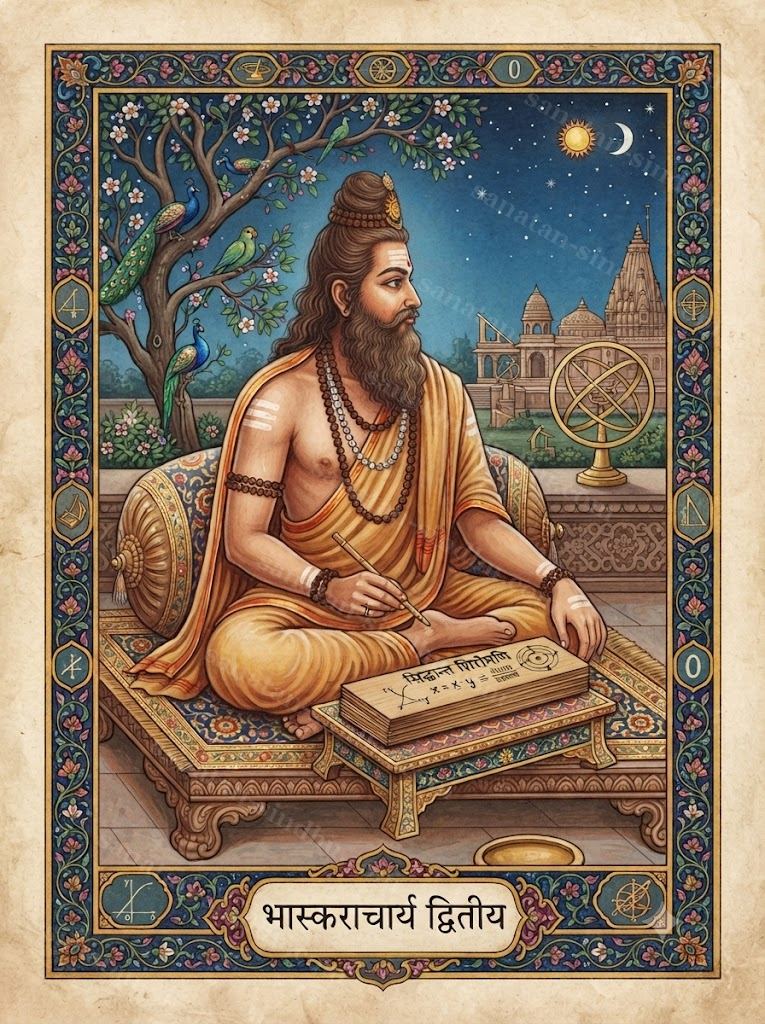
Author of Lilavati and Siddhanta Shiromani
Bhaskara II brought Indian mathematics to its medieval peak, weaving algebra, calculus-like reasoning, and observational astronomy into a single rigorous tradition.
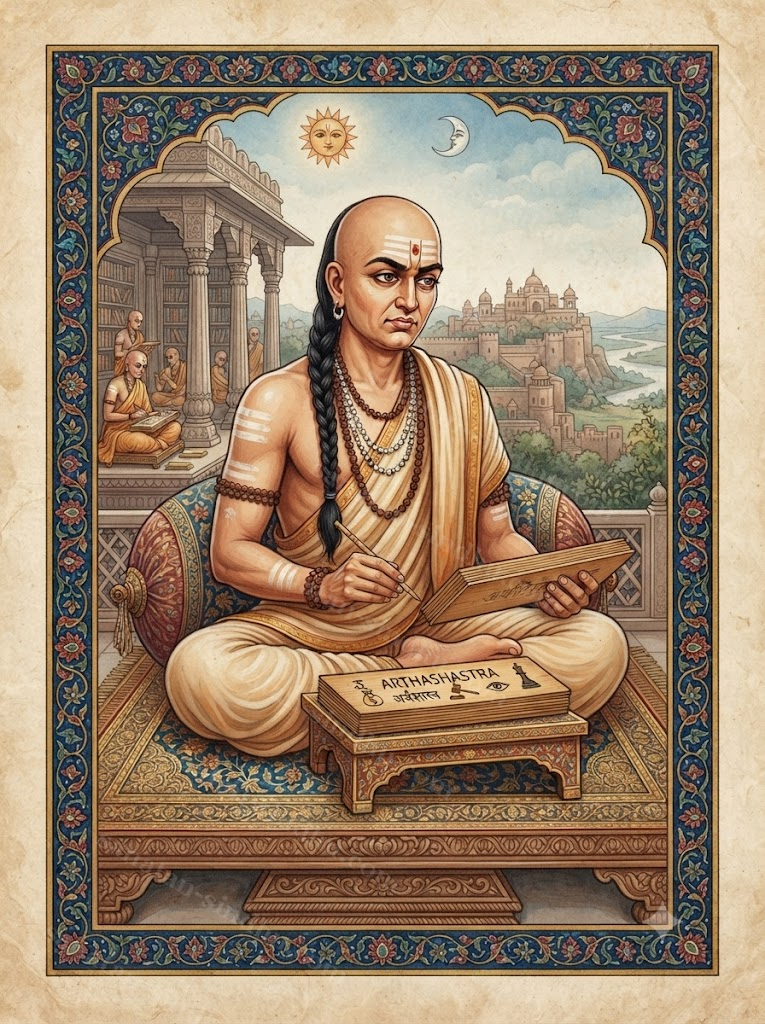
Strategist of the Mauryan Empire, Author of the Arthashastra
Chanakya's Arthashastra is the earliest comprehensive manual of statecraft, blending economics, law, intelligence, and strategy into a single operational framework.
Essays on the teachers
Essay · Foundations
The Beginningless Dawn — the true origins of Sanātana Dharma
Why the tradition calls itself eternal — cyclic cosmic time (Yugas, Kalpas, Mahāpralaya), the Vedas as Apauruṣeya (unauthored) sound cognised by Rishis, and the archeo-astronomical dating that anchors the earliest scriptural layers.
Essay · Acoustics & Cosmology
Nāda Brahman — the universe as sound, from AUM to the 22 śrutis
AUM read through cymatics and the Māṇḍūkya Upaniṣad, and Nāda Brahman read through the Gandharva Veda — the seven svaras, the 22 microtonal śrutis, and a wave-first model of matter that anticipates the vibrating strings of modern physics.
Essay · Guru-Śiṣya Paramparā
Guru Pūrṇimā — the scriptural significance of the teacher
The full-moon day of Āṣāḍha honours the lineage of teachers who dispel darkness. From Veda Vyāsa the Ādi Guru of recorded knowledge, through the Mundaka and Kaṭha Upaniṣads, to Śiva as Ādiyogi transmitting yoga to the Saptarishis — a reading of the Guru as the bridge to the Absolute.
Essay · Esoteric Gāṇapatya
The First Principle — Gaṇeśa as Omkāra and the root of consciousness
Beyond the beloved remover of obstacles: the Gaṇapati Atharvaśīrṣa reveals Gaṇeśa as the primordial sound Om itself, the visible Absolute, and the presiding deity of the Mūlādhāra — the root that must be grounded before consciousness can ascend.
Essay · Astronomy & Scripture
Measuring the Heavens — the speed of light and the distance to the Sun
Sāyaṇa's 14th-century commentary on a Ṛgvedic hymn to Sūrya states a velocity for sunlight that lands within one percent of the modern value for c — and the 18th verse of the Hanumān Cālīsā carries an orbital distance to the Sun. Two cases of hard astronomy preserved inside devotional text.
Essay · Bhagavad Gītā 2.47–2.51
Karma Yoga — the discipline of acting without craving the fruit
A reading of niṣkāma karma from the Gītā's most quoted verse outward: why the fruit is withdrawn but the act is not, how samatva (evenness) turns work into yoga, what 'skill in action' actually means, and how the three Vedānta schools read the agency that remains.
Essay · Greater India · Anchor
Across the Cosmic Milk — Sanātana Dharma in Southeast Asia
For centuries the Indian Ocean was a highway, not a barrier. This anchor essay traces how the epics, philosophy and vocabulary of Sanātana Dharma crossed to Śrīvijaya, Majapahit, Angkor and Ayutthaya — and opens onto three deeper studies: stone and shadow, the living flame of Bali, and the Sanskrit still spoken in ASEAN parliaments.
Essay · Greater India · Language
Sanskrit tides — the language and legends of Southeast Asia
How Lakṣmaṇa became a naval admiral, Hanumān a reconnaissance codeword and Garuḍa a national emblem — and how mantrī, pradhāna, bhāṣā and nagarī still run through the constitutions and everyday speech of Malaysia, Indonesia and Thailand.
Essay · Gītā 4.13
Guṇa, not birth — the architecture of society in Gītā 4.13
The most fiercely argued verse in the Gītā. Does cāturvarṇya describe a hereditary caste order or a psychological typology of qualities and work? A reading of the Sanskrit, Śaṅkara's Advaitic gloss, later reformist readings of the verse, and the counter-verse in chapter nine.
Essay · Gītā 18.66
Sarva-dharmān parityajya — the final instruction of the Gītā
The Carama Śloka, the verse the whole Vaiṣṇava world treats as the last word. What Kṛṣṇa asks Arjuna to abandon, why Rāmānuja reads it as the surrender of self-reliance rather than of duty, and how the Gauḍīya tradition hears in 'mā śucaḥ' an embrace rather than a command.
Essay · Gītā 11 · Viśvarūpa Darśana
Kālo 'smi — the Universal Form and the terror of the eleventh chapter
Arjuna asks to see the whole, and is given the divine eye. What he sees is not comfort — it is fire, infinite mouths, and Time announcing itself as the devourer of worlds. A reading of Viśvarūpa Darśana Yoga, Kāla as the answer to the problem of destruction, and Madhva's use of the vision.
Essay · Gītā 2 · Sāṅkhya Yoga
The seed chapter — Sāṅkhya Yoga as the whole Gītā in miniature
The ācāryas call chapter two the sūtra of the entire Gītā: if the rest were lost, the architecture of liberation would survive here. Arjuna's collapse, the refutation of Cārvāka materialism, the immortal Ātman, and the portrait of the sthitaprajña that the Buddhist and Jain traditions would recognise instantly.
Essay · Gītā 12 · Bhakti Yoga
With form or without — the devotional core of Gītā 12
The shortest chapter in the Gītā asks the oldest question in Indian theology: is it better to worship the unmanifest Absolute or the personal Lord? Kṛṣṇa's answer, Rāmānuja's reading of klesha, the Sikh synthesis of formless-yet-beloved, and the marks by which a devotee is actually recognised.
Essay · Gītā 18 · Mokṣa Sannyāsa Yoga
Do as you wish — renunciation, the guṇas and free will in Gītā 18
The longest chapter closes the argument. Kṛṣṇa cuts between ritualists and world-fleeing ascetics by separating sannyāsa from tyāga, sorts action, knowledge and even food by the three guṇas, and then — having delivered the most secret knowledge — leaves the decision entirely to Arjuna.
Essay · Chronology
How Old Is Sanatan Dharma? — what the evidence actually shows
Astronomy, epic chronology, and archaeology have all tried to date this tradition, and they don’t converge on one number. A survey of Āryabhaṭa’s own testimony, the sharply disputed epic-dating school, and what Sanauli and Purana Qila actually show — reported as an open field, not resolved into a headline figure.
Essay · Continuity
The Unbroken Chain — a tradition tested by every ending history threw at it
No single method pins Sanatan Dharma to one exact birth date. There is a better-evidenced claim underneath the age question: this tradition has demonstrably survived its own internal catastrophe, roughly a millennium of outside political rule, and a colonial era — not by hiding, but by continuing to produce new scripture, new philosophy, and new institutions the entire way through.
Essay · Dharma & Governance
Rāma Rājya — the making of an ideal, and what it cost
The coronation at Ayodhyā, the twenty-odd verses that describe the reign, and how a short passage at the close of the Rāmāyaṇa became the standard by which Indian political thought has judged governments ever since — including the price the same book records.
Looking for the deities? Visit the deities section →