Why chapter two is the seed
Traditional commentators treat chapter two as the sūtra — the compressed seed — of the whole Gītā. It moves in one arc from Arjuna's psychological collapse, through the metaphysics of the deathless Self, into the mechanics of desireless action, and out to a portrait of the liberated person. Everything the remaining sixteen chapters do is expansion.
It also marks the moment the register changes. Arjuna stops asking as a warrior and asks as a student: śiṣyas te 'haṃ śādhi māṃ tvāṃ prapannam — 'I am your disciple; instruct me, I take refuge in you' (2.7). Only after that sentence does teaching begin.
The opening volley — grief for what needs no grief
Kṛṣṇa does not begin with duty, strategy or morality. He begins at the root of fear:
अशोच्यानन्वशोचस्त्वं प्रज्ञावादांश्च भाषसे । गतासूनगतासूंश्च नानुशोचन्ति पण्डिताः ॥ २.११ ॥
aśocyān anvaśocas tvaṃ prajñā-vādāṃś ca bhāṣase | gatāsūn agatāsūṃś ca nānuśocanti paṇḍitāḥ || 2.11 ||
'You grieve for those who deserve no grief, and yet speak words of wisdom. The wise mourn neither for the living nor for the dead.'
The Self is then described by what cannot touch it — weapons, fire, water, wind (2.23) — and by the plainest of images: worn clothes exchanged for new (2.22). Śaṅkara's Bhāṣya makes the therapeutic logic explicit. Until the fear of annihilation is removed, no warrior can act without flinching and no yogī can sit still.

The Cārvāka in the room
Kṛṣṇa's opening is not addressed to a vacuum. The Cārvāka or Lokāyata school of pure materialism held dehātmavāda — the body itself is the self, consciousness a by-product of the elements, death the absolute end. It was a live, respectable position in Indian debate, preserved for us largely in the refutations of its opponents.
Against it the Gītā asserts the jīvātman that merely changes bodies, and echoes the Upaniṣads directly: na jāyate mriyate vā kadācit (2.20) is almost a quotation of Kaṭha Upaniṣad 1.2.18. The argument is not that death is pleasant. It is that the thing Arjuna is mourning was never the thing that dies.
Action without the ledger
Having settled what cannot die, the chapter turns to what should be done, and gives the single most quoted line in the text:
कर्मण्येवाधिकारस्ते मा फलेषु कदाचन । मा कर्मफलहेतुर्भूर्मा ते सङ्गोऽस्त्वकर्मणि ॥ २.४७ ॥
karmaṇy evādhikāras te mā phaleṣu kadācana | mā karma-phala-hetur bhūr mā te saṅgo 'stv akarmaṇi || 2.47 ||
'Your right is to the work alone, never to its fruits. Do not let the fruit be your motive, nor let attachment to inaction take hold of you.'
Two verses later comes the definition that the tradition never stopped quoting: yogaḥ karmasu kauśalam — yoga is skill in action (2.50). The full treatment of this line lives in the essay Karma Yoga; here it is planted as a seed.
The sthitaprajña — a portrait in eighteen verses
From verse 55 to the end of the chapter, Arjuna asks how a person of settled wisdom speaks, sits and walks. The answer is one of the great character studies of Indian literature.
आपूर्यमाणमचलप्रतिष्ठं समुद्रमापः प्रविशन्ति यद्वत् । तद्वत्कामा यं प्रविशन्ति सर्वे स शान्तिमाप्नोति न कामकामी ॥ २.७० ॥
āpūryamāṇam acala-pratiṣṭhaṃ samudram āpaḥ praviśanti yadvat | tadvat kāmā yaṃ praviśanti sarve sa śāntim āpnoti na kāma-kāmī || 2.70 ||
'As the waters of the rivers enter the ocean, which is ever filled yet unmoved, so the one whom all desires enter attains peace — not the one who chases desires.'
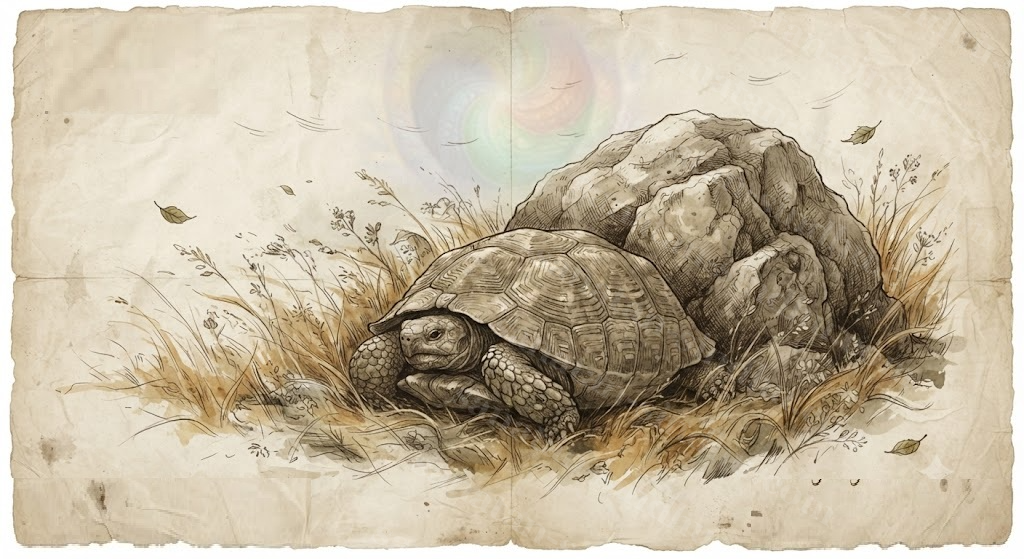
Note what the image does not claim. The rivers keep arriving; the desires keep coming. The ocean is not empty, it is unmoved. Two verses earlier the same portrait is drawn as the tortoise withdrawing its limbs from every side (2.58).

The Śramaṇa resonance
The description of a sage who has extinguished craving and stands unshaken in pleasure and pain is recognisable far outside Vedānta.
- Buddhism. The arahant has extinguished taṇhā (thirst), and the Dhammapada draws the identical simile of the unmoved one: selo yathā ekaghano vātena na samīrati — 'as a solid rock is not shaken by the wind, so the wise are unmoved by praise and blame' (Dhammapada 81).
- Jainism. The withdrawal of the senses in 2.58 sits exactly beside the Jain disciplines of pratyākhyāna (renunciation) and saṃvara — the stopping of the inflow (āsrava) of karmic matter through restraint of the senses, as the Tattvārtha Sūtra sets it out (9.1–9.2).
Three traditions that disagree sharply about metaphysics describe the free person in nearly the same sentences. That agreement is itself a datum.