The metamorphosis of Lakṣmaṇa — prince to sea admiral
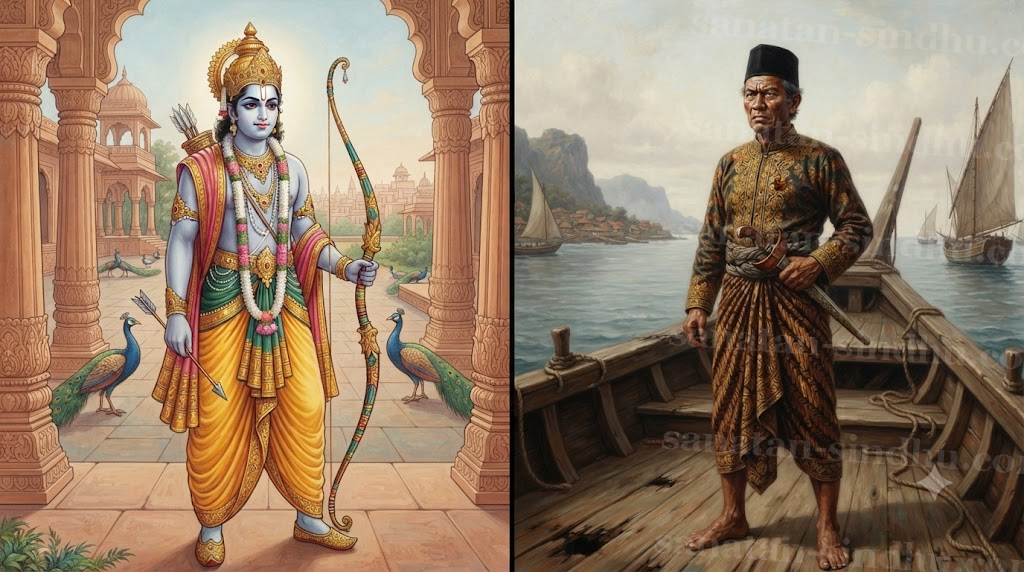
In the Vālmīki Rāmāyaṇa, Lakṣmaṇa is the descent of Śeṣanāga and the standing symbol of unwavering loyalty and guardianship — a land-bound prince of Ayodhyā and a master archer.
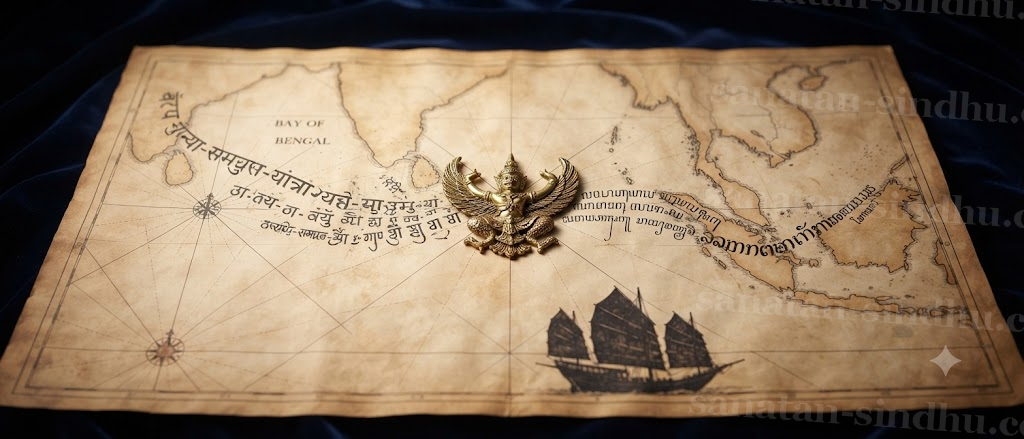
As the Rāmāyaṇa travelled into the maritime kingdoms of the Malay archipelago, the royal courts kept the trait and moved the setting. Lakṣmaṇa was read as the supreme archetype of the guardian who keeps the realm safe from outside threat — and for a state made of thousands of islands, the decisive frontier was not a land border but the open sea.
So the title of the grand guardian, Laksamana in Malay, became the official rank of the commander-in-chief of the navy: the sea admiral. When the eighteenth-century warrior Datuk Ibrahim defended the coasts of the Siak sultanate he was honoured as Laksamana Raja Di Laut, the admiral king of the sea — still sung in Malay folk song. A Sanskrit name for a devoted brother is now the ordinary Indonesian and Malaysian word for an admiral.
Hanumān and Garuḍa — statecraft and sovereignty
Lakṣmaṇa is not the only figure given a working, structural role.
- Hanumān, the code of intelligence. In the epic, Hanumān is Rāma's supreme envoy, crossing the ocean by stealth and returning with the intelligence that decides the war. Indonesian military terminology historically took up Hanoman for scouting, reconnaissance and high-stakes intelligence work.
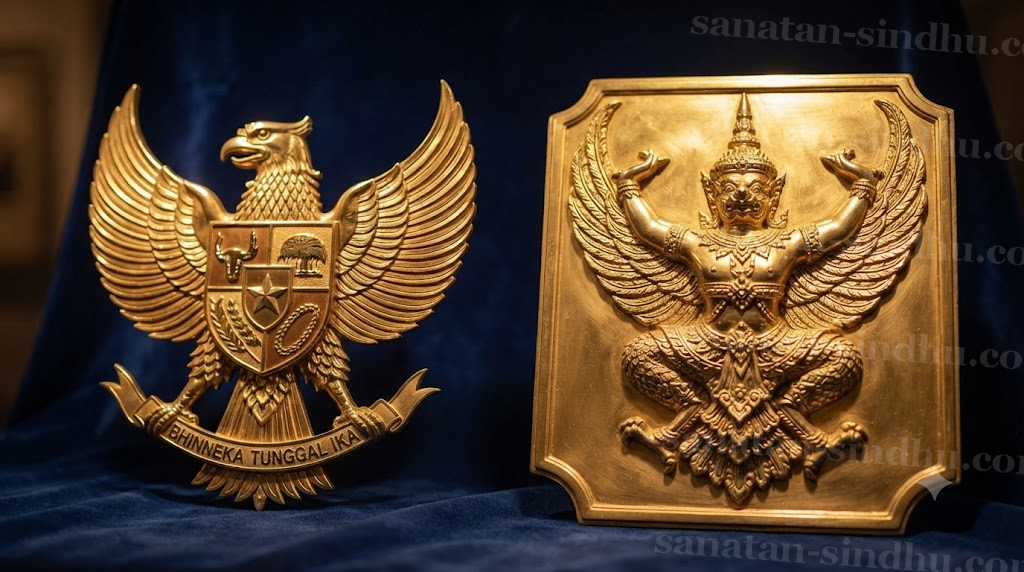
- Garuḍa, the emblem of sovereignty. The eagle-mount (vāhana) of Viṣṇu is today the national emblem of Indonesia — Garuda Pancasila — and the name of its national airline. In Thailand, as Krut, the Garuḍa is the royal seal stamped on official government documents, standing for divine authority and protection.
Governance and politics
Words that carry spiritual or royal weight in India are used structurally across the ASEAN region:
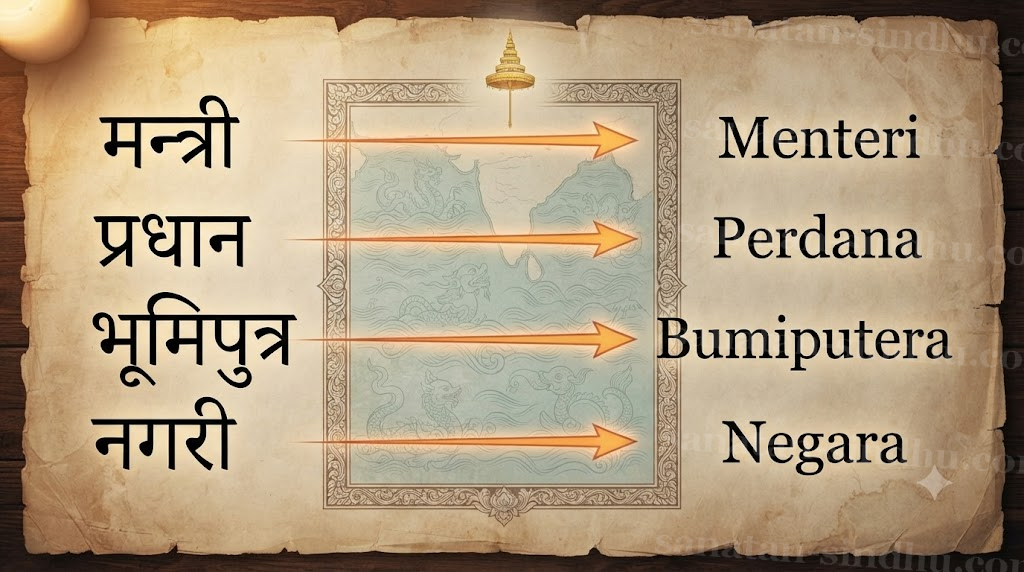
- mantrī (मन्त्री) → Menteri — the official word for a cabinet minister in Malaysia and Indonesia.
- pradhāna (प्रधान) → Perdana — the Prime Minister of Malaysia is the Perdana Menteri, the chief minister.
- bhūmiputra (भूमिपुत्र) → Bumiputera — 'son of the soil'; in Malaysian constitutional law, the legal term for native citizens holding specific indigenous entitlements.
- nagarī (नगरी) → Negara — 'city' or 'settlement' in Sanskrit; the modern Malay and Indonesian word for country or state.
Family and everyday life
- svāmī (स्वामी) → suami — 'lord, master, owner' in Sanskrit; simply husband in modern Indonesian and Malay.
- jīva (जीव) → jiwa — the living soul; in Indonesian medical usage a psychiatric hospital is a Rumah Sakit Jiwa, a house for the sick soul.
- pūrva (पूर्व) → purba — 'east' or 'ancient'; in Indonesian it means prehistoric, as in manusia purba, early humans.
- bhāṣā (भाषा) → bahasa — the plain word for language, as in Bahasa Indonesia and Bahasa Melayu.
Sacred geography and kingship
- The royal title of Thailand. Every reigning monarch of the Chakri dynasty takes the ceremonial title Rāma. King Maha Vajiralongkorn reigns as Rama X.
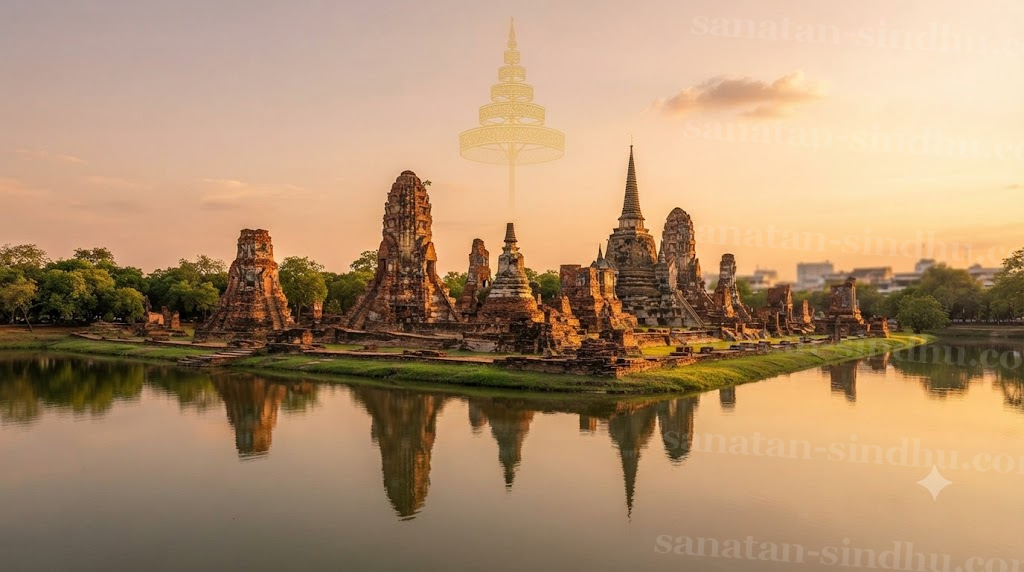
- Ayutthaya. The magnificent old capital of Siam was named for Ayodhyā, Rāma's birthplace — from a-yudhya, 'that which cannot be conquered'. The name projected the city as a holy, invincible seat of righteous rule.
Sacred geography was copied deliberately, not casually: a Meru at the centre, an unconquerable capital, a king who bears the name of the ideal king.
A living legacy
The journey of Sanātana Dharma across the oceans was cultural infusion rather than military conquest. It supplied a rich vocabulary of honour, duty and governance that local societies fitted to their own geography.
A Thai king named Rāma, an Indonesian airline named Garuḍa, a Malaysian officer ranked Laksamana: the echoes of ancient verses still guide the modern tides of Southeast Asia. Continue with The living flame — Bali and the sacred dance.