Wayang Kulit — the Rāmāyaṇa told in shadows
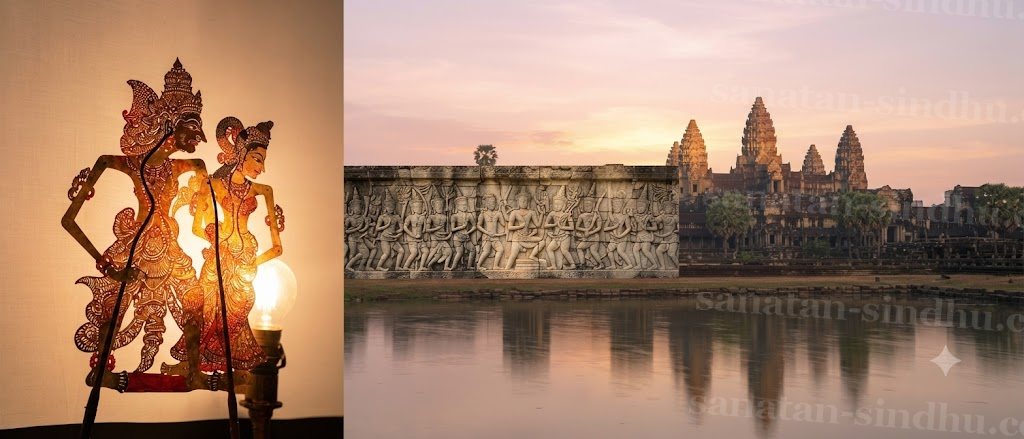
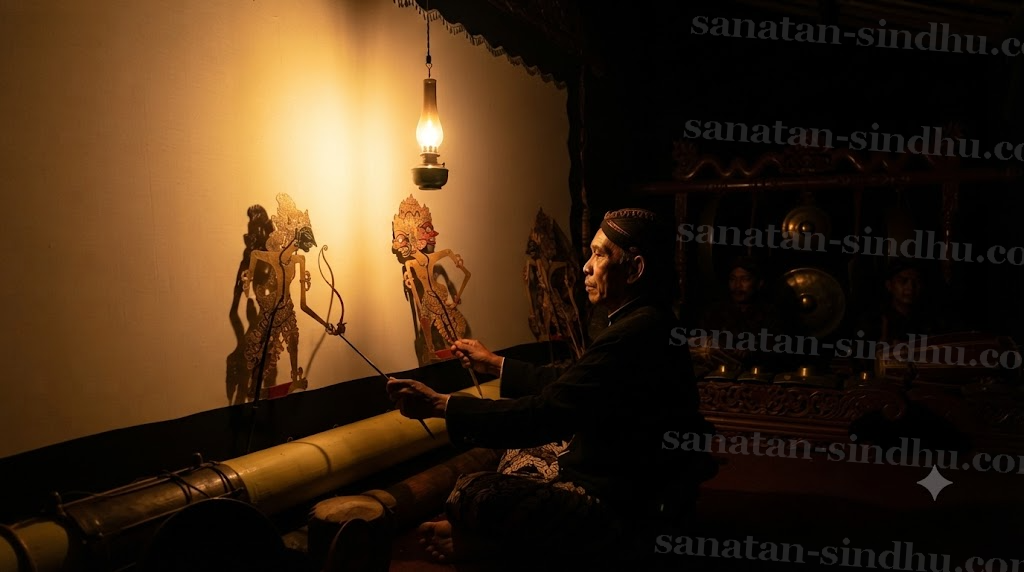
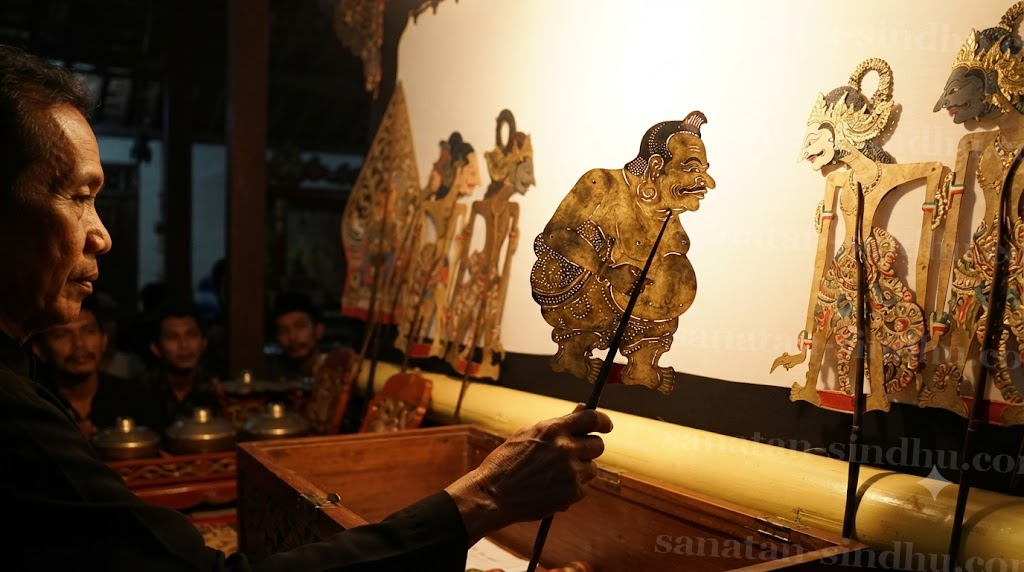
In Java and Bali, and in parts of Malaysia, the Rāmāyaṇa is not only a text to be read; it is a sacred performance. Wayang Kulit is shadow theatre in which flat, intricately carved leather puppets are worked behind a backlit cotton screen, often through the whole night.
The core narrative stays the story of Rāma, Sītā and Rāvaṇa. But master puppeteers — the dalang — introduced changes that carry local wisdom of their own.
The Punokawan — divine clowns as the real teachers
The most profound shift in the Indonesian Rāmāyaṇa is a set of characters found nowhere in Vālmīki: the Punokawan, clown-servants who advise Rāma and his army.
Their leader is Semar — short, heavy, plainly unbeautiful, and in Javanese belief an ancient supreme deity who chose to appear as a humble servant in order to guide righteous kings.
The philosophical inversion is deliberate. The Kṣatriya heroes are refined and aristocratic; the decisive wisdom and protection come from the poorest-looking servant on stage. Audiences were being taught, night after night, that divinity resides in humility and among ordinary people.
Changed fates and softened villains
Local adaptation also reworked the epic's moral weighting. In several Malay and Javanese versions Rawana (Rāvaṇa) is not a purely evil demon but a tragic figure driven to ruin by a love he cannot govern.
Conversely, Vibhīṣaṇa — Rāvaṇa's righteous brother, who defects to Rāma — is sometimes regarded with mild suspicion by local audiences for abandoning his own blood and kingdom in wartime, a reading that reflects the strong Southeast Asian emphasis on family loyalty.
Prambanan — Java's volcanic tribute to the Trimūrti
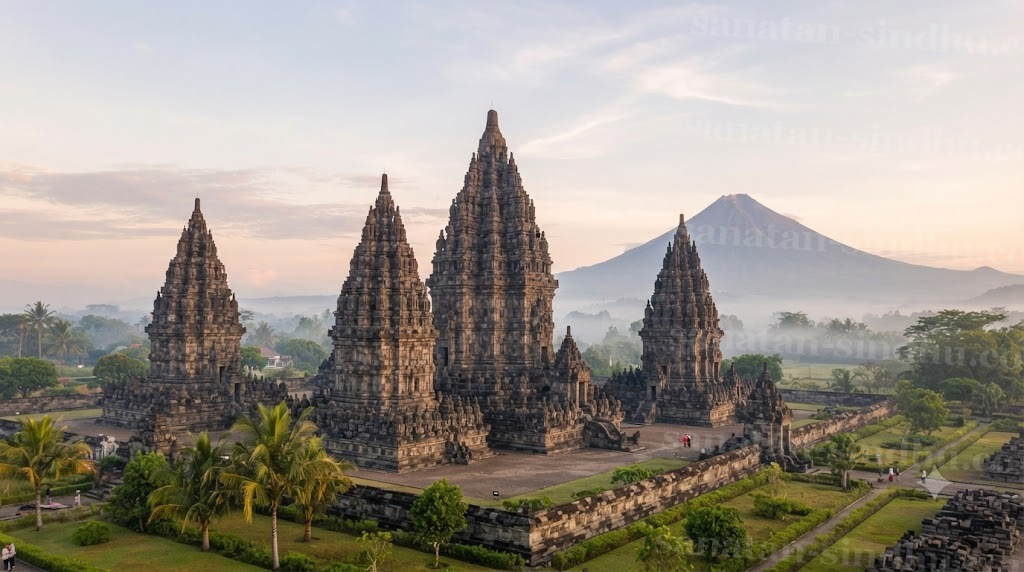
On the plain east of Yogyakarta stands Candi Prambanan, a ninth-century Hindu temple compound raised by the Sanjaya dynasty. It was a spiritual and political statement at once: an assertion of Hindu sovereignty on an island where Buddhism was also powerfully established.
The compound is built as a physical Mount Meru, the cosmic centre. Its needle-like spires rise in tiers; the tallest, at 47 metres, is dedicated wholly to Śiva, flanked by shrines to Viṣṇu and Brahmā.
The carved epic — Rāmāyaṇa in Javanese dress
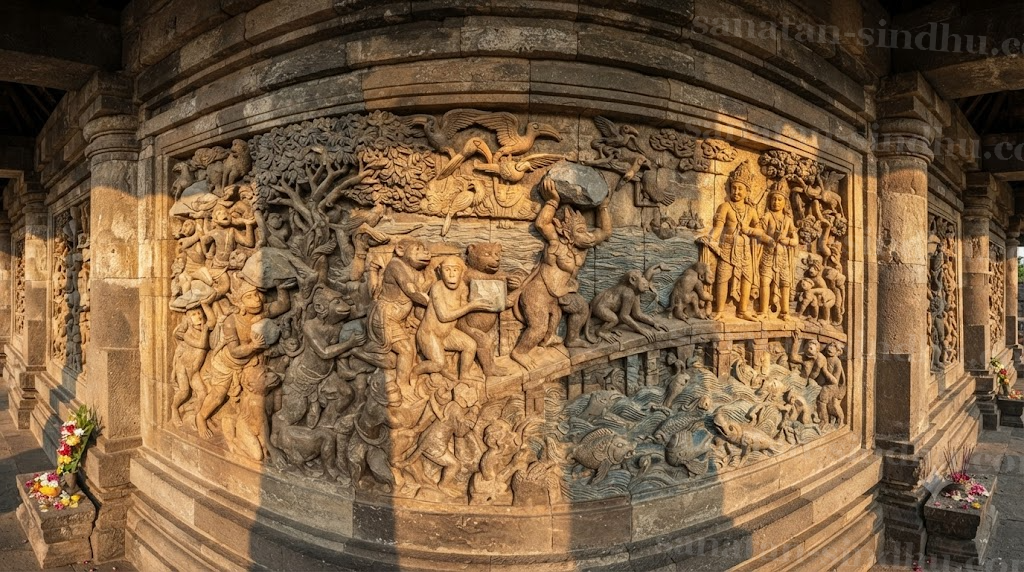
Walk the inner galleries of the Śiva and Brahmā temples and the Rāmāyaṇa reliefs unroll along the volcanic stone. What makes them remarkable is how thoroughly they are localised.
The animals helping Rāma bridge the sea to Laṅkā are not generic Indian monkeys but native Javanese wildlife — rainforest birds and local macaques. The clothing, crown designs and court etiquette are those of ninth-century Javanese royalty rather than ancient Ayodhyā. The divine epic is anchored, stone by stone, into Indonesian soil.
Angkor Wat — Mount Meru across an ocean of milk
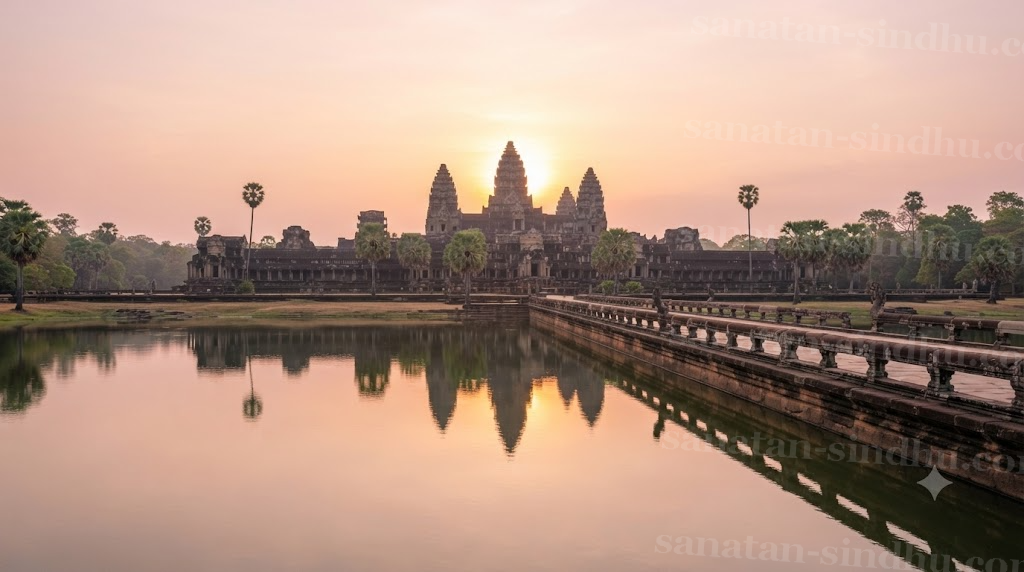
In Cambodia the Khmer empire took this architecture to the largest scale ever attempted. Built in the early twelfth century by Sūryavarman II, Angkor Wat was raised as a Hindu temple to Viṣṇu, and remains the largest religious monument on earth.
Its moat runs over five kilometres and is some two hundred metres wide. That water is not merely defensive: it stands for the Kṣīra Sāgara, the cosmic ocean of milk encircling the universe. The temple itself is Mount Meru. A visitor crossing the causeway is, by design, crossing the cosmic ocean into the abode of the gods.
The masterpiece — Samudra Manthana in bas-relief
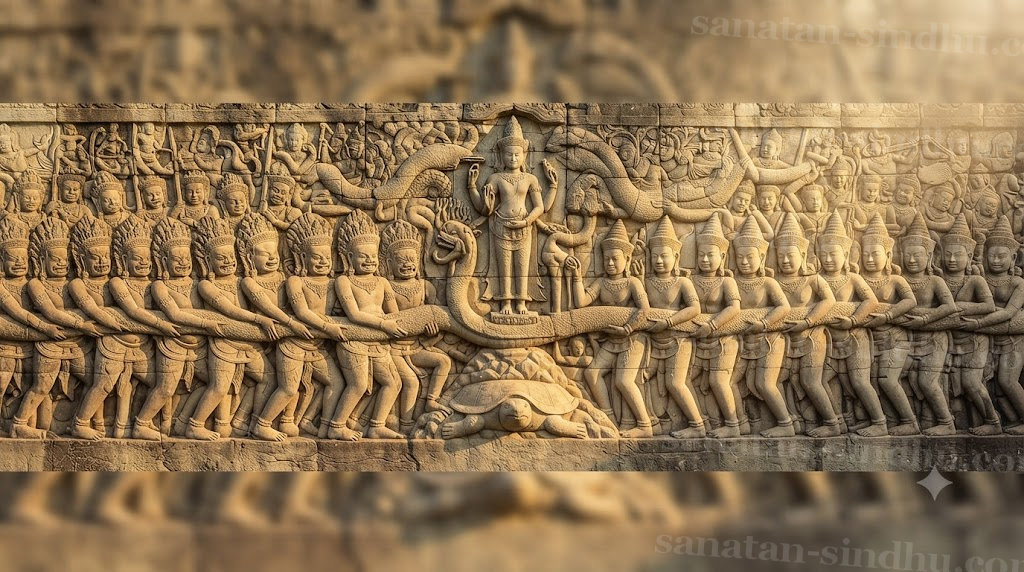
Along the third enclosure runs a single continuous bas-relief 49 metres long, depicting the Samudra Manthana, the churning of the ocean of milk, with extraordinary precision.
Eighty-eight Asuras pull from one side and ninety-two Devas from the other, using the serpent Vāsuki as the churning rope to raise Amṛta, the nectar of immortality. At the exact centre stands Viṣṇu in human form, and beneath the pivot the same Viṣṇu again as Kūrma, the tortoise bearing the mountain.
The choice of myth was political theology. Khmer kings understood themselves as Devarāja, divine rulers; by building the temple the king symbolically drew the stability and immortality won in that churning directly into his kingdom. For the story itself, see the churning of the ocean.