Deities · Vedic Devas
Lord Indra
इन्द्र
Indra
The foremost deity of the Ṛgveda — invoked in more hymns than any other. Indra is the storm-king who splits the demon Vṛtra with his Vajra to release the pent-up cosmic waters; the head of the celestial administration; the office (not a single person) that dispenses reward for meritorious deeds. In the Kena Upaniṣad he is the first of the devas to be humbled before Brahman; in the Bhāgavatam his pride is broken by Kṛṣṇa's lifting of Govardhana.
Quick facts
- Era
- Vedic / Sanatana
- vahana
- Airāvata (four-tusked white elephant), Uccaiḥśravas (celestial white horse — in battle)
- consort
- Śacī / Indrāṇī
- Abode
- Amarāvatī (Svarga)
Attributes & symbols
Emblems most often depicted with Lord Indra. Hover for gloss · click to search.
Essays
Related essays
Before the Trimūrti — the Brāhmaṇa Prelude
Before Brahmā, Viṣṇu and Śiva became a coordinated trio, the Brāhmaṇa texts already told stories of one god's injury, rivalry and repair during sacrifice — Viṣṇu as a dwarf and as the beheaded Makha, and Rudra's arrow against Prajāpati.
Essay · Vedic & Vedāntic CosmologyThe Devas and the Trimūrti — a stratified cosmology
Indra, Agni, Varuṇa, Sūrya, Vāyu and the other Vedic devas were once celestial sovereigns; in the Purāṇic era they appear subordinate to Brahmā, Viṣṇu, and Śiva. Not a replacement — a philosophical stratification through Nirguṇa Brahman, Iśvara, and the administrative devas.
Essay · Ṛgvedic self-descriptionSapta Sindhu and the Ārya — what the Ṛgveda says about its own people
Before any modern theory enters the picture, the Ṛgveda already answers “who are we, and where do we live?” — Sapta Sindhu, the Ārya as a ritual community rather than a race, and the one war the text narrates in full: the Battle of the Ten Kings.
Essay · HistoriographyThe Aryan Question — how the modern debate reads the same evidence
The Ṛgveda doesn’t say where its people were before Sapta Sindhu. This essay lays out, without a verdict, the frameworks modern scholars have built on that silence — the migration case, the Out of India case, and a 2019 genome study whose own co-authors read it differently.
Essay · VedicHow Many Gods? — the 33-koti count and the "330 million" mistranslation
"330 million Hindu gods" is one of the most repeated numbers about the tradition, and also one of the shakiest. The actual textual answer is 33 — asked and answered directly in the Bṛhadāraṇyaka Upaniṣad — and the tradition doesn't even agree on exactly who the 33 are. Where the "330 million" figure actually comes from, why a specific "32,000" claim has no traceable source at all, and what the texts themselves commit to.
Essay · ComparativeSvarga and Naraka — What Scripture Actually Says About Heaven and Hell
Svarga and Naraka look, from a distance, like the tradition's own heaven and hell. Up close, both realms come with fine print the popular comparison usually drops: Kṛṣṇa states directly, in the Gītā, that svarga is temporary — merit runs out, and the soul falls back. Naraka's many named hells are sin-specific and duration-bound, not eternal damnation. What that does to the usual heaven/hell comparison, and where both realms actually sit relative to mokṣa.
Essay · Iconography · VāhanaWhy Every God Rides Something — Vāhana Symbolism Across the Pantheon
Gaṇeśa's mouse, Śiva's bull, Durgā's lion, Viṣṇu's Garuḍa, Sarasvatī's swan, Yama's buffalo, Kārtikeya's peacock and Indra's elephant: where each pairing comes from in the texts, how it is usually read, and which readings are later tradition rather than scripture.
Related lore
All stories →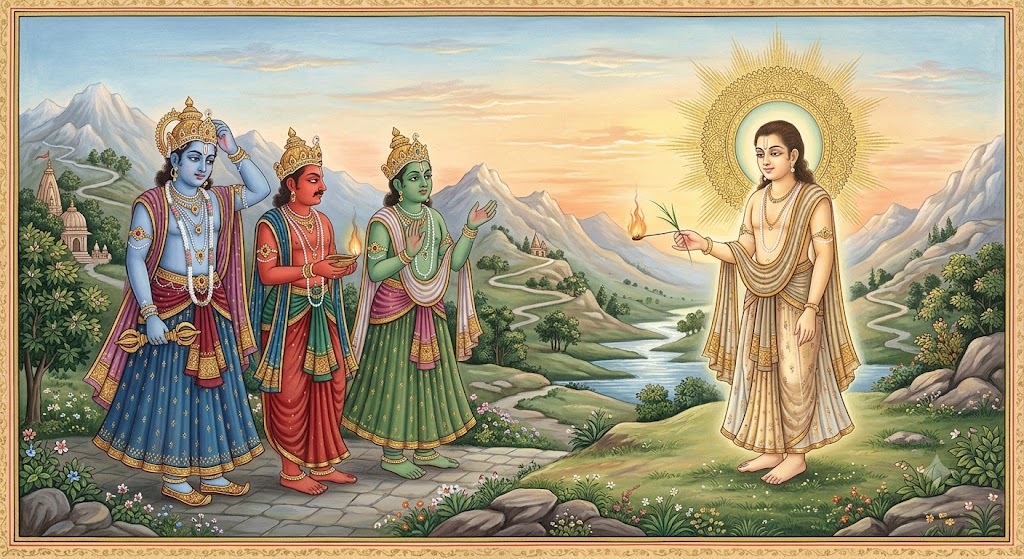
Kena Upanishad (Chapters 3 & 4), Shiva Purana (Shatarudra Samhita, Chapter 16)
The Cosmic Riddle: Yaksheshwara Avatar
To dissolve the growing pride of the Devas after their cosmic victory over the Asuras, Lord Shiva manifests as a mysterious, all-powerful spirit (Yaksha) to demonstrate that all individual power originates from the Supreme Brahman.
3 chapters · read →
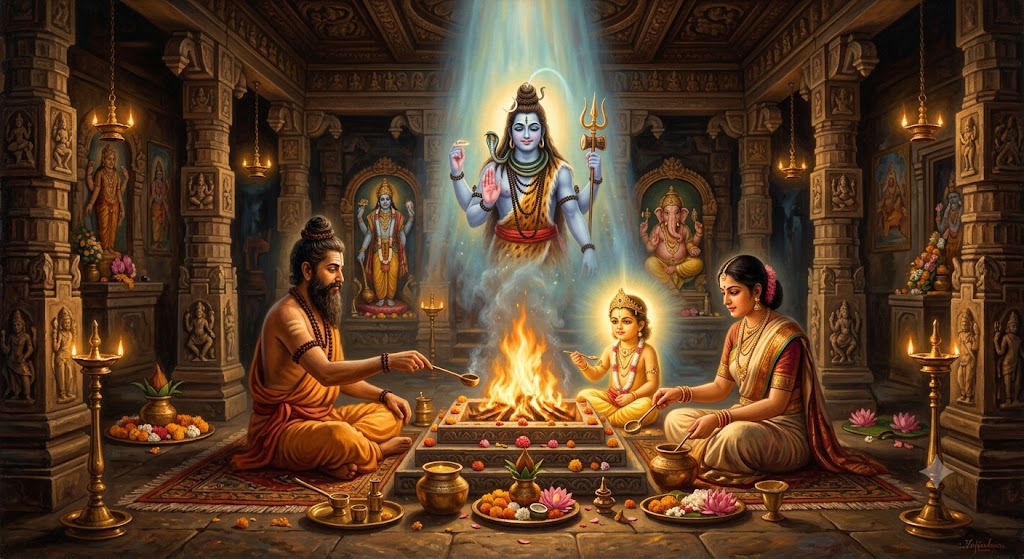
Shiva Purana (Shatarudra Samhita, Chapters 13-15)
The Lord of the Hearth: Grihapati Avatar
Born as a divine boon to a pious couple, the brilliant child Grihapati learns of an astrological prediction of an early death by fire. He surrenders himself completely to Lord Shiva in Kashi, overcoming both the fear of death and the wrath of Indra.
3 chapters · read →
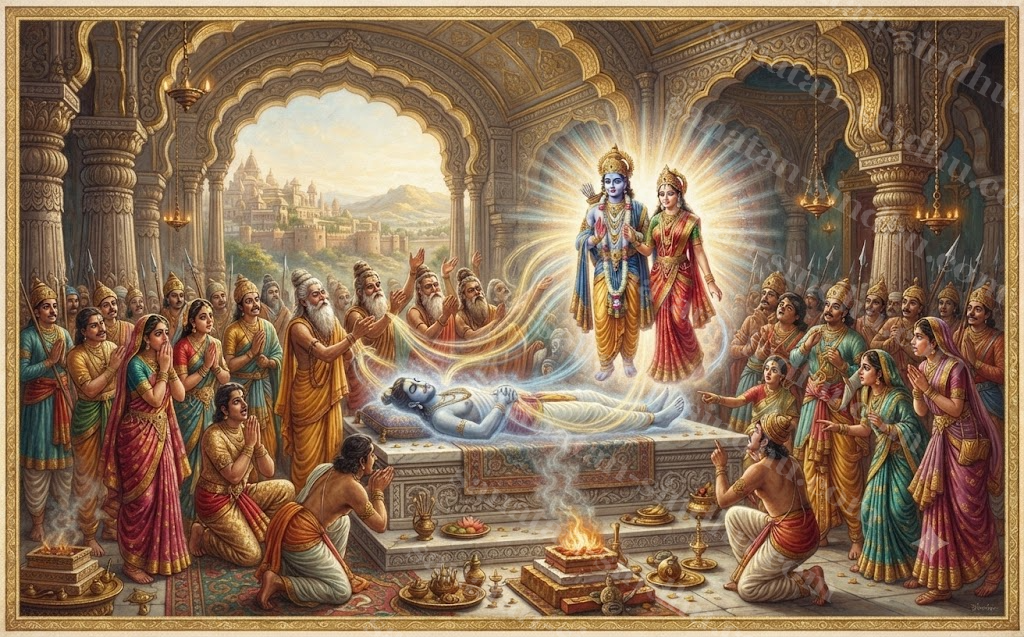
Bhāgavata Purāṇa, Canto 4, Chapters 15–23
King Pṛthu and the Earth Cow
Born from the body of the wicked King Vena, Pṛthu — the first true consecrated king and a partial avatāra of Viṣṇu — chases the earth itself when she flees from him in the form of a cow, and persuades her to feed all creatures; from him the earth takes her name Pṛthvī.
5 chapters · read →