

The imperishable third
Akṣaya — from a- (not) plus kṣi (to decay, diminish) — means undiminishing, imperishable; tṛtīyā simply names the day, the third tithi of Vaiśākha's bright fortnight. Together the name makes a specific claim: merit earned on this day — charity given, a venture begun, a vow undertaken — doesn't fade the way merit ordinarily might. Practically, that claim shows up as something unusual among the fasts this series has covered: Akṣaya Tṛtīyā is reckoned one of a small handful of svayaṁsiddha muhūrtas — self-auspicious moments — meaning the day itself is considered favourable without a priest needing to check nakṣatra, tithi and planetary position against each other the way almost every other ritual timing in this series has required.
Paraśurāma, and the start of an age
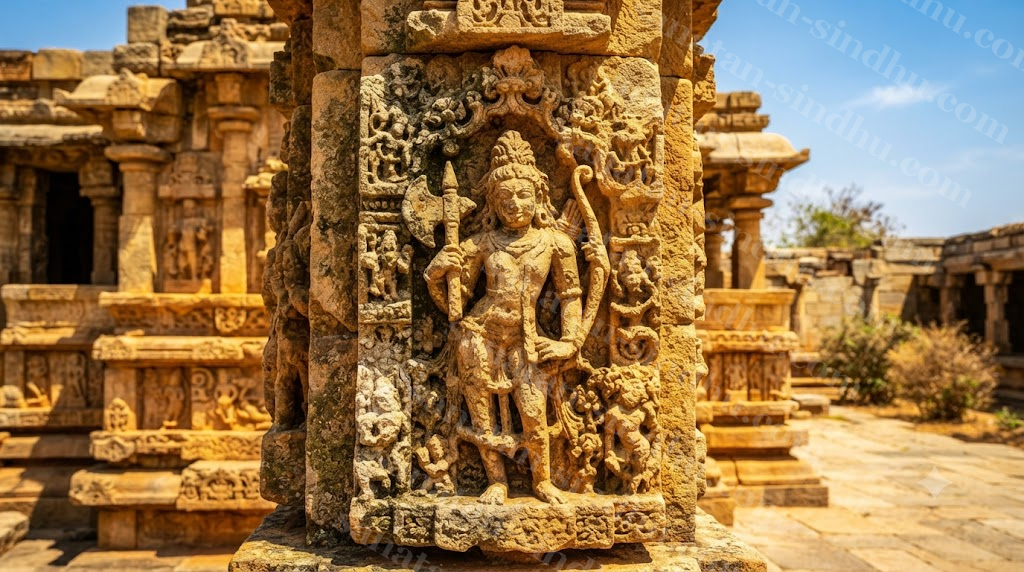
The day's clearest mythological anchor is Paraśurāma Jayantī — the birth of Viṣṇu's sixth avatāra, son of the sage Jamadagni and Reṇukā — named on this date across the Skanda, Bhaviṣya and Matsya Purāṇas. Some of the same textual tradition places something larger on this day as well: the Bhaviṣya Purāṇa is cited as marking Akṣaya Tṛtīyā as the day Tretā Yuga itself began, the cosmic age of Paraśurāma, Rāma and Vāmana. That second claim sits in this series' cosmological register rather than its historical one — a yuga boundary isn't the kind of thing this essay can verify the way it can verify a Purāṇa naming a festival, and it's presented here as the tradition's own account of the day's weight, not as an independently checked fact.
What people actually do with a day like this
The Purāṇic emphasis, where this essay has found it named directly, falls on dāna — charity — given on this day being credited with lasting, undiminishing merit; new ventures, marriages and major purchases begun on it without needing a separate muhūrta check follow from the same logic. The day's now-dominant modern association — buying gold — is a considerably more recent, commercially reinforced layer on top of that older charitable emphasis, the same kind of honest layering this series named for Santoshi Mātā's twentieth-century emergence: real, widely observed, and worth distinguishing from the older textual basis rather than presenting both as equally ancient. A further association, Gaṅgā's descent to earth (Gaṅgāvataraṇa), is named on this date in some regional traditions and not in others — another case this essay names as regional variation rather than settling into one universal account.

Not every tradition agrees
The cross-tradition disagreements this series named in its first essay — the Sikh and Ārya Samāj objections to ritual observance tied to a fixed calendar day, Jainism's and Buddhism's rejection of Purāṇic authority outright — apply here as much as to any other piece in this series, and aren't repeated in full again.
Return to What Is a Vrata? — the textual foundations of Hindu fasting for the fuller cross-tradition treatment, and for the rest of the fasting series as each piece is added.
Sources
- Primary scripture. Skanda Purāṇa, Bhaviṣya Purāṇa and Matsya Purāṇa, for Paraśurāma Jayantī's placement on this date; Bhaviṣya Purāṇa, for the Tretā Yuga origin claim — consulted via named secondary summaries rather than critical editions, the same limitation flagged elsewhere in this series.
- Living and commercial practice. The dāna emphasis, muhūrta-free status, and the modern gold-buying association, consulted via general festival-documentation sources rather than a single named ethnographic study; the gold association is named here as a recent commercial layer, not an ancient one.