
Three Tīj, one season
"Tīj" names three separate observances across two monsoon months, all dedicated to Pārvatī, all popularly shortened to the same one-word name in casual conversation — which is exactly the flattening this essay wants to undo. Hariyālī Tīj falls on the third day (tṛtīyā) after the new moon in Śrāvaṇ. Kajarī Tīj follows roughly a fortnight later, on the tṛtīyā of Bhādrapada's dark fortnight. Hartālikā Tīj comes a full lunar month after Hariyālī, on the tṛtīyā of Bhādrapada's bright fortnight. Same goddess, same general tṛtīyā date pattern, three different moods, three different textual footings — this essay takes each in turn rather than describing "Tīj" once and letting the reader assume the three are interchangeable.
Hariyālī Tīj — the green one
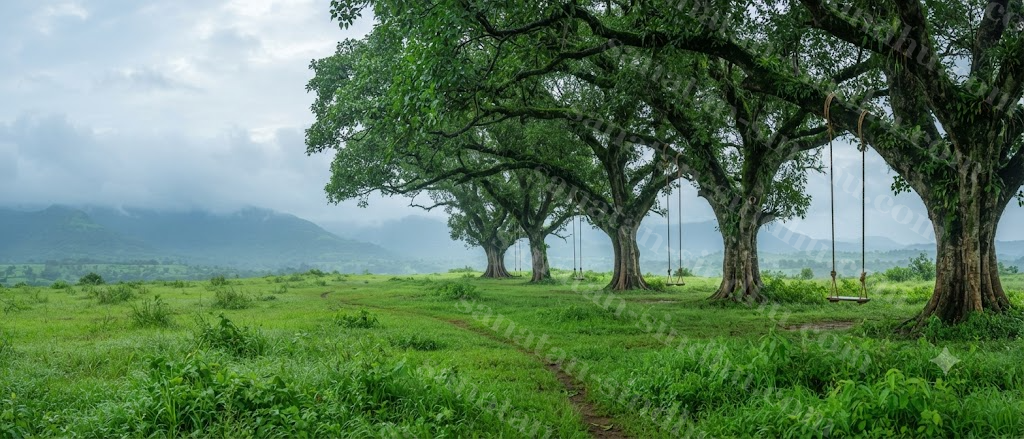
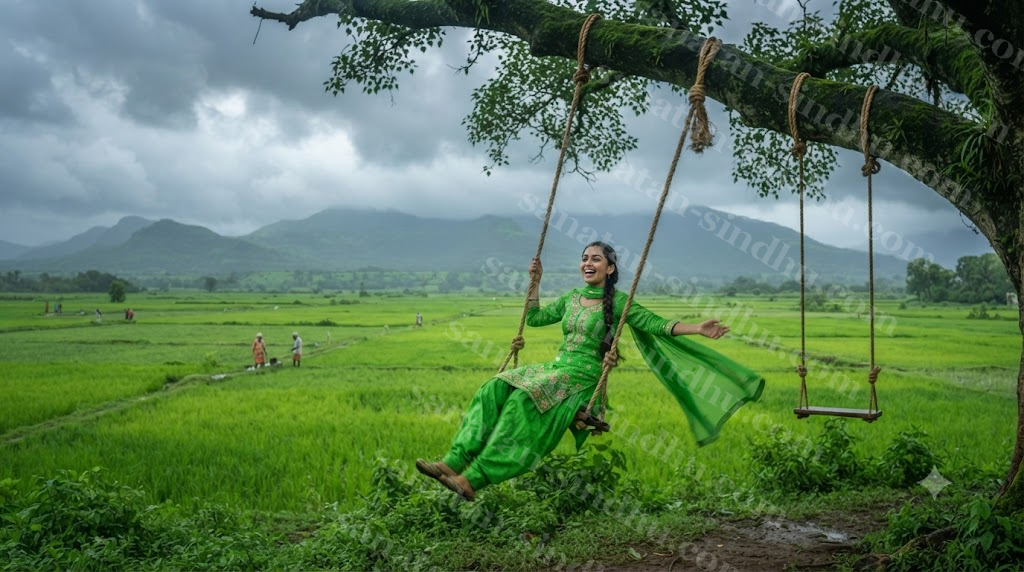
Hariyālī means greenery, and the festival is named for the monsoon itself: fields turned green, the first real relief from the hot season. Married and unmarried women alike dress in green, wear green bangles, apply mehndi, and — the festival's best-known image — hang rope swings (jhūlā) from trees and sing swing-songs together. The occasion is read as celebrating Pārvatī and Śiva's reunion and marriage, but this essay hasn't traced Hariyālī Tīj to a specific Purāṇic prescription the way Karva Chauth or Ekādaśī are named in named Purāṇas elsewhere in this series — it sits closer to the living, folk-and-festival tier this series has treated as its own primary stream since its first essay, not a lesser derivative of a textual original.
Kajarī Tīj — the old woman's Tīj
Also called Būṛhī Tīj — old-lady Tīj — Kajarī Tīj carries a different register entirely: agricultural, regional (strongest in Rajasthan, Bihar and eastern Uttar Pradesh), and built around a genre of folk songs, kajarī, sung specifically for the occasion. Where Hariyālī Tīj's mood is festive reunion, Kajarī songs dwell on virah — a wife's ache at a brief separation from her husband during a visit to her mother's house, sung by the women gathered for the observance rather than read from any text. This is folklore as this series has consistently defined it: a parallel, equally authentic stream of the same living tradition, not a fainter copy of something written down elsewhere.
Hartālikā Tīj — Pārvatī's own penance, re-enacted
Hartālikā Tīj stands apart from the other two on every axis: strictest observance (a full nirjala fast, without water, kept by married women for their husbands' well-being), clearest mythological grounding, and its own etymology worth spelling out. Harat (abduction, theft) plus ālikā (female friend) gives Hartālikā — "abducted by a friend" — naming the story directly: Pārvatī's father Himālaya had arranged her marriage to Viṣṇu, and her own friends, at her request, spirited her away into the forest before the wedding could take place, where she undertook fierce penance to win Śiva as her husband instead. It's worth noticing this is the second time this series has told a version of Pārvatī's own vow for Śiva — the Solah Somvār essay already named her sixteen-Monday fast for the same end. The two stories aren't identical, and this essay doesn't claim they are, but the pattern — a devotee's vrata re-enacting the goddess's own — repeats across this series for good reason: it's how the tradition explains why an ordinary woman's fast carries the weight it does.

Not every tradition agrees
All three Tīj observances are Śākta-and-Śaiva festivals inside Hindu practice specifically, and carry the same cross-tradition disagreements this series named in its first essay — the Sikh and Ārya Samāj objections, and Jainism's and Buddhism's rejection of Purāṇic authority outright. This essay doesn't repeat that ground fast by fast.
Return to What Is a Vrata? — the textual foundations of Hindu fasting for the fuller cross-tradition treatment, and for the rest of the fasting series as each piece is added.
Sources
- Mythological narrative. The Hartālikā Tīj / Pārvatī-penance story and its etymology, consulted via named secondary summaries and vrata-guide compilations rather than a critical edition citing a specific Purāṇic passage — the same limitation flagged elsewhere in this series.
- Folklore and regional documentation. Hariyālī Tīj's swing and green-bangle custom, and the Kajarī Tīj folk-song tradition and its Rajasthan/Bihar/eastern-UP regional strength, consulted via general festival-documentation sources rather than a single named ethnographic study.