
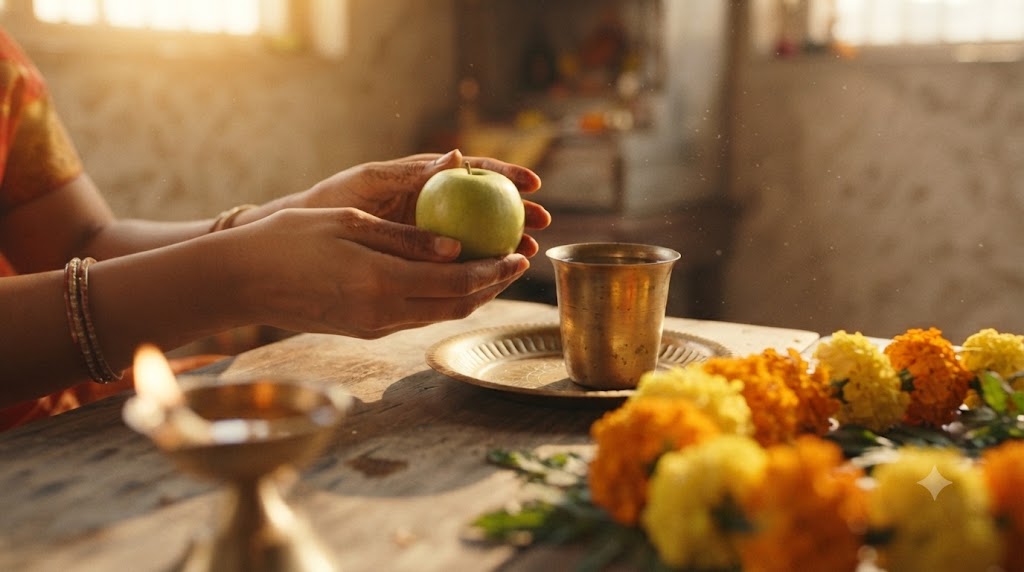
From cosmic law to personal vow
Vrata is older than fasting. In the Ṛgveda the word already appears often, but almost never to mean a fast — it means ordinance, the settled law a god upholds. Varuṇa is repeatedly named the guardian of vratāni, the cosmic and moral ordinances that keep ṛta — the order of things — from coming apart. A vrata, in this oldest layer of the language, is closer to a divine command than a dietary restriction.
The narrower sense — a personal vow that includes fasting — arrives later, in the Dharmaśāstra and Purāṇa literature, where vrata comes to mean a self-imposed observance undertaken for a specific end: purification, a boon, the discharge of a debt to a deity or an ancestor. The etymology is worth holding onto, because it reframes everything that follows in this series. A vrata was never primarily about the empty stomach. It is the instrument; aligning one's own will with a larger order is the point.
Upavāsa — to dwell near
The more specific word for fasting, upavāsa, carries its own reframe. Upa (near) plus vas (to dwell) gives, quite literally, to dwell near — traditionally read as dwelling near the deity, or near one's own better nature, by setting aside for a day the ordinary business of eating. It is a word about proximity before it is a word about restriction.
By the time of the Purāṇas, vratas had become one of the two major recognised paths of prāyaścitta — expiation — second only to tīrtha, pilgrimage, in how often the texts return to them. This is where the individual fasts in this series get their footing. The Skanda Purāṇa calls Śivarātri "the greatest of all vratas"; the Bhavishya Purāṇa treats a deity's appointed fast-day as a serious obligation, not a suggestion. Ekādaśī — the eleventh lunar day, twice a month, for Viṣṇu — is prescribed across the Padma, Skanda and Bhavishya Purāṇas alike. Alongside the Purāṇas sits a whole genre of nibandha — digest — literature written specifically to settle how a vrata should be performed: the Nirṇayasindhu and Dharmasindhu, which fix the tithi, the restrictions, the order of worship. This digest literature is where a tradition explains its own rules, rather than an outsider reconstructing them from the outside.
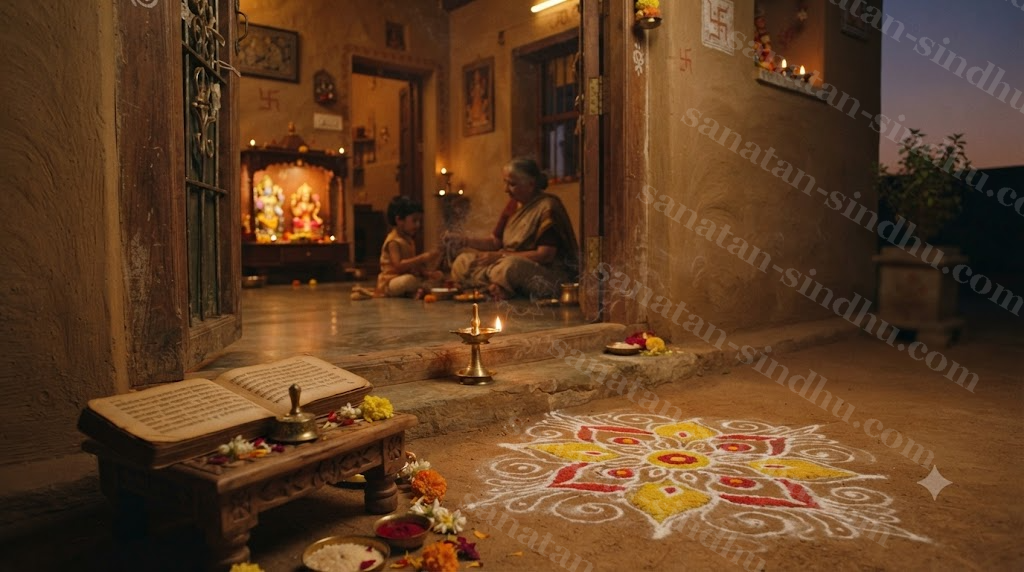
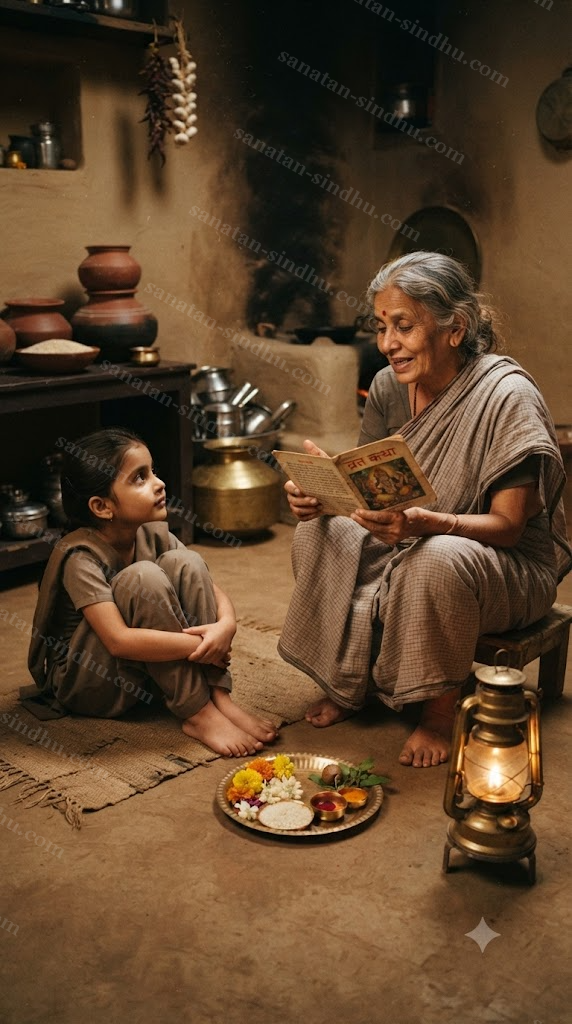
The kitchen and the kathā
Almost no one who keeps a Tuesday fast for Hanumān or a Friday fast for the household's prosperity has opened a Purāṇa to check. What they have heard — nearly always — is a vrata-kathā: a story, told aloud or printed cheaply and sold near the temple gate, explaining why the fast exists and what it promises. This is not a diluted version of the "real" textual basis. For most people who actually keep these fasts, the kathā is the text.
That matters for how this series is written. Some of the fasts ahead sit close to the Purāṇic tradition described above — Ekādaśī, Śivarātri, the Navarātri of the Devī Māhātmya. Others rest almost entirely on the kathā layer, with the classical textual layer thin or simply absent. The clearest case is the Friday fast for Santoshi Mātā — a goddess with only a faint medieval trace in the record, whose modern popularity is a documented twentieth-century story, told in the next essay in this series. That is not a flaw to smooth over. It is the actual shape of a living tradition, and this series will name it plainly, fast by fast, rather than quietly borrowing an ancient pedigree for every practice that carries one.
Not every tradition agrees
It would be dishonest to present fasting as a settled, shared Indic practice and move on. It isn't.
Sikhism rejects ritual fasting outright, and not as a minor variation — as doctrine. The Gurū Granth Sāhib states it plainly: "Fasting, daily rituals, and austere self-discipline — those who keep the practice of these are rewarded with less than a shell." The Sikh Rahit Maryādā goes further, naming faith in "fasting at different phases of the moon" among the superstitions a Khālsā Sikh should have no dealings with — and, specifically and by name, rejects the practice of a wife fasting for her husband's well-being, a category of vrata this series covers directly in the Karva Chauth essay. That is a doctrinal break, not a variant reading of the same idea, and it will stay visible here rather than being folded into a generic "Indic fasting traditions" umbrella.
Jainism sits at the opposite extreme: fasting is not peripheral to Jain practice but central to it, most visibly in the annual observance of Paryushana, where sustained fasting is a direct expression of the Jain path toward non-attachment.
Within Hindu tradition itself, the Ārya Samāj reform movement, through Dayānanda Sarasvatī's Satyārtha Prakāśa, is sharply critical of Purāṇic ritualism generally — including the specific apparatus this series documents fast by fast: a prescribed day, a prescribed deity, a kathā, a promised result. This does not mean Ārya Samāj rejects fasting as spiritual discipline; tapas, self-restraint, has independent Vedic standing. It means the particular form most of these fasts take is exactly the kind of post-Vedic accretion the reform movement built itself around questioning. That internal disagreement belongs in this essay too, not smoothed into false unity.
The fasts in this series
Each fast below gets its own essay, sourced the same way this one is — primary text where one exists, the vrata-kathā tradition named as its own tier where that is the actual basis, and genuine disagreement (gendered critique, cross-tradition rejection, uncertain dating) kept visible rather than edited out. Regional variants of the same underlying fast are kept together in one essay rather than scattered.
Published so far:
- Friday Fasts — From Vaibhav Lakshmi to Santoshi Mātā. The older Purāṇic-adjacent Friday vrata for Lakṣmī, set directly against the well-documented twentieth-century emergence of Santoshi Mātā.
- Nine Nights of the Goddess — Navrātri and the Navadurgā across India. The nine Navadurgā names from the Devī Kavacham, why autumn outgrew spring as the great public occasion, and how Bengal, Tamil Nadu, Gujarat and North India each keep the same nine nights differently.
- Vows for a Husband's Life — Karva Chauth and Its Regional Kin. Karaka Chaturthī's textual name, the Draupadī retelling, the sieve-and-moon ritual, its genuine regional kin across Andhra, Tamil Nadu and Karnataka, and the critique — including one tradition's outright rejection — this essay doesn't soften.
- A Mother's Fast for Her Son — Ahoi Aṣṭamī and Jīvitputrikā. Two autumn fasts for a child's long life that this essay argues are genuinely different vratas, not regional kin — a folk goddess and a hedgehog on one side, a Buddhist-inflected prince's sacrifice with a datable Sanskrit literary lineage on the other.
- Śiva's Day — Sāwan Somvār, Solah Somvār and Pradoṣ Vrat. Three separate Śaiva vows that share one weekday — a month of Mondays, a sixteen-week vow said to have won Pārvatī her husband, and a twice-monthly twilight fast kept apart from Monday entirely.
- The Great Night of Śiva — Mahā Śivarātri. The vrata the Skanda Purāṇa calls the greatest of all — a hunter who worshipped by accident, and three different Purāṇas giving three different reasons for the same night.
- The Eleventh Day — Ekādaśī and the Discipline of Twice a Month. The fast this series kept citing before finally giving it its own telling — a goddess born from Viṣṇu's own body, and a genuine day-of-observance disagreement inside Hindu practice itself.
- A Wife Argues with Death — Vaṭ Sāvitrī. The Sāvitrī story this series promised to return to from the Karva Chauth essay — a wife who wins her husband back from Yama not by endurance, but by argument.
- Hanumān's Days — the Tuesday and Saturday Vratas. One devotion, two weekly claims on it — Mars's courage on Tuesday, and a debt Śani Dev himself is said to owe Hanumān on Saturday.
- Tīj — Hariyālī, Kajarī and Hartālikā across the Monsoon. Three monsoon fasts for Pārvatī that get called by one name more often than they should — a swing-festival, a folk-song fast, and a nirjala vow re-enacting the goddess's own penance, kept genuinely apart.
- Chhaṭh — the Sun and Chhaṭhī Maiya. No priest, no mūrti, no temple — the fast that sits furthest from the Purāṇic textual tier and closest to lived, unmediated devotion.
- Sankaṣṭī Chaturthī — Gaṇeśa's Monthly Vow. Kept twelve or thirteen times a year, broken only after the moon is sighted — and the one Chaturthī this vrata isn't kept on is the one the tradition warns you not to look at the moon during.
- Akṣaya Tṛtīyā — the Day the Merit Never Fades. One of the rare days this tradition holds needs no muhūrta check at all — whatever is begun on it is auspicious by the day itself.
- Nāga Pañcamī — Making Peace with the Serpent. The one itihāsa origin story in this whole series that doesn't need the usual chapter-tracing caveat — it's the Mahābhārata's own frame narrative.
- Skanda Ṣaṣṭhī — Kārtikeya's Six Days. A six-day vow building to one battle — and, in the moment of victory, a transformation instead of a death.
This completed the series' originally planned twelve pieces, and has kept going since — sixteen essays now, the essay you're reading and fifteen more. It stays the map for the fasts and vows covered here, whatever gets added to this series next.
Sources
- Primary scripture. Ṛgveda, on vrata as cosmic ordinance (Varuṇa's vratāni); Bhaviṣya Purāṇa, Skanda Purāṇa and Padma Purāṇa on vrata prescriptions and Ekādaśī, consulted via named Purāṇa-summary compilations rather than a critical edition — flagged here as a real limitation on this section's precision, not smoothed over.
- Classical commentary. Nirṇayasindhu and Dharmasindhu, the nibandha (digest) literature that codifies vrata practice.
- Cross-tradition sources. Gurū Granth Sāhib and the Sikh Rahit Maryādā, on the explicit rejection of ritual fasting; Dayānanda Sarasvatī's Satyārtha Prakāśa, for the Ārya Samāj critique of Purāṇic ritualism.
- Folklore and oral tradition. The vrata-kathā genre broadly, treated here as its own primary tier rather than a lesser derivative of the Purāṇas.
A note on one claim above: this essay says fasting is central to Jain practice, most visibly during the annual Paryushana observance. That is accurate and well known — but unlike everything else on this page, we have not yet traced it to a specific Jain scripture or a named commentator, so we are not citing chapter and verse for it here. We have kept the point in because it is true and relevant to the comparison, but wanted to say plainly that this one reference is still waiting on a proper source before we would treat it as fully verified.