
Every month, one obstacle
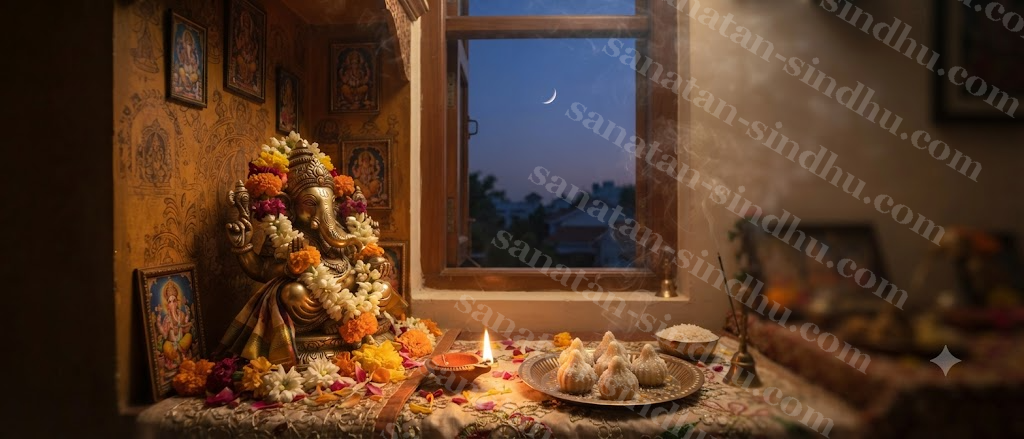
Where most fasts in this series mark a single date in the year, Sankaṣṭī Chaturthī repeats: the fourth day (chaturthī) of every lunar month's waning fortnight (Kṛṣṇa Pakṣa), twelve times a year, thirteen in a year carrying an Adhik Māsa. Sankaṣṭa means difficulty or crisis, and the vrata is kept for exactly that — removing whatever obstacle stands in front of the devotee that month, addressed to Gaṇeśa in his specific role as Vighnaharta, remover of obstacles. Devotees fast through the day and break the fast only after sighting the moon that night, alongside worship of Gaṇeśa.
Kṛṣṇa's advice to Yudhiṣṭhira
The vrata's best-known origin story places it inside the Pāṇḍavas' forest exile: worn down by continuous hardship, Yudhiṣṭhira asks Kṛṣṇa how to overcome misfortune that won't let up, and Kṛṣṇa's answer is to keep this fast for Gaṇeśa. It's worth naming the pattern this makes with an earlier essay in this series: Chhaṭh's own origin story, a few essays back, follows the identical shape — hardship during the Pāṇḍavas' exile, a vrata recommended in response, this time by the sage Dhaumya rather than Kṛṣṇa. Two different vratas, two different advisors, the same narrative frame — worth noticing rather than treating as coincidence, since it's exactly how this genre of origin story tends to work.
On the textual side, the Bhaviṣya Purāṇa and Narasiṃha Purāṇa are named in the vrata-guide literature this essay has consulted as naming all thirteen Sankaṣṭīs of an Adhik Māsa year, each tied to a distinct name of Gaṇeśa. A further claim circulates widely in popular sources — a specific origin around 700 BCE, a named sage teaching a named pupil — that this essay has not been able to trace to any primary text at all; it reads as a later embellishment dressed up as history, and is left out here rather than repeated as fact.
Why the moon — and the one Chaturthī where looking at it is a curse
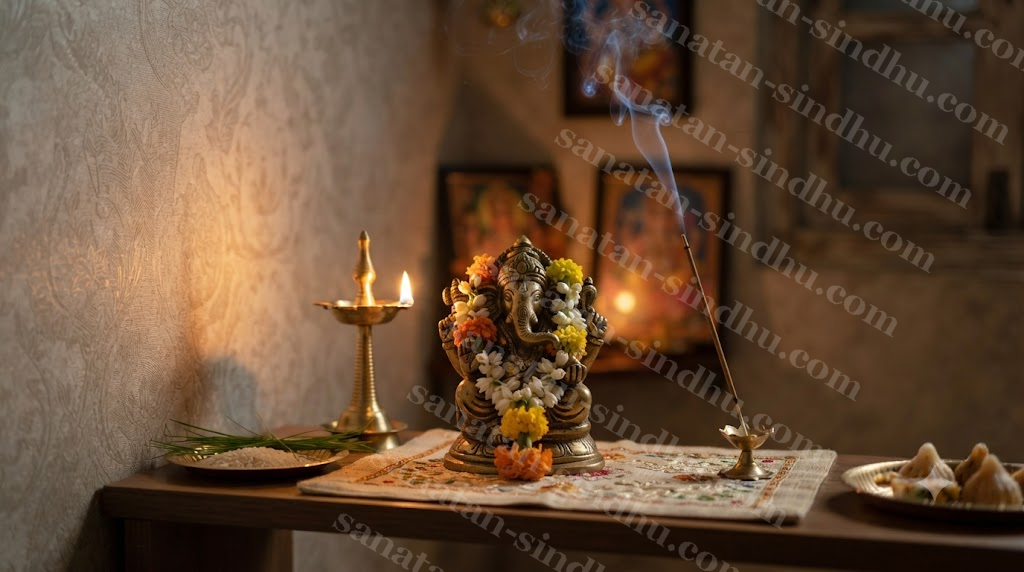
The Vedic tradition already has a line for why moon and mind are bound together: the Puruṣa Sūkta of the Ṛgveda (10.90.13) states candramā manaso jātaḥ — "the moon was born from the [cosmic being's] mind" — echoed later in the Bṛhadāraṇyaka Upaniṣad. Gaṇeśa himself is invoked as buddhi-pradāyaka, granter of intellect, so ending a Gaṇeśa fast by sighting the moon reads, in this frame, as bringing mind and its own cosmic origin into the same gesture.
That makes the vrata's one real complication worth stating plainly rather than smoothing over: on Bhādrapada Chaturthī — Gaṇeśa's own birthday, not a Sankaṣṭī at all but the year's other major Chaturthī — tradition holds that looking at the moon brings a curse of false accusation, traced to the Bhāgavata and Viṣṇu Purāṇas' Syamantaka-gem story, in which Kṛṣṇa himself is wrongly accused of theft after inadvertently glancing at the moon on that day. So the same object — the moon, on a Chaturthī — is something this series' monthly vrata requires a devotee to seek out, and something the calendar's other major Chaturthī warns against looking at entirely. Both traditions are real and widely kept; this essay names the tension rather than picking one as the "correct" reading of Chaturthī and the moon.
Aṅgārakī — when Sankaṣṭī falls on a Tuesday
When a Sankaṣṭī Chaturthī lands on a Tuesday, it takes a separate name — Aṅgārakī Chaturthī — and is held to be the most potent of the year's twelve or thirteen observances, combining Gaṇeśa's own day of the month with Maṅgal's association with courage and the removal of obstacles by force rather than only by grace, an association this series' Hanumān essay already traced for Tuesday specifically. Fasting strictness varies by household — some keep a full day without food, others simply avoid grain — but the moonrise-breaking of the fast is consistent across every version of the vrata this essay has found documented.
Not every tradition agrees
As with every fast in this series, the cross-tradition disagreements named at length in the first essay — the Sikh and Ārya Samāj objections to ritual observance tied to a fixed lunar calendar day, Jainism's and Buddhism's rejection of Purāṇic authority outright — apply here too, and this essay doesn't repeat that ground.
Return to What Is a Vrata? — the textual foundations of Hindu fasting for the fuller cross-tradition treatment, and for the rest of the fasting series as each piece is added.
Sources
- Primary scripture. Ṛgveda 10.90.13 (Puruṣa Sūkta), for candramā manaso jātaḥ, echoed in the Bṛhadāraṇyaka Upaniṣad; Bhāgavata and Viṣṇu Purāṇas, for the Syamantaka-gem / Chaturthī moon-curse story.
- Purāṇic vrata literature. Bhaviṣya Purāṇa and Narasiṃha Purāṇa, for the thirteen named Sankaṣṭīs of an Adhik Māsa year, consulted via named secondary summaries rather than critical editions — the same limitation flagged elsewhere in this series.
- Itihāsa tradition, not yet independently verified. The Kṛṣṇa–Yudhiṣṭhira origin story, widely repeated in popular vrata literature but not traced here to a specific Mahābhārata parva or chapter in a critical edition.
- A note on an unverified claim. A specific c. 700 BCE origin naming a particular sage and pupil circulates in popular sources; this essay could not trace it to any primary text and has left it out rather than repeat it as history.