Six days building to one battle
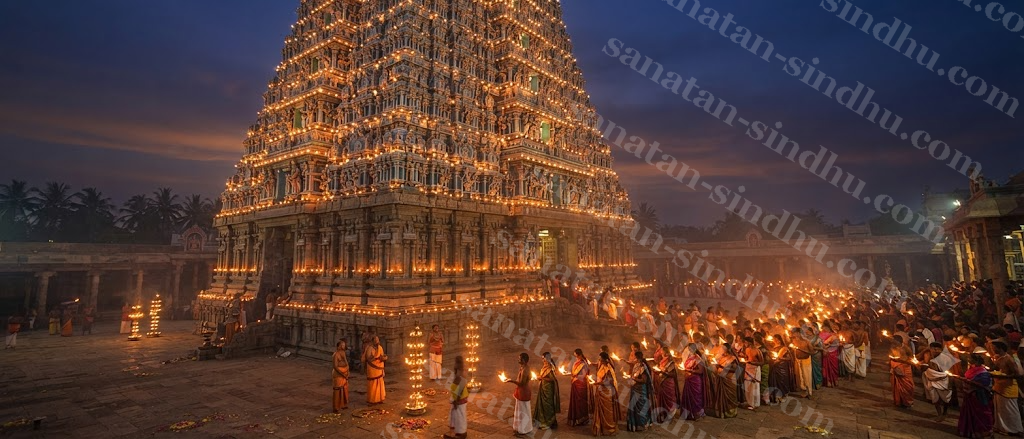
Skanda Ṣaṣṭhī is kept for Kārtikeya — Skanda, Murugan in Tamil devotion — across six days culminating on the ṣaṣṭhī (sixth tithi) of the bright fortnight of Aippasi (October–November), most intensively observed in Tamil Nadu. Devotees begin fasting five days before the culminating date, most keeping a single meal or a fully grain-free diet through the period, and the observance closes on Mahā Skanda Ṣaṣṭhī itself with a temple reenactment, Sūrasaṃhāram, of the story the whole six days lead up to.
The Vel, the peacock, and a redemption instead of a death
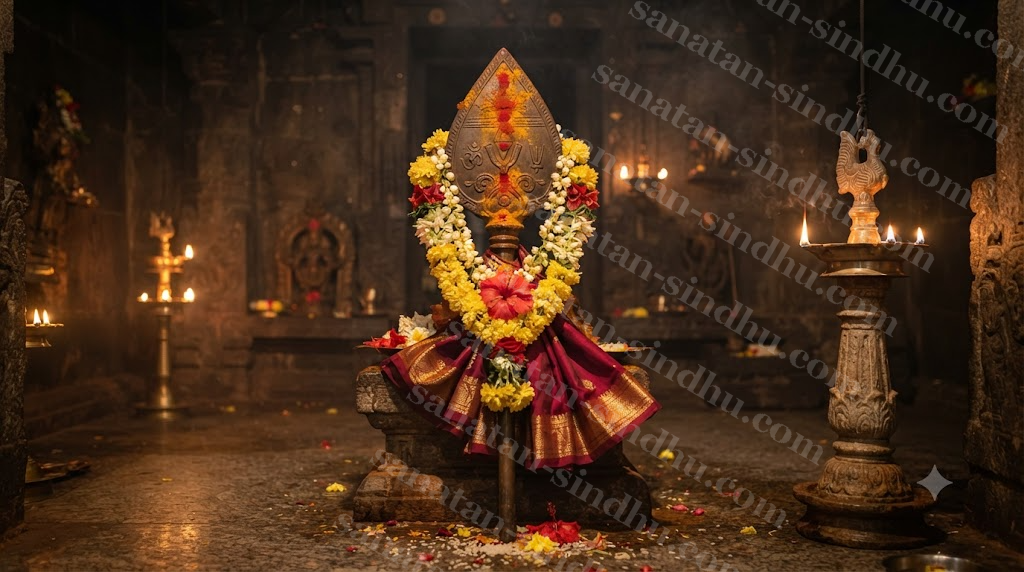
The story: the demon Sūrapadman, empowered by boons won through austerity, tyrannises the three worlds until Kārtikeya, born specifically to defeat him, meets him in battle and kills him with the Vel — his divine spear, gifted by Pārvatī and central to Murugan worship in its own right. The Sanskrit Skanda Purāṇa carries this story within Śaiva literature broadly, but the fuller, most widely known telling among Murugan's own devotees today is a separate, later Tamil text: the Kanda Purāṇam of Kacciyappa Civacāriyar, its own literary work rather than a direct translation of the Sanskrit original — the same kind of regional-language primary tradition this series has already named for the Devī Māhātmya's Bengali household form and Rāma's Akāl Bodhan.
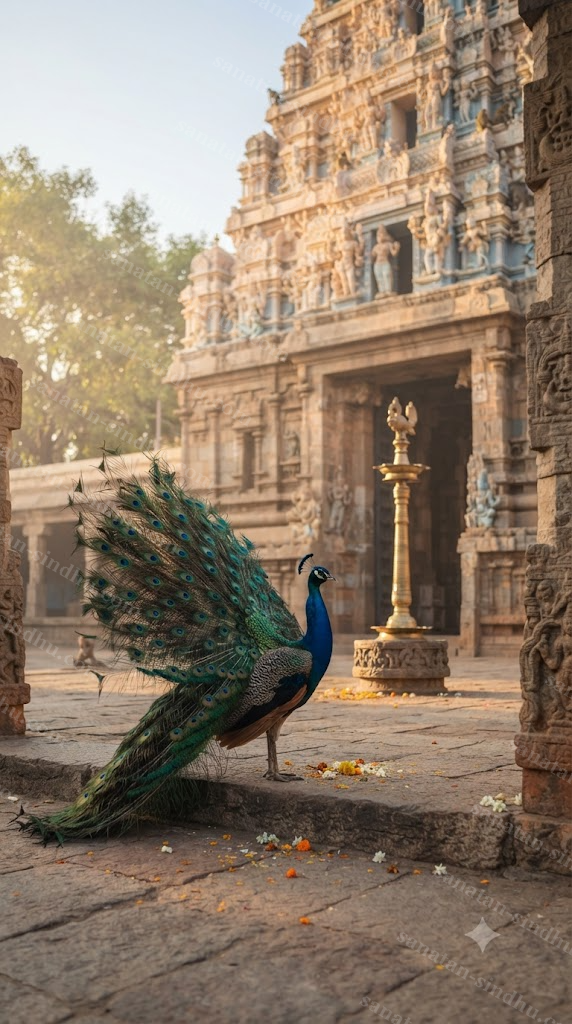
The detail devotees actually dwell on isn't the killing blow itself: at the point of death, Sūrapadman is split, and instead of simply dying is transformed — one half becoming a peacock, which Kārtikeya then takes as his mount (mayil), the other becoming a rooster, which he places on his banner. The tradition reads this as redemption rather than annihilation — the defeated demon made permanently part of the victorious god's own iconography, not erased from the story.
Kaumāram — a devotional tradition of its own
Murugan devotion is substantial enough to carry its own name within the broader Śaiva family: Kaumāram, a recognised devotional stream centred on Skanda/Kārtikeya as the primary deity rather than as Śiva and Pārvatī's son incidental to their own worship. Tamil Nadu's Arupadaiveedu — the six sacred abodes — anchors this tradition geographically, each site associated with a specific episode of Murugan's own story, Sūrasaṃhāram among them; Skanda Ṣaṣṭhī is kept with particular intensity at these six temples specifically, not only as a general household vrata.
Not every tradition agrees
As with every fast in this series, the cross-tradition disagreements named in the first essay — the Sikh and Ārya Samāj objections to fixed-calendar ritual observance, Jainism's and Buddhism's rejection of Purāṇic authority outright — apply here too and aren't repeated in full.
Return to What Is a Vrata? — the textual foundations of Hindu fasting for the fuller cross-tradition treatment, and for the rest of the fasting series as each piece is added.
Sources
- Primary scripture. Skanda Purāṇa, for the Sūrapadman narrative within Śaiva literature broadly, consulted via named secondary summaries rather than a critical edition.
- Regional literary tradition. Kanda Purāṇam of Kacciyappa Civacāriyar, the Tamil retelling most South Indian devotees actually know, named here as its own distinct literary work rather than a direct translation of the Sanskrit Skanda Purāṇa.
- Living ritual and pilgrimage practice. The six-day fasting structure, the Sūrasaṃhāram temple reenactment, and the Arupadaiveedu pilgrimage sites, consulted via general festival-documentation sources rather than a single named ethnographic study.