
Deities · Vaishnava / Dashavatara / Vaiṣṇava Avatāras
Balarāma
बलराम
Balarāma
Elder brother of Śrī Kṛṣṇa, born to Devakī and transplanted into the womb of Rohiṇī by Yogamāyā — earning the name Saṅkarṣaṇa ('he who was drawn away'). Two Vaiṣṇava streams describe him differently: the Mahābhārata / Viṣṇu Purāṇa stream identifies him as Ādi-Śeṣa, the cosmic serpent on whom Viṣṇu rests; the Gauḍīya Vaiṣṇava stream identifies him as the eighth Daśāvatāra and Kṛṣṇa's first plenary expansion. Wielding the plough (hala) and mace, he embodies the stabilising, agricultural, life-supporting energy that undergirds the age of Kṛṣṇa.
Quick facts
- Era
- Dvāpara Yuga
- vahana
- None (walks; occasional chariot)
- consort
- Goddess Revati
- Abode
- Dvārakā / Vṛndāvana
Attributes & symbols
Emblems most often depicted with Balarāma. Hover for gloss · click to search.
Epithets
Names and titles by which Balarāma is invoked across the śāstras.
Essays
Related essays
The Ten Descents — Daśāvatāra and the awakening of consciousness
Viṣṇu's ten avatāras read as a parallel to biological and social evolution — from Matsya the fish to Kalki the future rider — with the Vedāntic twist that the Lord *descends* (avatāra) so the soul (jīva) can *ascend* (pariṇāma).
Essay · Vaiṣṇava TheologyTwo traditions on the Eighth — Kṛṣṇa, Balarāma and the question of who the avatāra is
Two authoritative streams disagree about the eighth Daśāvatāra: one names Kṛṣṇa the avatāra with Balarāma as Ādi-Śeṣa, the other (Gauḍīya) names Kṛṣṇa Svayam Bhagavān with Balarāma as the eighth. Both are read side by side.
Related lore
All stories →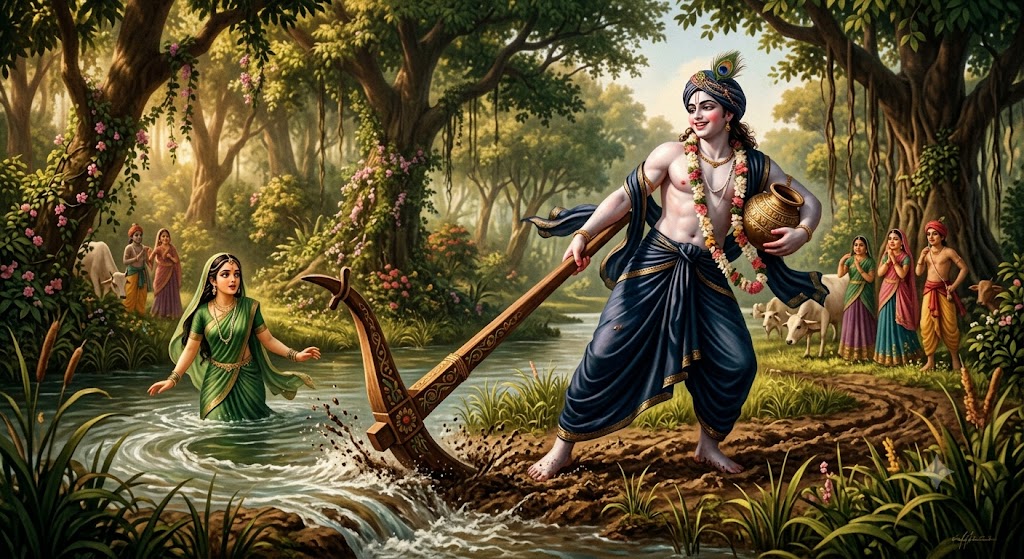
Bhagavata Purana Canto 10, Vishnu Purana Book 5
Balarāma Drags the Yamunā
A rare and startling episode in which the elder brother of Kṛṣṇa, in a mood of joyful intoxication in the forest of Vṛndāvana, commands the river Yamunā to come to him — and when she hesitates, plants his plough into her bank and drags her course itself to his feet.
3 chapters · read →
Bhagavata Purana (Canto 10, chapters 56-57), Vishnu Purana (Book 4, chapter 13)
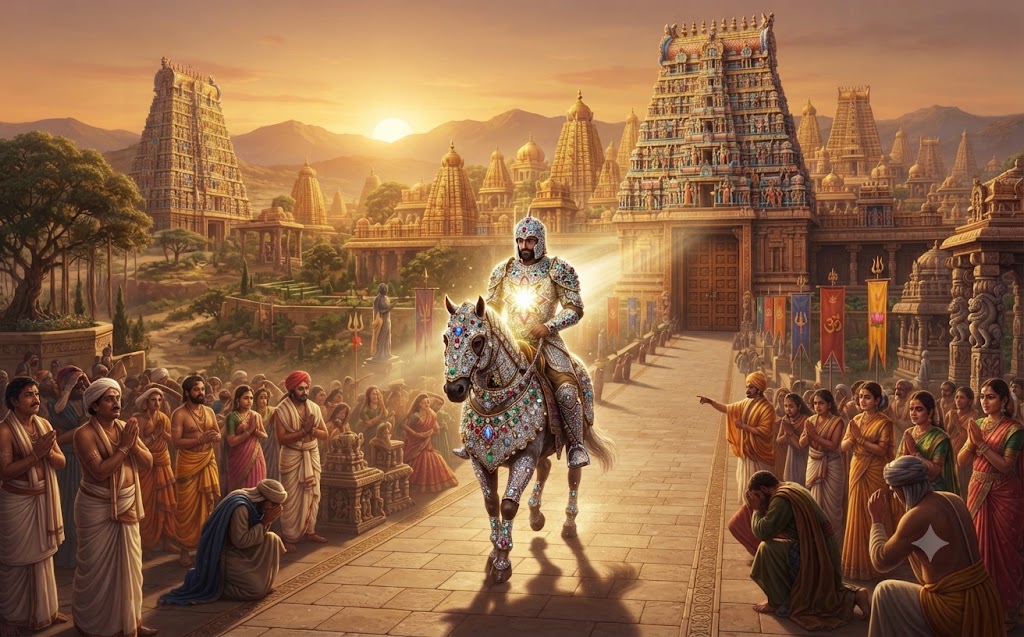
The Jewel That Accused a God
A gem that could not be worn by the unworthy, a disappearance that put Krishna himself under suspicion, and a twenty-eight-day battle in a mountain cave against a warrior far older than the Yadavas themselves — the story of the Syamantaka jewel is a detective story wearing the shape of a Puranic legend, ending in two marriages and a debt owed since the Ramayana.
5 chapters · read →