
Deities · Vedic Devas
Lord Surya
सूर्य
Sūrya
Sūrya is the visible presence of the divine — a deva who does not need to be inferred, only observed. He illumines the intellect (dhī) and is addressed in the Gāyatrī Mantra as Savitṛ, 'the divine stimulator'. In the Rāmāyaṇa, Sage Agastya teaches Rāma the Āditya Hṛdayam at the height of the war with Rāvaṇa. In later Purāṇic literature he is understood as Sūrya-Nārāyaṇa — the visible material form of Viṣṇu's preserving energy. Hanumān chose him as his own guru.
Quick facts
- Era
- Vedic / Sanatana
- vahana
- Golden chariot drawn by seven horses (the seven rays / seven Vedic meters), driven by Aruṇa
- consort
- Saṁjñā, Chāyā
- Abode
- The solar disc
Attributes & symbols
Emblems most often depicted with Lord Surya. Hover for gloss · click to search.
Epithets
Names and titles by which Lord Surya is invoked across the śāstras.
Essays
Related essays
Before the Trimūrti — the Brāhmaṇa Prelude
Before Brahmā, Viṣṇu and Śiva became a coordinated trio, the Brāhmaṇa texts already told stories of one god's injury, rivalry and repair during sacrifice — Viṣṇu as a dwarf and as the beheaded Makha, and Rudra's arrow against Prajāpati.
Essay · Vedic & Vedāntic CosmologyThe Devas and the Trimūrti — a stratified cosmology
Indra, Agni, Varuṇa, Sūrya, Vāyu and the other Vedic devas were once celestial sovereigns; in the Purāṇic era they appear subordinate to Brahmā, Viṣṇu, and Śiva. Not a replacement — a philosophical stratification through Nirguṇa Brahman, Iśvara, and the administrative devas.
Essay · Astronomy & ScriptureMeasuring the Heavens — the speed of light and the distance to the Sun
Sāyaṇa's 14th-century commentary on a Ṛgvedic hymn to Sūrya states a velocity for sunlight that lands within one percent of the modern value for c — and the 18th verse of the Hanumān Cālīsā carries an orbital distance to the Sun. Two cases of hard astronomy preserved inside devotional text.
Essay · PracticeRitual as Attention — what pradakṣiṇā, temple bells, and tilaka actually mean
Pradakṣiṇā, temple bells, kīrtana, touching an elder's feet, tilaka, and offering water to the Sun each carry real, textually grounded meaning — reverence, purification, remembrance, community. None of that needs a borrowed claim about brain hemispheres, acupressure, or ultraviolet light to be worth taking seriously.
Essay · Fasting & VratasChhaṭh — the Sun and Chhaṭhī Maiya
No priest, no mūrti, no temple — Chhaṭh is kept standing in a river. Four days, roughly thirty-six hours of it without food or water, closing this series with the fast that sits furthest from the Purāṇic textual tier and closest to lived, unmediated devotion.
Related lore
All stories →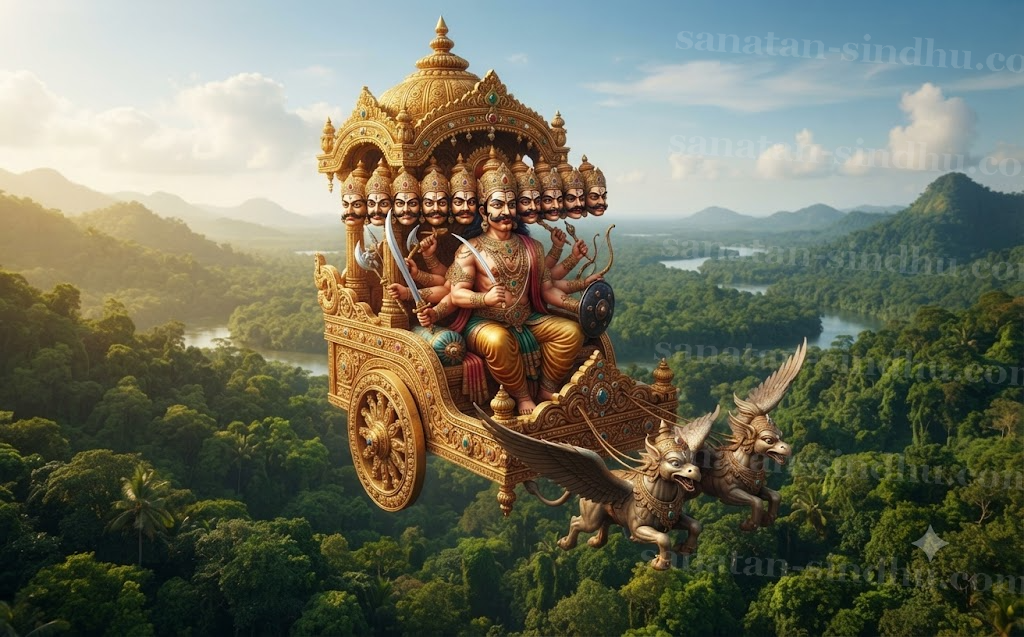
Vālmīki Rāmāyaṇa, Uttara Kāṇḍa (sarga 34), with Kiṣkindhā Kāṇḍa
The Vānara King Who Humbled Rāvaṇa
Before the war, Rāvaṇa went looking for one more king to defeat and found a monkey at his evening prayers. What happened next is the strangest humiliation in the Rāmāyaṇa — and it tells you who Vāli really was.
5 chapters · read →
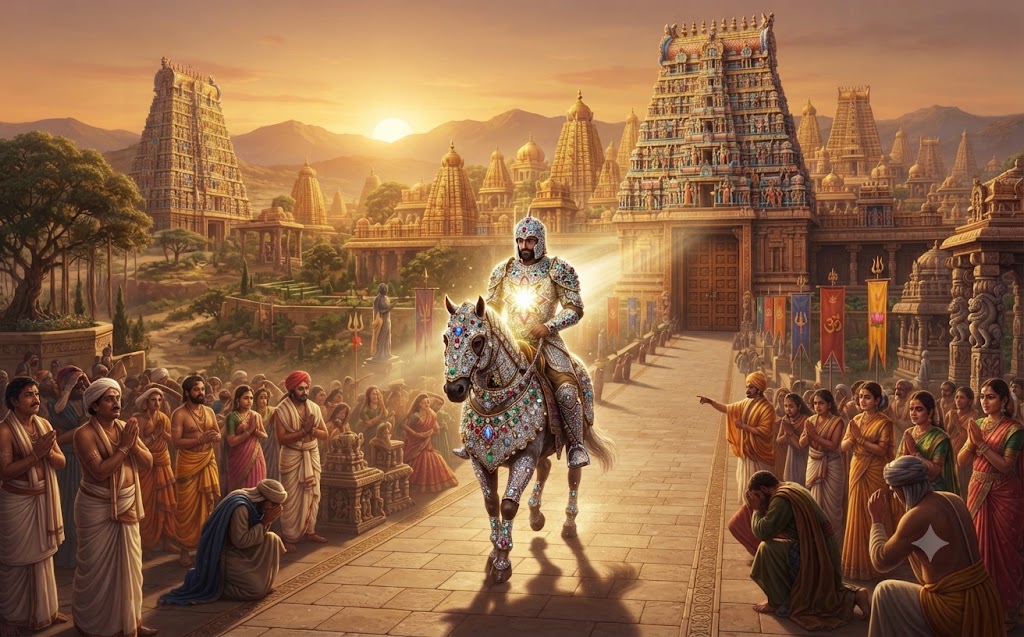
Bhagavata Purana (Canto 10, chapters 56-57), Vishnu Purana (Book 4, chapter 13)
The Jewel That Accused a God
A gem that could not be worn by the unworthy, a disappearance that put Krishna himself under suspicion, and a twenty-eight-day battle in a mountain cave against a warrior far older than the Yadavas themselves — the story of the Syamantaka jewel is a detective story wearing the shape of a Puranic legend, ending in two marriages and a debt owed since the Ramayana.
5 chapters · read →