Deities · Vaishnava / Dashavatara / Vaiṣṇava Avatāras
Lord Rama
राम
Ram
One of Lord Vishnu's incarnations (Dashavatara); the 7th avatar. Ram (or Rama) signifies supreme joy, peace, and divine bliss. Lord Ram's life serves as the ultimate moral compass for living a virtuous, honorable life.
Quick facts
- Era
- Treta Yuga / Sanatana
- vahana
- Chariot (ratha), Garuda (as Vishnu)
- consort
- Goddess Sita
- Abode
- Ayodhya
Attributes & symbols
Emblems most often depicted with Lord Rama. Hover for gloss · click to search.
Epithets
Names and titles by which Lord Rama is invoked across the śāstras.
Essays
Related essays
The Ten Descents — Daśāvatāra and the awakening of consciousness
Viṣṇu's ten avatāras read as a parallel to biological and social evolution — from Matsya the fish to Kalki the future rider — with the Vedāntic twist that the Lord *descends* (avatāra) so the soul (jīva) can *ascend* (pariṇāma).
Essay · Vaiṣṇava TheologyTwo traditions on the Eighth — Kṛṣṇa, Balarāma and the question of who the avatāra is
Two authoritative streams disagree about the eighth Daśāvatāra: one names Kṛṣṇa the avatāra with Balarāma as Ādi-Śeṣa, the other (Gauḍīya) names Kṛṣṇa Svayam Bhagavān with Balarāma as the eighth. Both are read side by side.
Essay · Astronomy & ScriptureMeasuring the Heavens — the speed of light and the distance to the Sun
Sāyaṇa's 14th-century commentary on a Ṛgvedic hymn to Sūrya states a velocity for sunlight that lands within one percent of the modern value for c — and the 18th verse of the Hanumān Cālīsā carries an orbital distance to the Sun. Two cases of hard astronomy preserved inside devotional text.
Essay · Greater India · AnchorAcross the Cosmic Milk — Sanātana Dharma in Southeast Asia
For centuries the Indian Ocean was a highway, not a barrier. This anchor essay traces how the epics, philosophy and vocabulary of Sanātana Dharma crossed to Śrīvijaya, Majapahit, Angkor and Ayutthaya — and opens onto three deeper studies: stone and shadow, the living flame of Bali, and the Sanskrit still spoken in ASEAN parliaments.
Essay · Greater India · Art & architectureShadows of the Rāmāyaṇa and stones of the gods
Wayang Kulit shadow theatre, the volcanic Trimūrti spires of Prambanan, and Angkor Wat's 49-metre Churning of the Ocean — how Southeast Asia carved and projected the epics into forms entirely its own.
Essay · Greater India · Living practiceThe living flame — Bali's Hinduism and the sacred dance
Why an island in the world's largest Muslim-majority nation remains over eighty per cent Hindu — the empty stone throne of Acintya, the daily canang sari, the instrument-free Kecak chant, and the hyperextended royal postures of Khon and Robam Preah Ream.
Essay · Greater India · LanguageSanskrit tides — the language and legends of Southeast Asia
How Lakṣmaṇa became a naval admiral, Hanumān a reconnaissance codeword and Garuḍa a national emblem — and how mantrī, pradhāna, bhāṣā and nagarī still run through the constitutions and everyday speech of Malaysia, Indonesia and Thailand.
Essay · Women in Dharma · Smṛti & epicReverence and Restriction — women across the Smṛti and epic age
The Manusmṛti calls women worthy of worship in one verse and unfit for independence in another. Draupadī and Sītā, in the epics beside it, answer that contradiction with an agency the law text doesn't quite anticipate.
Essay · Fasting & VratasNine Nights of the Goddess — Navrātri and the Navadurgā across India
Navrātri is a fast built around nine forms of one goddess, twice a year in public — Chaitra in spring, Śarad in autumn. Where the nine names of the Navadurgā actually come from, why autumn outgrew spring as the great public occasion, and how Bengal, Tamil Nadu, Gujarat and North India each keep the same nine nights differently.
Essay · Dharma & GovernanceRāma Rājya — the making of an ideal, and what it cost
The coronation at Ayodhyā, the twenty-odd verses that describe the reign, and how a short passage at the close of the Rāmāyaṇa became the standard by which Indian political thought has judged governments ever since — including the price the same book records.
Chālīsā & Bhajan
Recite with Lord Rama
Related lore
All stories →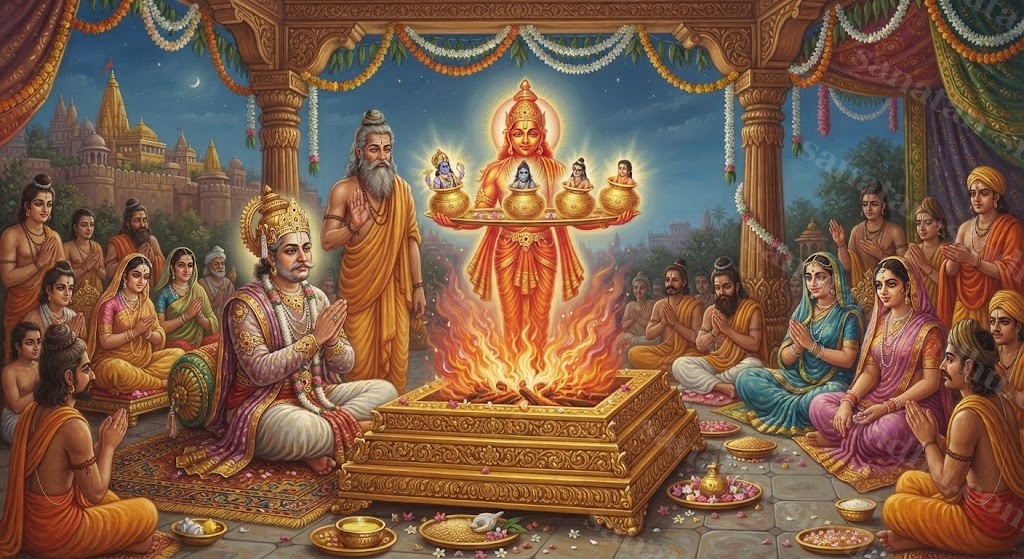
Valmiki Ramayana (Bala Kanda)
The Golden Payasam: Rama's Birth
King Dasharatha of Ayodhya, aging and without an heir, performs the great Putrakameshti yajna on his guru Vashishtha's counsel — and from its sacred fire comes a gift that gives him four sons, among them Vishnu himself, born as Rama.
3 chapters · read →
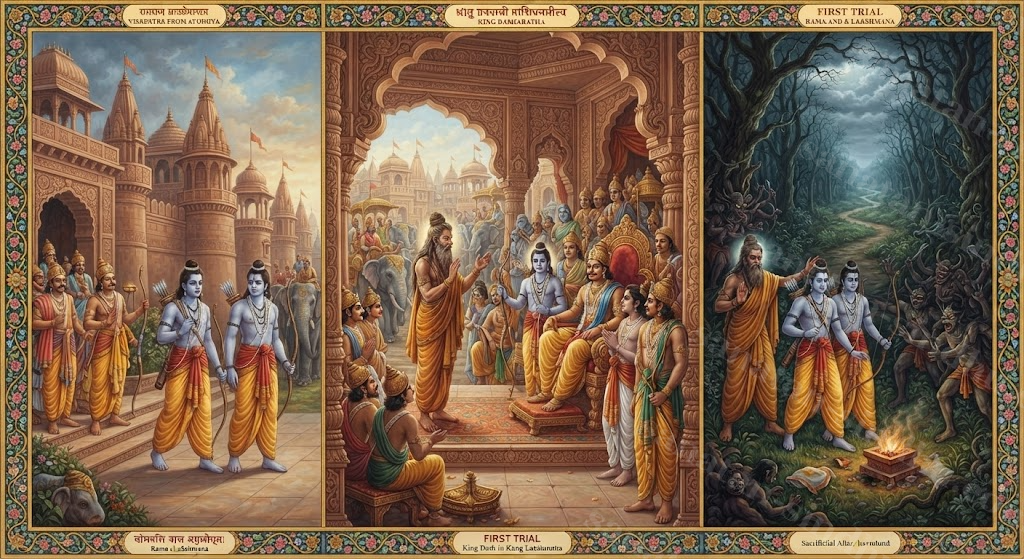
Valmiki Ramayana (Bala Kanda)
Guardians of the Sacred Fire: Vishwamitra's Yajna
The formidable sage Vishwamitra arrives at Ayodhya's court asking for young Rama's protection against demons haunting his forest sacrifice — and leads the two princes into the wilderness for their first trial far from home.
4 chapters · read →
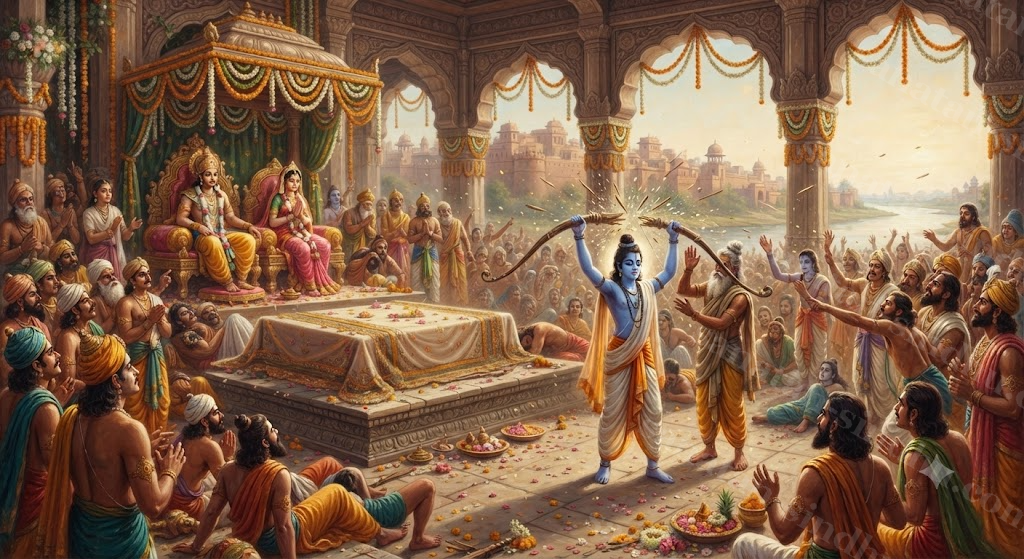
Valmiki Ramayana (Bala Kanda)
The Bow That Would Not Bend
At King Janaka's court in Mithila, princes and kings from across Bharata fail even to lift the massive bow of Shiva to win Sita's hand — until young Rama, guided by Vishwamitra, not only lifts it but breaks it in two.
3 chapters · read →
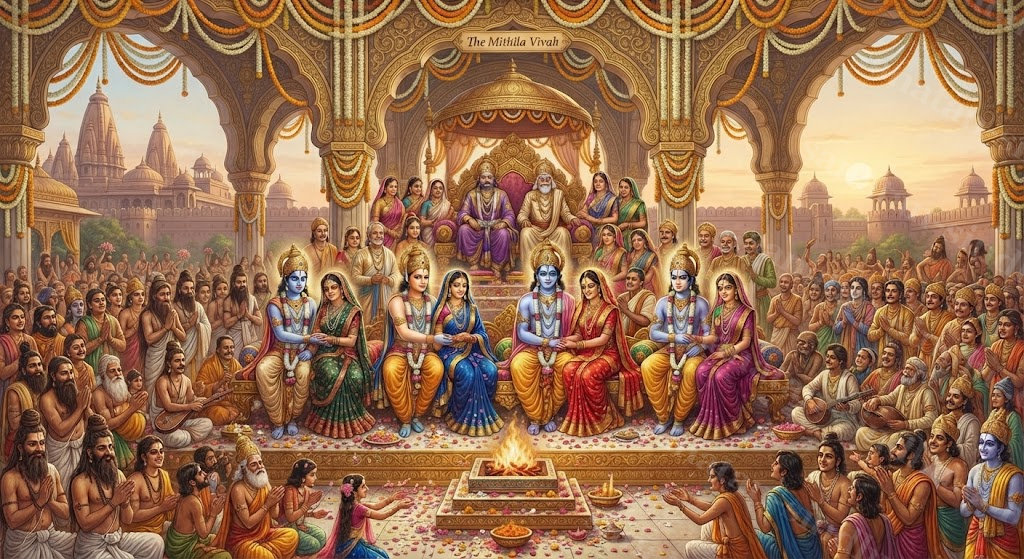
Valmiki Ramayana (Bala Kanda)
Four Princes, Four Brides
In a single, once-in-an-age ceremony at Mithila, the four sons of Dasharatha marry four daughters of the Videha royal house — Rama to Sita, Lakshmana to Urmila, Bharata to Mandavi, and Shatrughna to Shrutakirti — sealing two kingdoms into one family.
3 chapters · read →
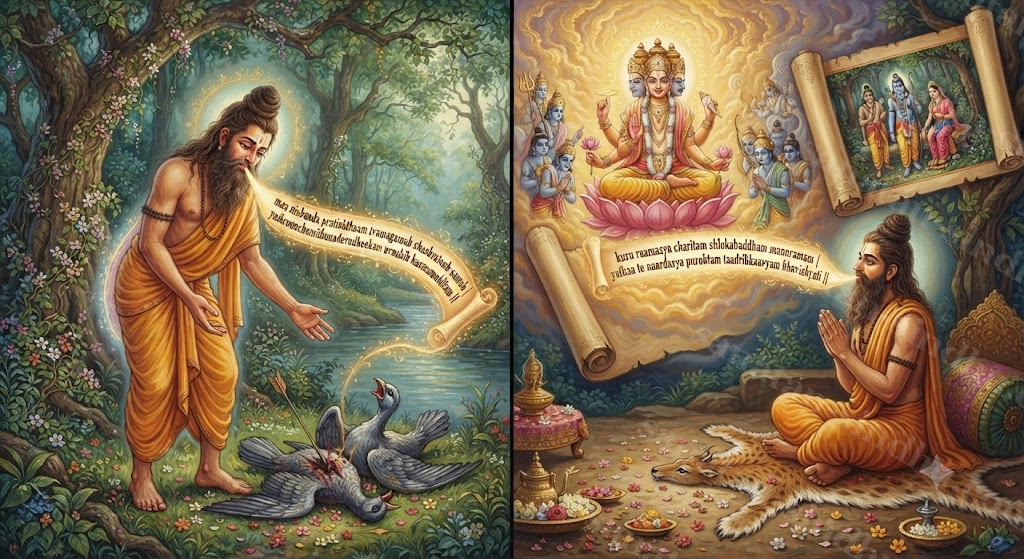
Valmiki Ramayana — the Adikavya tradition
The Grief That Became a Verse
Before Rama's story could be told, its very first verse had to be born — the tale of how the sage Valmiki, moved to spontaneous grief by the death of a bird, uttered the world's first shloka, and how the god Brahma then commissioned him to tell the whole Ramayana in that new meter.
3 chapters · read →
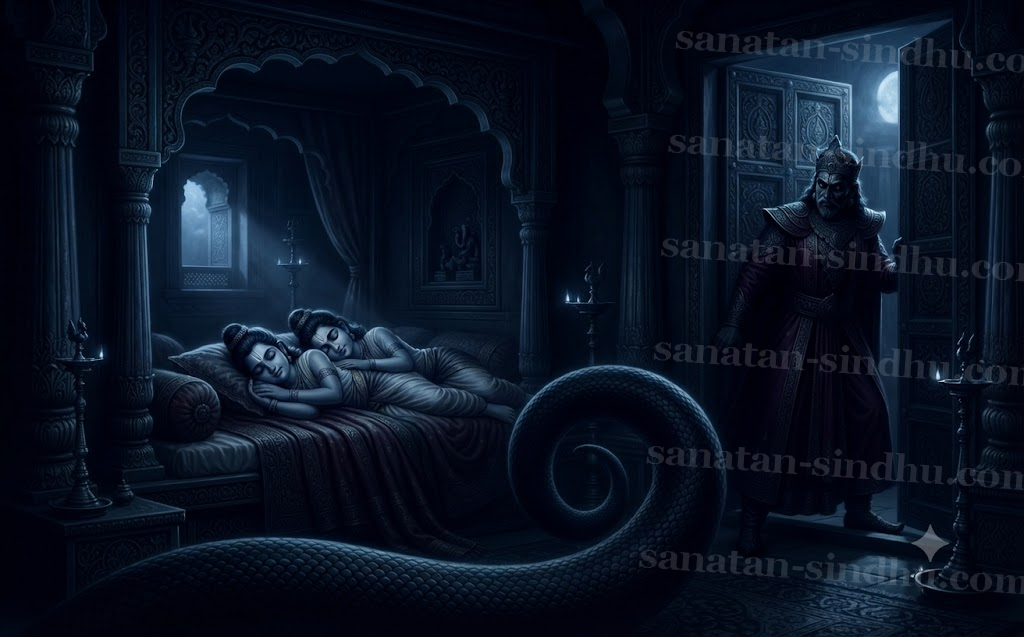
Krittivāsī Rāmāyaṇa (Bengali, c. 15th century); Adbhuta Rāmāyaṇa
The Fall of the Two Mahīrāvaṇas
Two demons, unrelated to each other, share one name across two different tellings of the Rama story: a Pātāla sorcerer felled by Hanumān's five-faced form, and Rāvaṇa's own hidden elder brother, defeated only when Sītā reveals the Goddess within her. Told here as the Bengali Krittivāsī tradition and the Adbhuta Rāmāyaṇa remember them — one after the other, not as one story.
4 chapters · read →
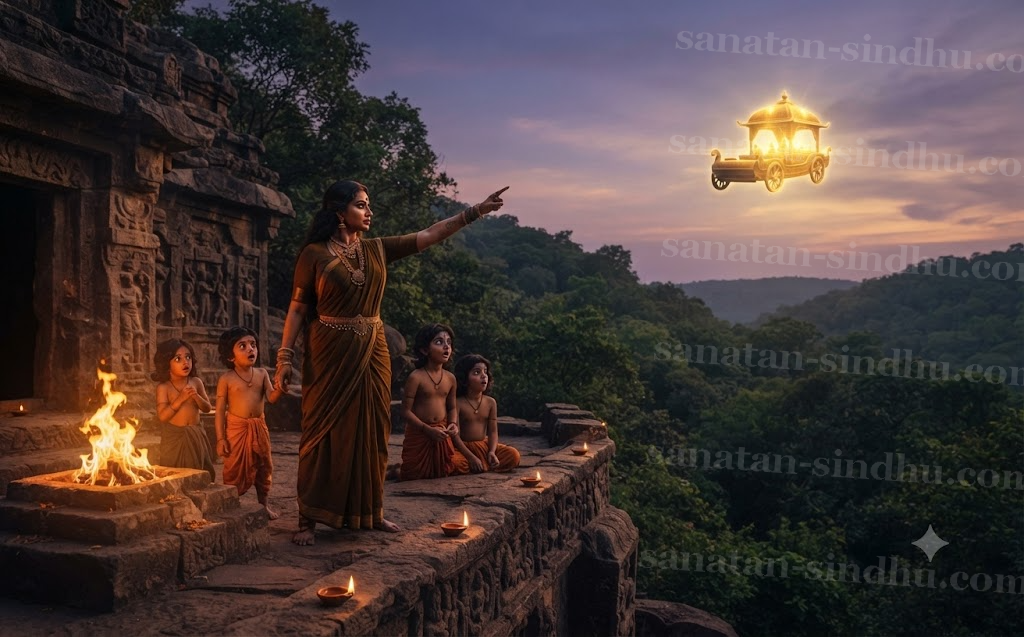
Vālmīki Rāmāyaṇa, Uttara Kāṇḍa (sargas 9–12), with the Padma and Kūrma Purāṇas
Ravana's Beginning
Four children of the same sage, the same forest, the same terrible discipline — and four boons that reveal what each of them actually wanted. The Rāmāyaṇa's own account of how its antagonist was made, and how one brother chose otherwise.
5 chapters · read →
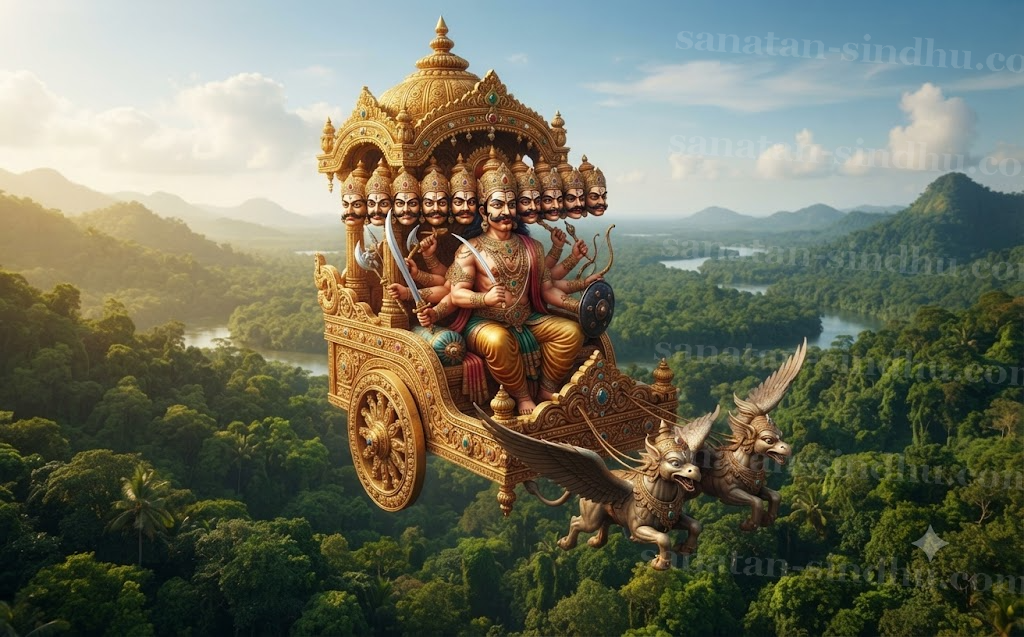
Vālmīki Rāmāyaṇa, Uttara Kāṇḍa (sarga 34), with Kiṣkindhā Kāṇḍa
The Vānara King Who Humbled Rāvaṇa
Before the war, Rāvaṇa went looking for one more king to defeat and found a monkey at his evening prayers. What happened next is the strangest humiliation in the Rāmāyaṇa — and it tells you who Vāli really was.
5 chapters · read →
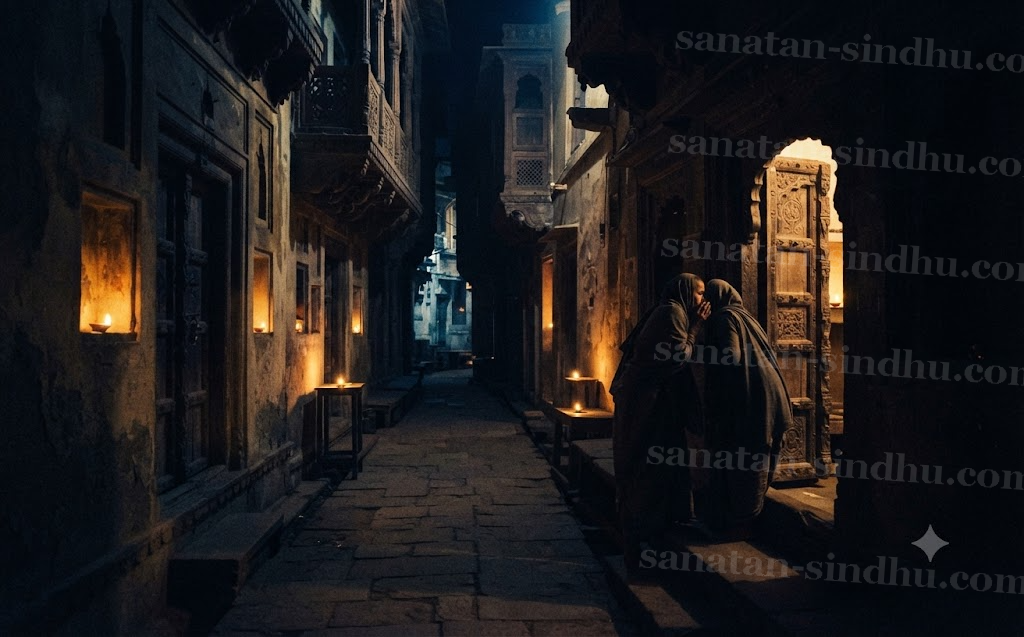
Vālmīki Rāmāyaṇa, Uttara Kāṇḍa (sargas 42–49, 88–97)
The Washerman's Doubt
A remark overheard in a lane at night, and a decision that the Rāmāyaṇa never justifies and never takes back. The epic's hardest chapter, told without smoothing the contradiction the text itself refuses to resolve.
5 chapters · read →