Deities · Vaishnava / Dashavatara / Vaiṣṇava Avatāras
Lord Krishna
कृष्ण
Kṛṣṇa
The eighth avatar of Vishnu and the speaker of the Bhagavad Gita. As the charioteer of Arjuna on Kurukshetra, he revealed the Vishwarupa — the infinite cosmic form that contains all of time, space, and creation.
Quick facts
- Era
- Dvapara Yuga
- vahana
- Garuda (as Vishnu)
- consort
- Rukmini, Satyabhama, Radha (eternal)
- Abode
- Goloka Vrindavan / Dwarka
Attributes & symbols
Emblems most often depicted with Lord Krishna. Hover for gloss · click to search.
Epithets
Names and titles by which Lord Krishna is invoked across the śāstras.
Essays
Related essays
The Ten Descents — Daśāvatāra and the awakening of consciousness
Viṣṇu's ten avatāras read as a parallel to biological and social evolution — from Matsya the fish to Kalki the future rider — with the Vedāntic twist that the Lord *descends* (avatāra) so the soul (jīva) can *ascend* (pariṇāma).
Essay · Vaiṣṇava TheologyTwo traditions on the Eighth — Kṛṣṇa, Balarāma and the question of who the avatāra is
Two authoritative streams disagree about the eighth Daśāvatāra: one names Kṛṣṇa the avatāra with Balarāma as Ādi-Śeṣa, the other (Gauḍīya) names Kṛṣṇa Svayam Bhagavān with Balarāma as the eighth. Both are read side by side.
Essay · Bhagavad Gītā 2.47–2.51Karma Yoga — the discipline of acting without craving the fruit
A reading of niṣkāma karma from the Gītā's most quoted verse outward: why the fruit is withdrawn but the act is not, how samatva (evenness) turns work into yoga, what 'skill in action' actually means, and how the three Vedānta schools read the agency that remains.
Essay · Gītā 4.13Guṇa, not birth — the architecture of society in Gītā 4.13
The most fiercely argued verse in the Gītā. Does cāturvarṇya describe a hereditary caste order or a psychological typology of qualities and work? A reading of the Sanskrit, Śaṅkara's Advaitic gloss, later reformist readings of the verse, and the counter-verse in chapter nine.
Essay · Gītā 18.66Sarva-dharmān parityajya — the final instruction of the Gītā
The Carama Śloka, the verse the whole Vaiṣṇava world treats as the last word. What Kṛṣṇa asks Arjuna to abandon, why Rāmānuja reads it as the surrender of self-reliance rather than of duty, and how the Gauḍīya tradition hears in 'mā śucaḥ' an embrace rather than a command.
Essay · Gītā 11 · Viśvarūpa DarśanaKālo 'smi — the Universal Form and the terror of the eleventh chapter
Arjuna asks to see the whole, and is given the divine eye. What he sees is not comfort — it is fire, infinite mouths, and Time announcing itself as the devourer of worlds. A reading of Viśvarūpa Darśana Yoga, Kāla as the answer to the problem of destruction, and Madhva's use of the vision.
Essay · Gītā 2 · Sāṅkhya YogaThe seed chapter — Sāṅkhya Yoga as the whole Gītā in miniature
The ācāryas call chapter two the sūtra of the entire Gītā: if the rest were lost, the architecture of liberation would survive here. Arjuna's collapse, the refutation of Cārvāka materialism, the immortal Ātman, and the portrait of the sthitaprajña that the Buddhist and Jain traditions would recognise instantly.
Essay · Gītā 12 · Bhakti YogaWith form or without — the devotional core of Gītā 12
The shortest chapter in the Gītā asks the oldest question in Indian theology: is it better to worship the unmanifest Absolute or the personal Lord? Kṛṣṇa's answer, Rāmānuja's reading of klesha, the Sikh synthesis of formless-yet-beloved, and the marks by which a devotee is actually recognised.
Essay · Gītā 18 · Mokṣa Sannyāsa YogaDo as you wish — renunciation, the guṇas and free will in Gītā 18
The longest chapter closes the argument. Kṛṣṇa cuts between ritualists and world-fleeing ascetics by separating sannyāsa from tyāga, sorts action, knowledge and even food by the three guṇas, and then — having delivered the most secret knowledge — leaves the decision entirely to Arjuna.
Essay · Women in Dharma · Smṛti & epicReverence and Restriction — women across the Smṛti and epic age
The Manusmṛti calls women worthy of worship in one verse and unfit for independence in another. Draupadī and Sītā, in the epics beside it, answer that contradiction with an agency the law text doesn't quite anticipate.
Essay · Women in Dharma · Bhakti & TantraThe Goddess and the Poet-Saint — women in Bhakti and Tantra
Tantra made the Absolute female. The Bhakti poets made devotion louder than marriage, caste, and clothing. Āṇṭāḷ, Akka Mahādēvi, Lalleśwarī and Mīrābāī are what that looked like in four different languages.
Essay · PracticeRitual as Attention — what pradakṣiṇā, temple bells, and tilaka actually mean
Pradakṣiṇā, temple bells, kīrtana, touching an elder's feet, tilaka, and offering water to the Sun each carry real, textually grounded meaning — reverence, purification, remembrance, community. None of that needs a borrowed claim about brain hemispheres, acupressure, or ultraviolet light to be worth taking seriously.
Essay · Fasting & VratasVows for a Husband's Life — Karva Chauth and Its Regional Kin
A wife's day-long, waterless fast for her husband's life, broken by moonlight seen through a sieve — under its North Indian name and under Andhra's Atla Tāddē, Tamil Nadu's Karaḍaiyān Nōṇbu and Karnataka's Bhīmana Amāvāsyē. Its textual name, its retelling in the Mahābhārata tradition, its actual ritual mechanics, and a critique — including one tradition's outright rejection of the whole category — that this essay doesn't soften.
Related lore
All stories →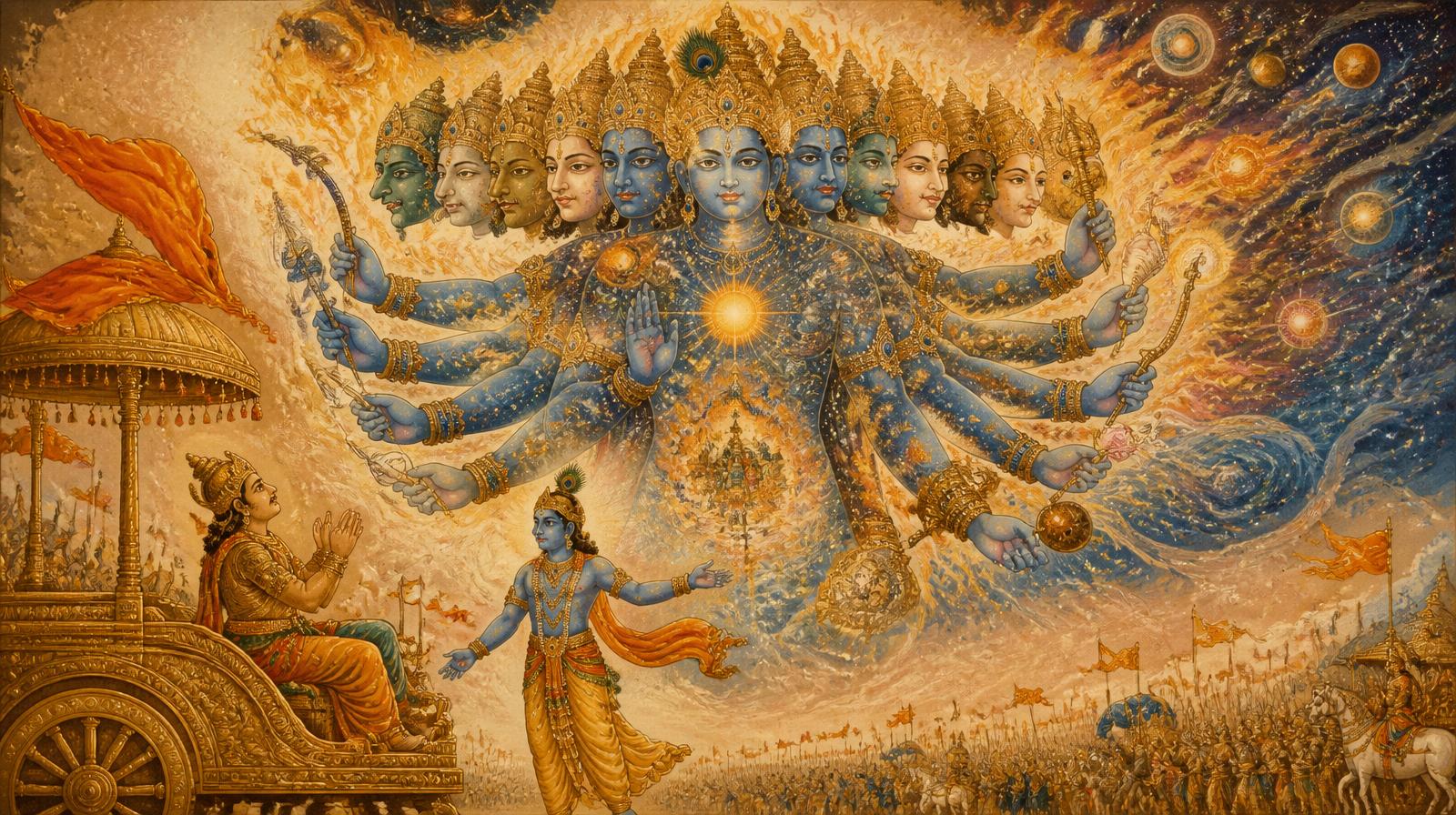
Bhagavad Gita, Mahabharata
The Revelation of the Vishwarupa: Universal Form of Krishna
On the battlefield of Kurukshetra, Lord Krishna resolves the moral crisis of the warrior prince Arjuna by revealing his awe-inspiring, infinite cosmic form that encapsulates all of time, space, and creation.
3 chapters · read →
Linga Purana (Chapter 24), Vayu Purana (Chapter 23), Kurma Purana
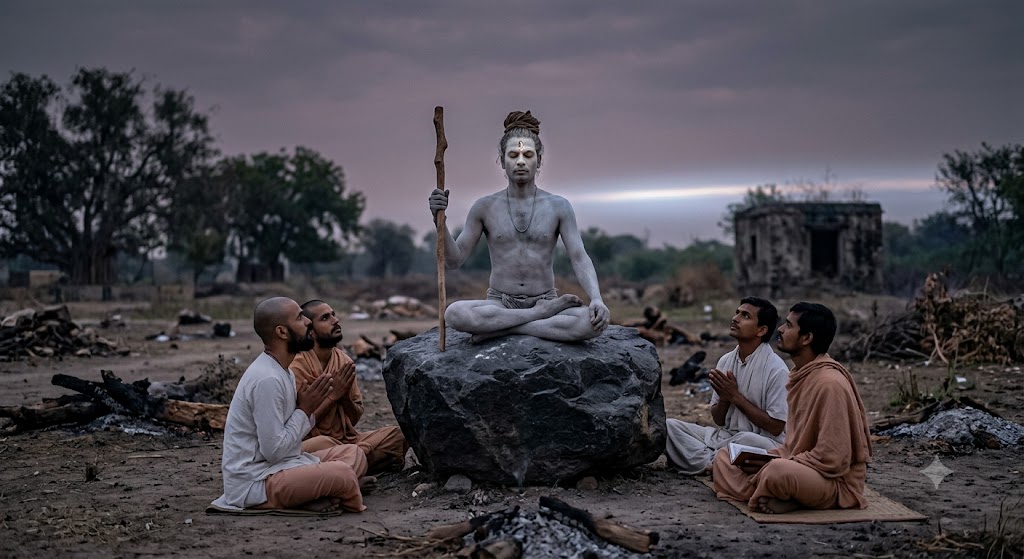
The Master of Yoga: Lakulisha Avatar
Manifesting during the 28th Dvapara Yuga along the banks of the Narmada River, Lord Shiva as Lakulisha revives the ancient yogic sciences, establishing an unbroken lineage of teachers verified by modern archaeological records.
3 chapters · read →
Skanda Purana, Dvapara Upakhyan
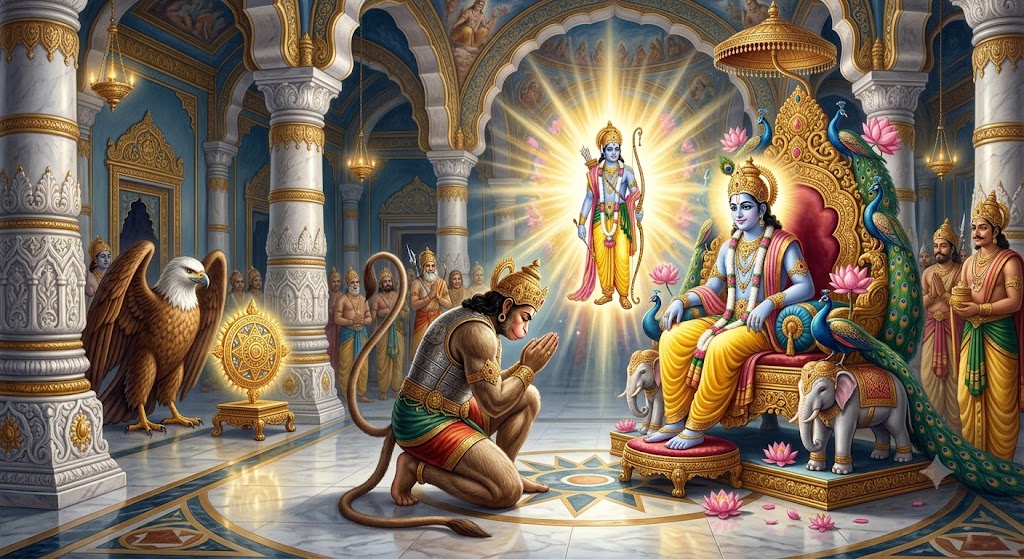
The Day Dwarka Learned Humility
Lord Krishna utilizes the pure, unshakeable devotion of the immortal Hanuman to gently correct the subtle spiritual pride residing in his queen Satyabhama, his mount Garuda, and his cosmic weapon Sudarshana Chakra.
3 chapters · read →
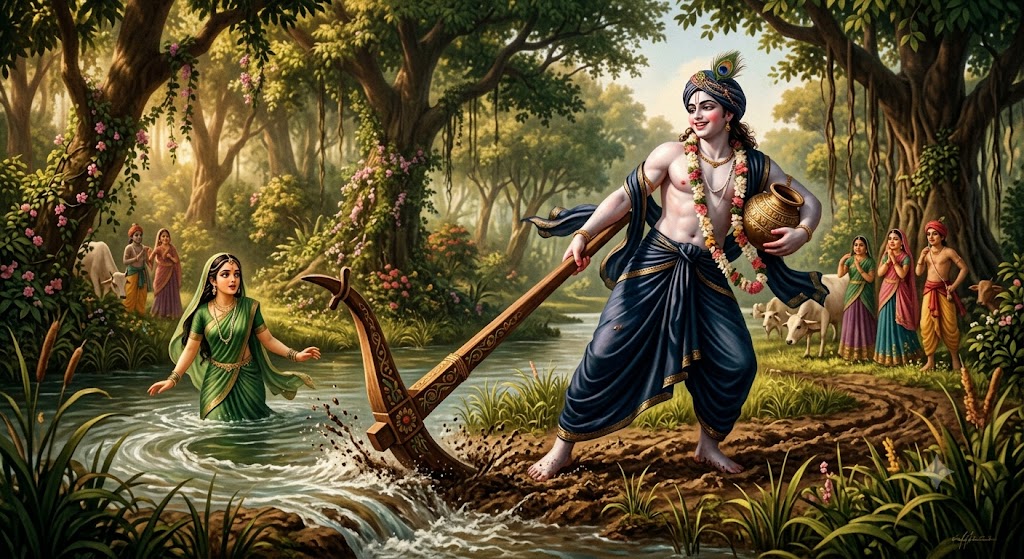
Bhagavata Purana Canto 10, Vishnu Purana Book 5
Balarāma Drags the Yamunā
A rare and startling episode in which the elder brother of Kṛṣṇa, in a mood of joyful intoxication in the forest of Vṛndāvana, commands the river Yamunā to come to him — and when she hesitates, plants his plough into her bank and drags her course itself to his feet.
3 chapters · read →
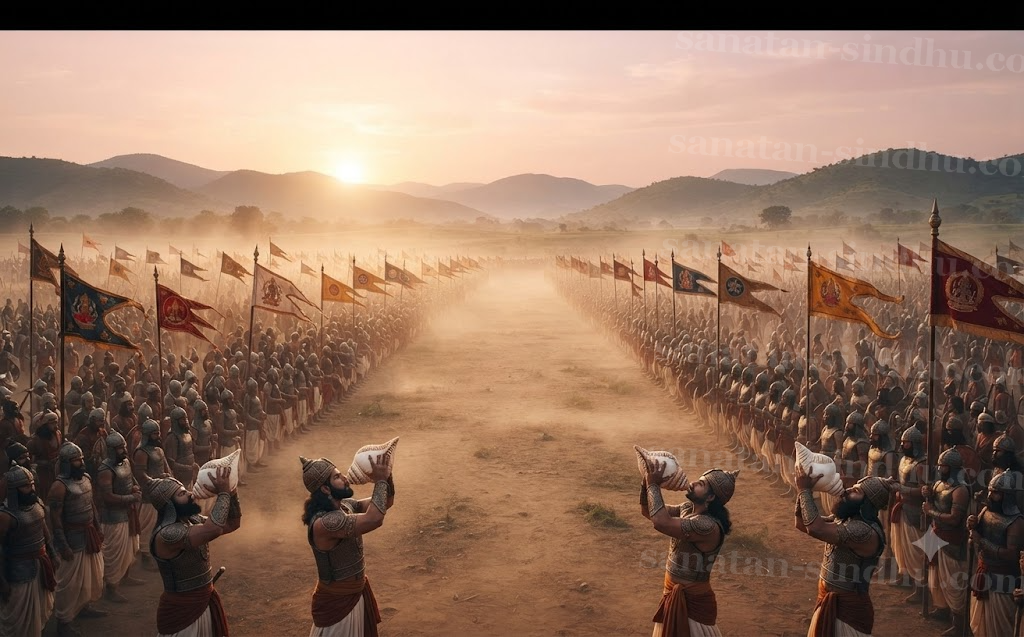
Bhagavad Gītā, Chapter 1 (Arjuna Viṣāda Yoga), Mahābhārata, Bhīṣma Parva
The Bow That Slipped From His Hand
Before a single word of the Gītā's teaching is spoken, its greatest archer sits down in his chariot and refuses to fight. This is the story of that hour — the conches, the survey of the field, the shaking hands, and the sentence that begins everything: 'I will not fight.'
5 chapters · read →
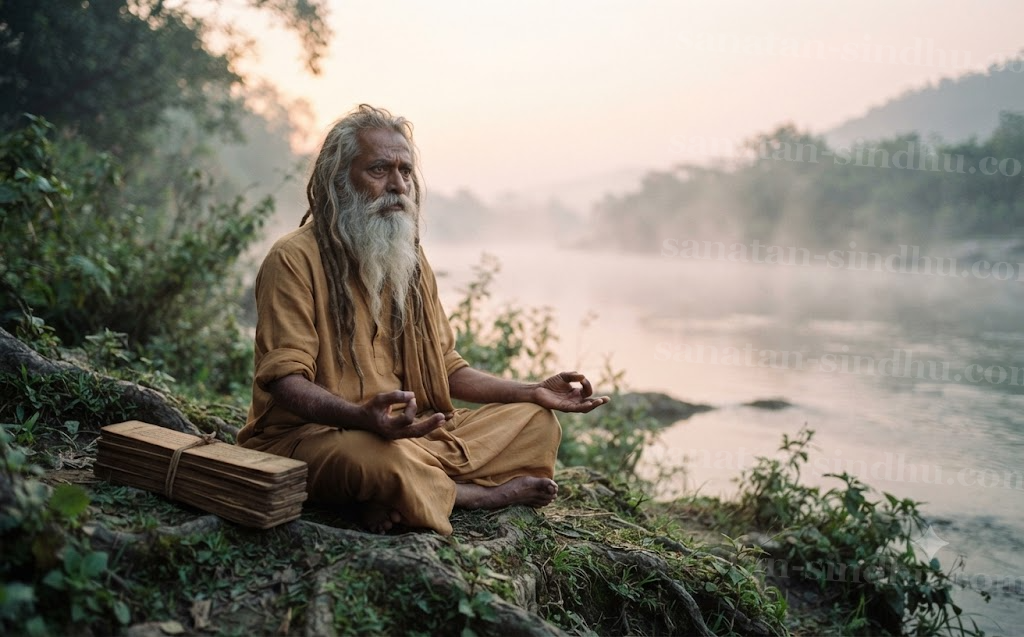
Bhāgavata Purāṇa, Canto 1, Chapters 4–7 (notably SB 1.5.11)
The Sorrow of the Man Who Wrote Everything
Vyāsa had divided the Vedas, composed the Mahābhārata and written the Purāṇas — and still sat by the Sarasvatī feeling that something essential had been left out. The sage Nārada arrives and tells him exactly what. The Bhāgavata Purāṇa is the book written in answer.
5 chapters · read →
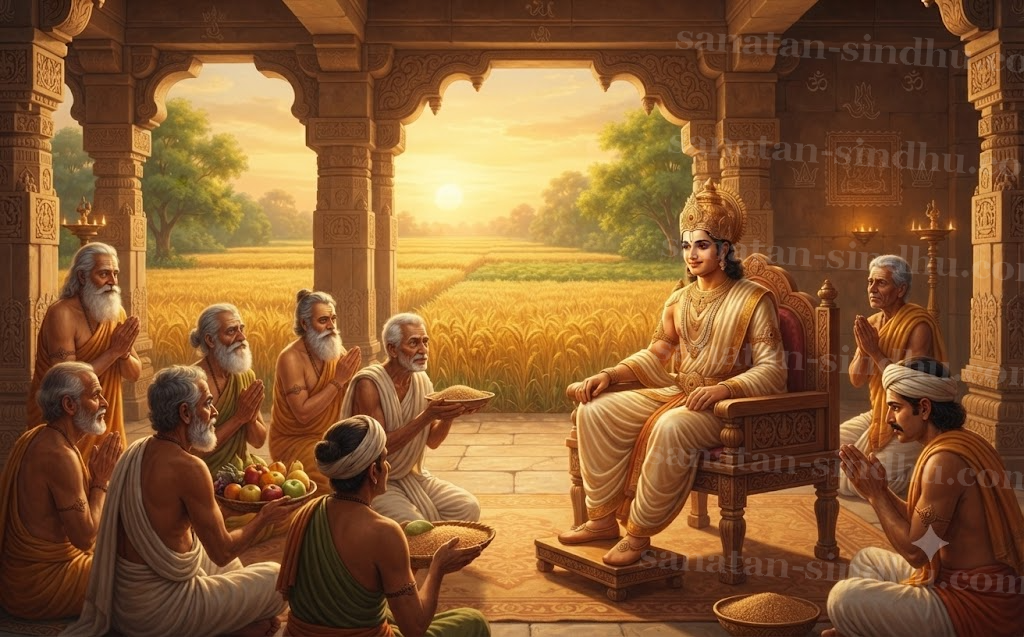
Bhāgavata Purāṇa, Canto 1, Chapters 16–19
Seven Days to Live
A good emperor, a thirsty afternoon, a meditating sage who does not answer, and a dead snake placed on his shoulders in a moment of irritation. The curse that follows gives Parīkṣit seven days — and gives the world the Bhāgavata Purāṇa.
5 chapters · read →
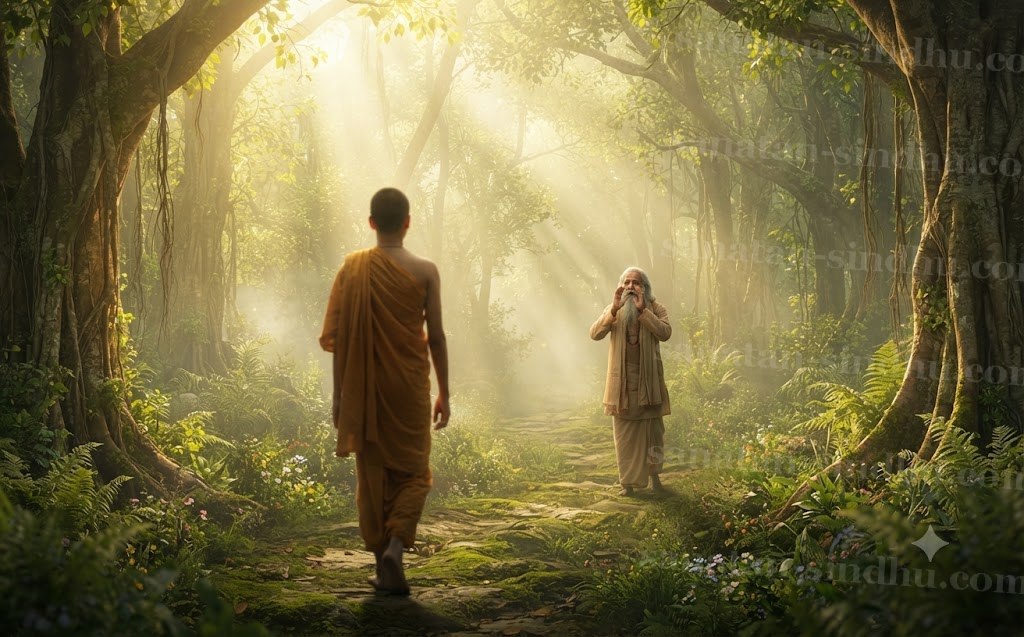
Bhāgavata Purāṇa, Canto 1, Chapter 19 (notably SB 1.19.25) and Canto 2
The Boy Who Would Not Stay
Vyāsa's son Śuka walked out of the house at birth and never looked back at the world. Yet it is this avadhūta — indifferent to clothes, food, praise and blame — who sits down beside a dying king and speaks the Bhāgavata Purāṇa for seven days.
5 chapters · read →
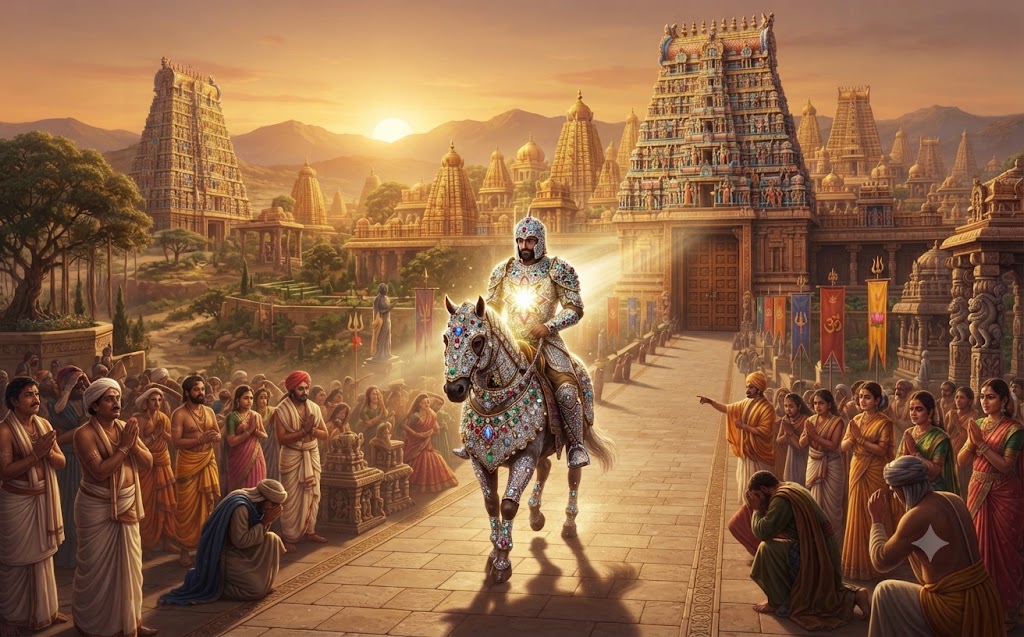
Bhagavata Purana (Canto 10, chapters 56-57), Vishnu Purana (Book 4, chapter 13)
The Jewel That Accused a God
A gem that could not be worn by the unworthy, a disappearance that put Krishna himself under suspicion, and a twenty-eight-day battle in a mountain cave against a warrior far older than the Yadavas themselves — the story of the Syamantaka jewel is a detective story wearing the shape of a Puranic legend, ending in two marriages and a debt owed since the Ramayana.
5 chapters · read →