
Astronomical antiquity
The antiquity of the Ṛgveda is supported by references corresponding to planetary configurations visible only from the 8th to the 5th millennium BCE, verified by modern planetarium software and by the precession of the equinoxes. During the earliest Vedic period, the vernal equinox occurred when the sun rose in the background of the Mārgaśīra (Orion / Gemini) constellation, placing the hymns between 6,450 and 8,600 years ago — with earlier cycles extending even deeper into antiquity.
The Muṇḍaka Upaniṣad
Within this sub-section special emphasis is placed on the Muṇḍaka Upaniṣad, a text originating in the Atharvaveda tradition, named after the shaven-headed (muṇḍaka) ascetics who dedicated their lives to absolute truth. Mantra 3.1.6 is the source of India's national motto:
सत्यमेव जयते
Satyameva Jayate — Truth alone triumphs.
The text establishes that the path of the gods is paved by absolute truthfulness, which serves as the ultimate vessel (nāva) to cross the ocean of mortal limitations.
Programmed oral technology
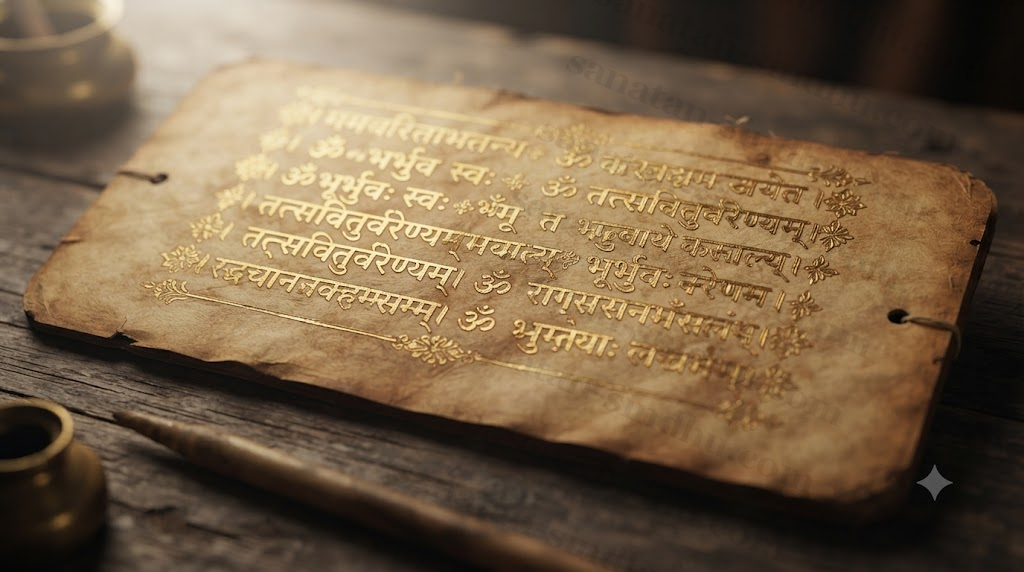
The preservation of this library was made possible through an exact, programmed oral technology. Sanskrit is not a naturally drifted language but a highly structured, programmed linguistic system built by the seers using context-free phonetic rules and invariant sandhi transformations. Rigorous mnemonic manuals — the Prātiśākhyas — locked phonetic properties, stress levels and musical metrics of Vedic chants across countless generations, free from textual corruption.