
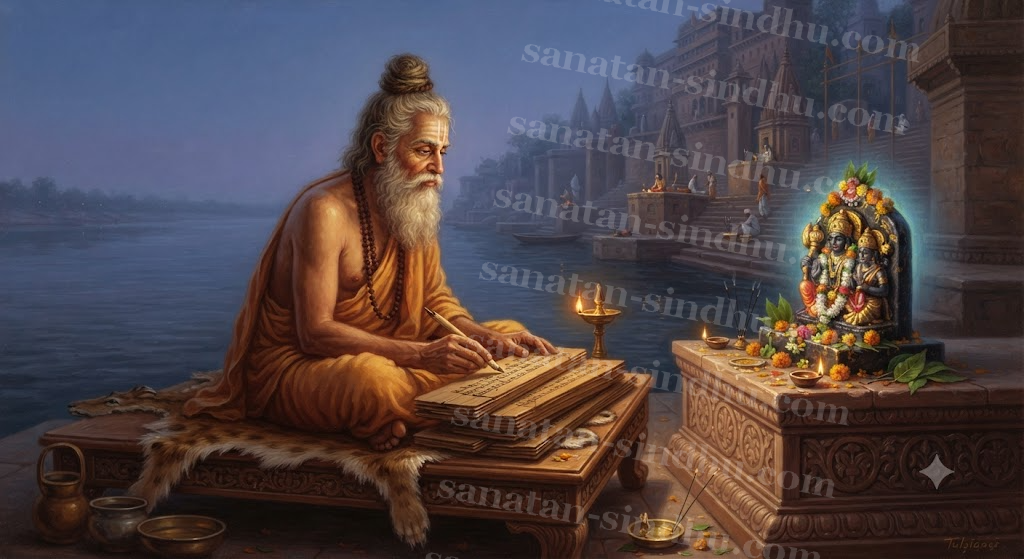
The seven kāṇḍa
Each kāṇḍa opens with Sanskrit śloka of invocation and then moves into Avadhī caupāī closed by dohā — the metre that made the text singable in village courtyards for four centuries.
Kāṇḍa 1 · 760 blocks
Bāla Kāṇḍa
बालकाण्ड
Invocations to Gaṇeśa, Sarasvatī, Śiva and the guru; the story of Satī and Pārvatī; the birth of Rāma in Ayodhyā; the breaking of Śiva's bow and the marriage at Mithilā.
Read The book of childhood →
Kāṇḍa 2 · 664 blocks
Ayodhyā Kāṇḍa
अयोध्या काण्ड
The interrupted coronation, Kaikeyī's two boons, fourteen years of exile, Bharata's renunciation and the sandals kept upon the throne.
Read The book of Ayodhyā →
Kāṇḍa 3 · 98 blocks
Araṇya Kāṇḍa
अरण्य काण्ड
Forest years among ṛṣis and hermitages, the encounter with Śūrpaṇakhā and Rāvaṇa's abduction of Sītā.
Read The book of the forest →
Kāṇḍa 4 · 61 blocks
Kiṣkindhā Kāṇḍa
किष्किन्धा काण्ड
The meeting with Hanumān and Sugrīva, the vānara alliance and the search parties sent to the four quarters.
Read The book of Kiṣkindhā →
Kāṇḍa 5 · 121 blocks
Sundara Kāṇḍa
सुंदर काण्ड
Hanumān's leap across the ocean, Laṅkā by night, the meeting with Sītā and the burning of the city — the kāṇḍa most often recited on its own.
Read The beautiful book →
Kāṇḍa 6 · 273 blocks
Laṅkā Kāṇḍa
लंका काण्ड
The bridge, the siege, Kumbhakarṇa and Meghanāda, the fall of Rāvaṇa and Sītā's return.
Read The book of Laṅkā →
Kāṇḍa 7 · 270 blocks
Uttara Kāṇḍa
उत्तर काण्ड
The homecoming and Rāmarājya, followed by Tulsīdās's discourses on bhakti, the Kali age and the way of the name.
Read The final book →
A note on the text and translation
The verse text is reproduced as received, without editorial emendation. English and Hindi-gloss renderings are being prepared and will appear beneath each block as they are completed; until then the pages carry the original only, so nothing is paraphrased into the reader's mouth.
For the older Sanskrit epic and its dating debates, see Itihāsa, and for the discourse nested inside the Mahābhārata, the Bhagavad Gītā.