The ultimate transformer
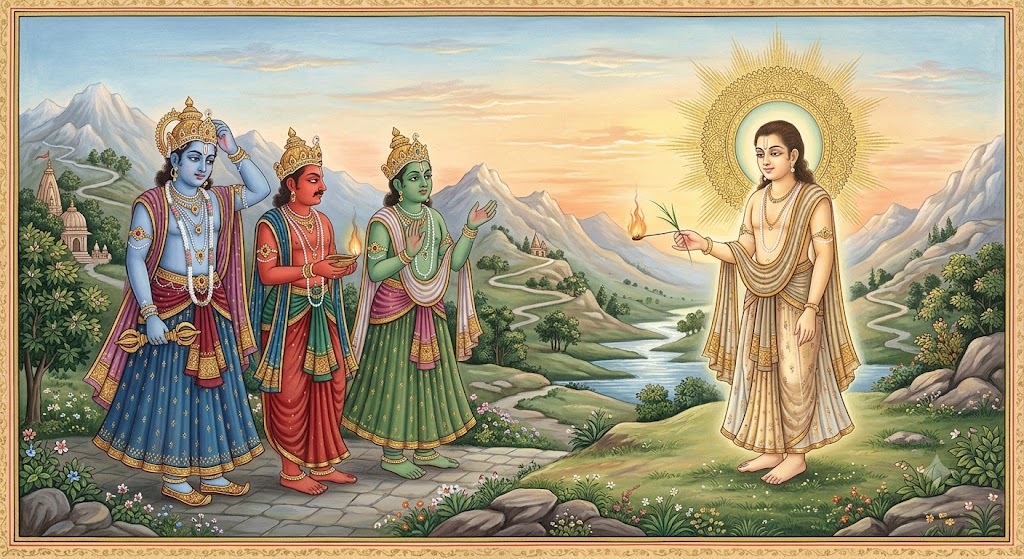
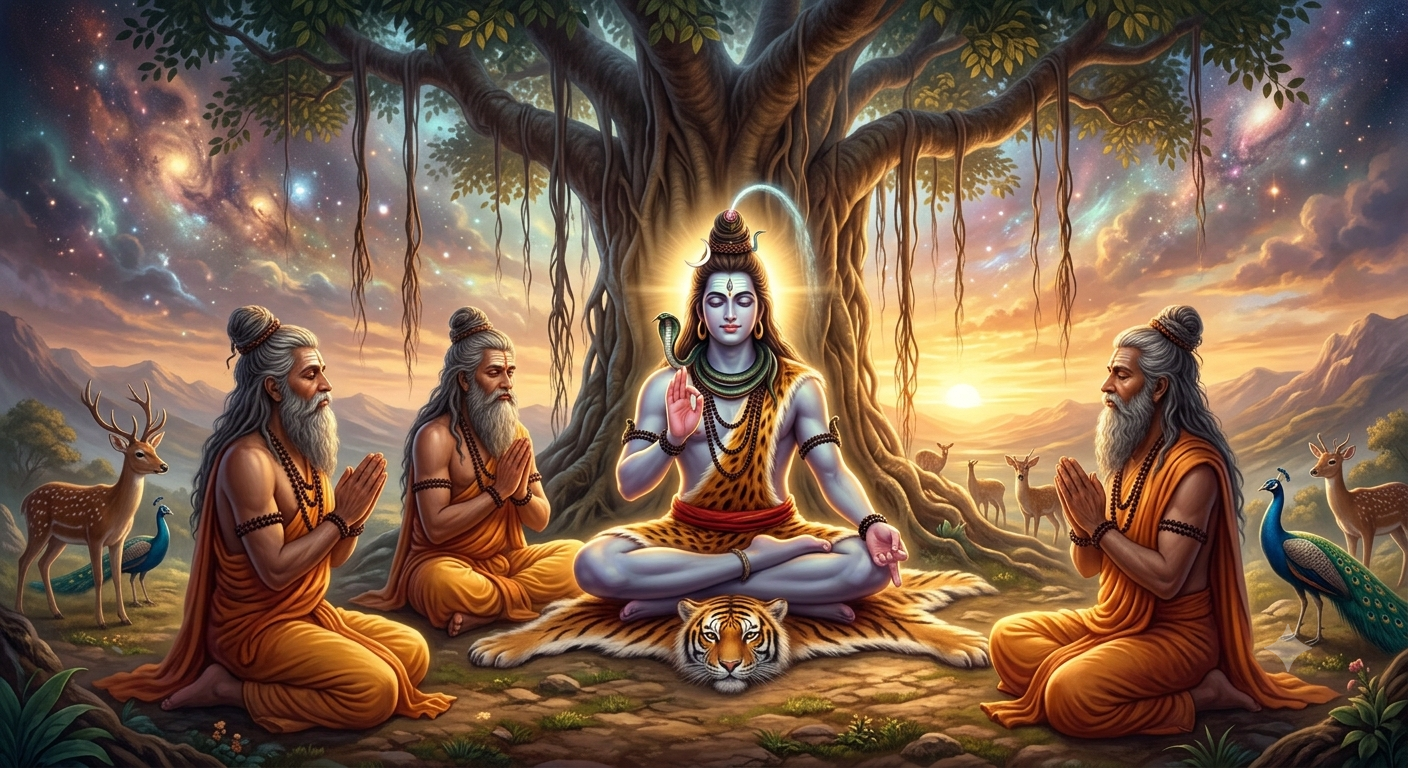
Often translated as 'The Destroyer', Mahesh (Shiva) actually represents Tamas Guṇa — which in higher Hindu philosophy signifies dissolution, stillness, and the collapsing of form back into formless consciousness. He does not destroy out of malice; he recycles out of necessity. Without decay, nothing new can be born. Shiva is absolute space, absolute stillness, and the ultimate reality (Mahādeva) that remains when everything else disappears.
The great paradox — ascetic vs. householder
One of the most profound elements of Shiva's nature is his living paradox, straddling two diametrically opposed human states.
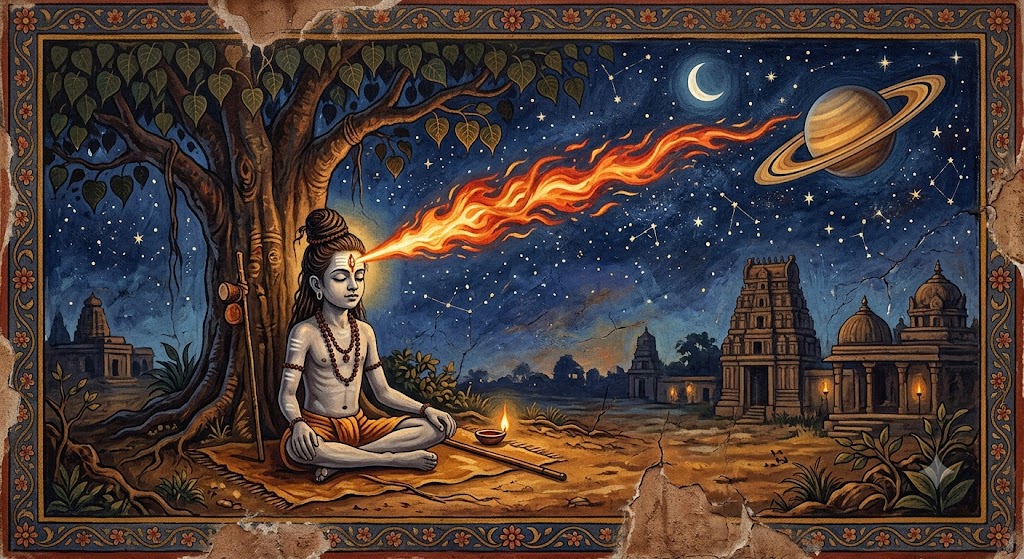
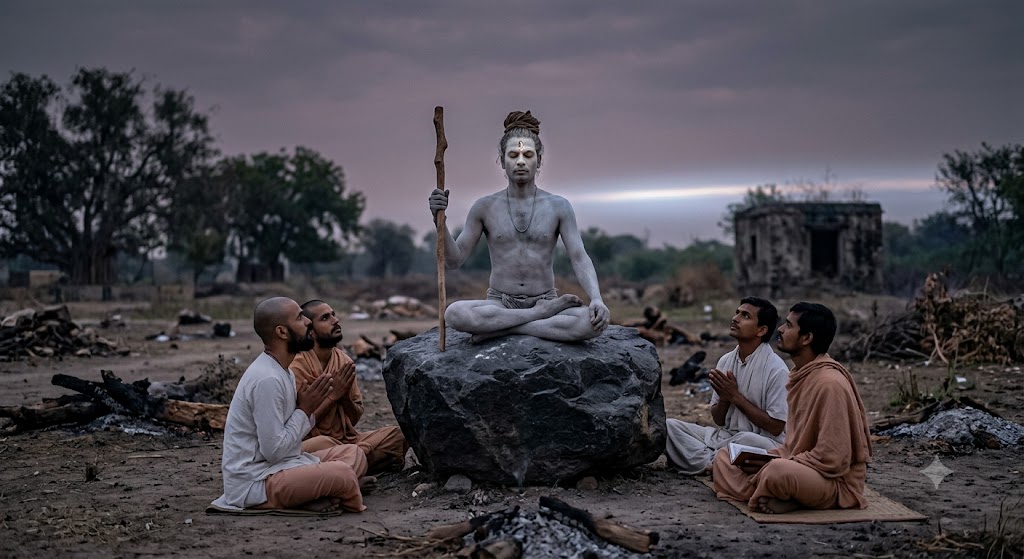
- *The Great Ascetic (Mahāyogī). Shiva sits on the icy peaks of Mount Kailāsa, smeared with holy ash (Vibhūti) from cremation grounds. He wears animal skins, his hair is matted, and he is deeply absorbed in samādhi. He teaches that the material world is a fleeting illusion (Māyā*).
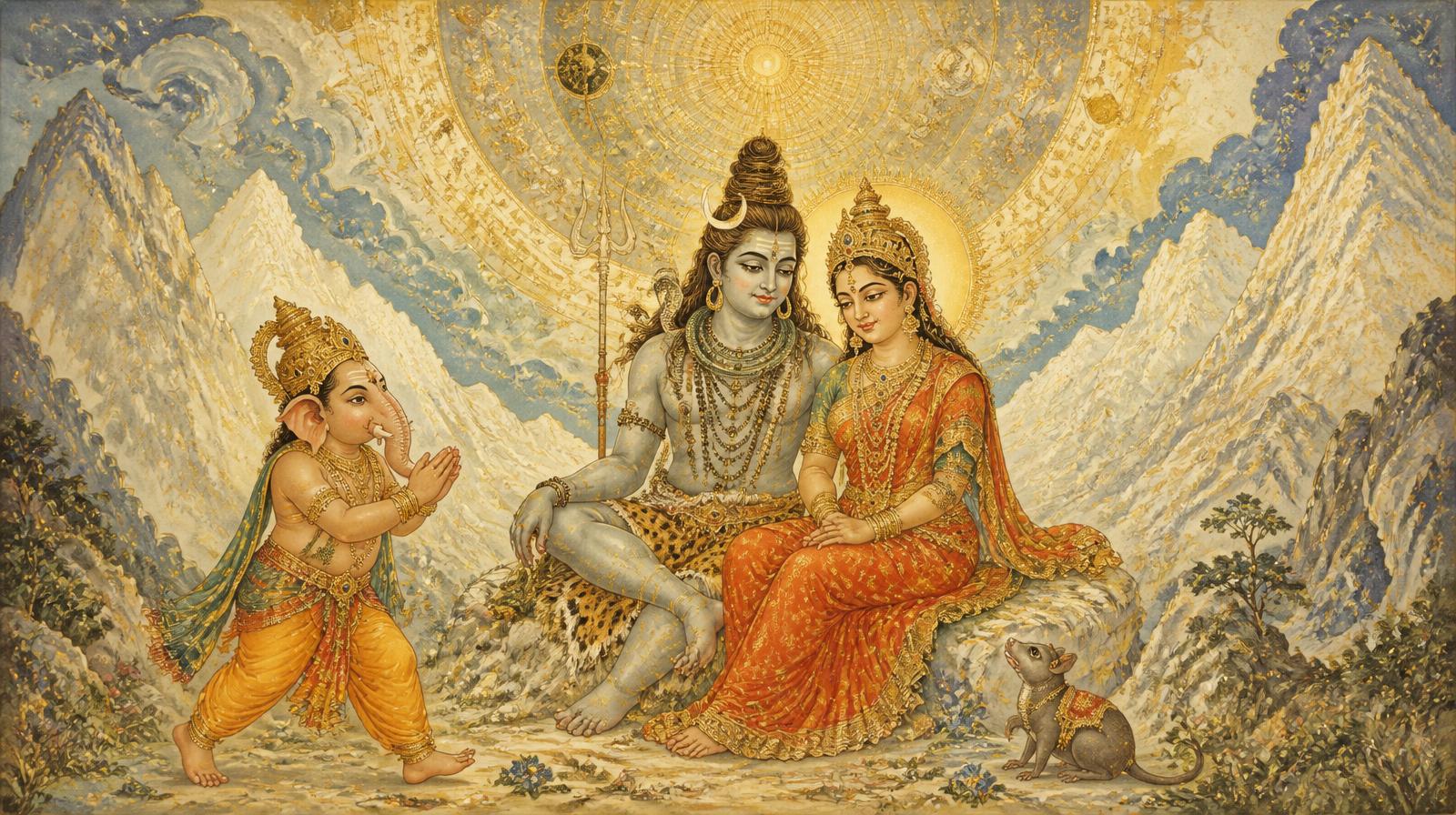
- *The Divine Householder (Gṛhastha).* When he marries Pārvatī, Shiva transitions into a loving husband and father to Ganesha and Kārttikeya. He descends from absolute isolation to engage in the beautiful play of worldly life, proving that spiritual mastery does not require choosing between the world and the spirit.
The Tāṇḍava — the cosmic dance of reality
Nowhere is Shiva's dual nature of absolute stillness and explosive action more beautifully captured than in his form as Naṭarāja, Lord of the Dance. The Tāṇḍava dictates the rhythm of physics, time, and consciousness, encompassing five cosmic actions.
Naṭarāja bronze in the Chola idiom — Shiva dancing within a ring of fire, right foot on Apasmāra, matted locks flying outward
- Upper right hand — the Ḍamaru. He holds an hourglass-shaped drum. Its rhythm is Sṛṣṭi (creation) — the primal pulse of time initiating the material world.
- Upper left hand — the flame. A blazing fire: Saṁhāra (dissolution), the eventual clearing away of physical forms.
- Lower right hand — Abhaya Mudrā. The open palm meaning 'fear not': Sthiti (preservation and protection).
- The right foot treads upon Apasmāra, a dwarf demon representing spiritual ignorance, forgetfulness, and the ego.
- The lifted left leg & lower left hand. The hand points down toward the raised foot: Anugraha (grace and liberation). Surrender your ego at my feet, and I will lift you out of the cycle of suffering.
The ring of fire surrounding him is the physical universe, vibrating with energy, while his face remains completely calm, serene, and still at the centre.
Vedic antecedent — Rudra and the Śatarudrīya
Śiva's cosmogonic lineage begins with the Ṛgvedic Rudra, fierce storm-god and 'Father of the Maruts' (RV 2.33), whose dual nature is at once terrifying and healing. The Yajurvedic Śatarudrīya (Taittirīya Saṃhitā 4.5 / 5.5.9) systematises his omnipresence in every domain of nature and society:
यो रुद्रो अग्नौ यो अप्सु य ओषधीषु यो रुद्रो विश्वा भुवनाऽऽविवेश तस्मै रुद्राय नमो अस्तु ॥
yo rudro agnau yo apsu ya oṣadhīṣu yo rudro viśvā bhuvanā''viveśa tasmai rudrāya namo astu ||
'The Rudra who is in the fire, who is in the waters, who is in the plants — the Rudra who has entered and pervaded all beings: to that Rudra be homage.'
Upanishadic identification — the one without a second
The Śvetāśvatara Upaniṣad is the decisive text for Shaiva theology, elevating Rudra-Śiva to the status of the non-dual Absolute:
एको हि रुद्रो न द्वितीयाय तस्थुर् य इमांल्लोकानीशत ईशनीभिः । प्रत्यङ्जनांस्तिष्ठति सञ्चुकोचान्तकाले संसृज्य विश्वा भुवनानि गोपाः ॥
eko hi rudro na dvitīyāya tasthur ya imāṃllokānīśata īśanībhiḥ | pratyaṅ janāṃs tiṣṭhati sañcukocāntakāle saṃsṛjya viśvā bhuvanāni gopāḥ ||
'Rudra is truly one; knowers of Brahman admit no second. He rules all worlds by his supreme powers, dwelling within every living being. Having created all worlds, he — their Protector — withdraws them into himself at the end of time.'
Here Śiva's role as the final dissolver is inseparable from his status as the ground of existence itself — beyond the dualities of life and death.
Puranic narrative — the pillar of fire and the birth of Rudra
The Śiva Purāṇa and Liṅga Purāṇa present Śiva as the unoriginated Source (Anādi and Ananta). His ultimate cosmogonic manifestation is the Liṅgodbhavamūrti.
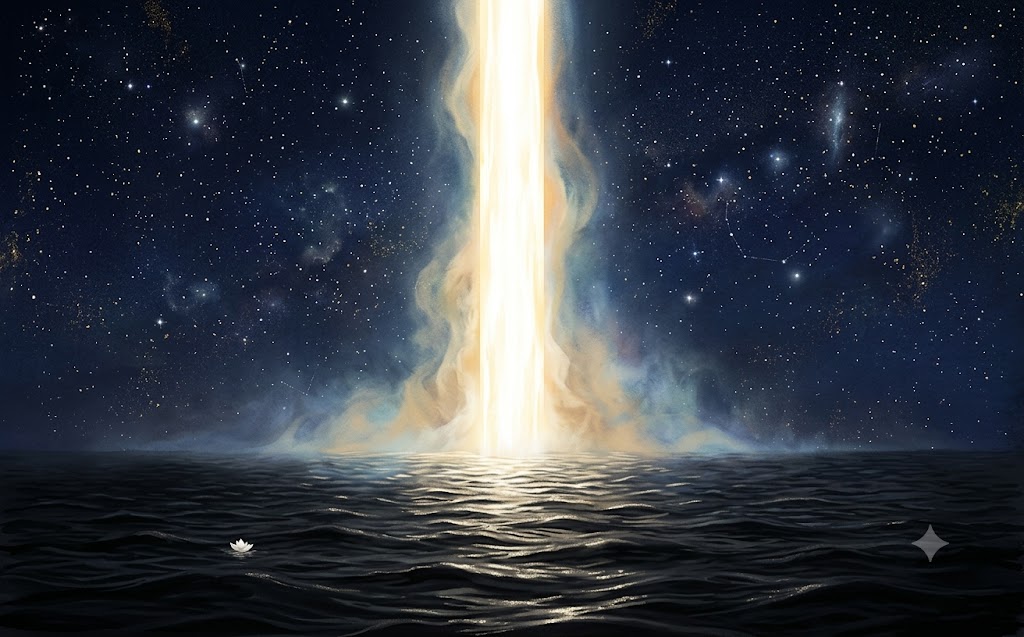
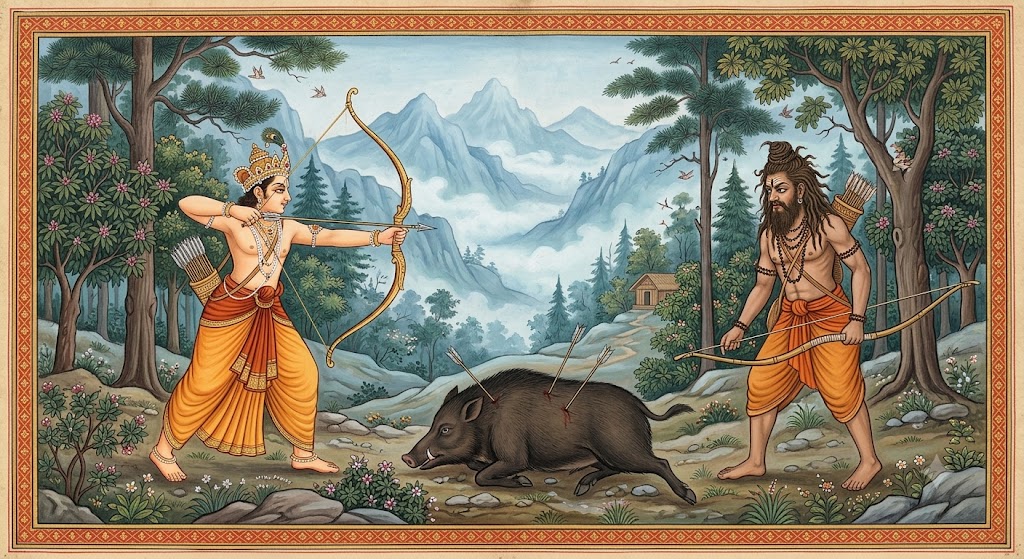
At the end of a previous Kalpa, Brahmā and Viṣṇu quarrelled over their respective supremacy, and the cosmic order began to buckle. To settle the dispute Śiva appeared between them as a colossal pillar of fire (Jyotirliṅga) piercing the heavens and the underworlds. Brahmā took the form of a swan (Haṃsa) and flew upward to find its crest; Viṣṇu became a boar (Varāha) and dug down for its root. Neither found the pillar's end. Returning humbled, they bowed — and from the column's centre Śiva revealed himself, declaring that both had been born of his own transcendent energy.
A companion narrative from the Liṅga Purāṇa records that when the world was to be created within the physical realm, Brahmā's furrowed forehead brought forth a crying, red-and-blue child. Brahmā named him Rudra (from the root rud — 'to cry', 'to roar'). This child then divided himself into the Ekādaśa Rudras — eleven male forms — and eleven corresponding Rudrāṇīs, together governing the fierce, protective, and transformative forces of the physical universe.
The non-dual paradigm of Kashmiri Shaivism (Trika)
The Trika system of Kashmir, systematised by Vasugupta (c. 850 CE) and Abhinavagupta (c. 975–1025 CE), gives Śiva's non-duality its most rigorous philosophical form. Unlike Advaita Vedānta, which treats the world as illusion (Māyā), Trika holds that the universe is entirely real — a voluntary self-manifestation of the dynamic consciousness (Chit) of Paramāśiva.
The descent of consciousness is charted through 36 Tattvas. The five pure tattvas are:
- Śiva Tattva — pure subjective light (Prakāśa).
- Śakti Tattva — the reflective awareness of that light (Vimarśa).
- Sadāśiva Tattva — the initial subtle intent to create (Icchā Śakti).
- Īśvara Tattva — the conceptualisation of the objective world (Jñāna Śakti).
- Śuddhavidyā Tattva — the balance of subject and object (Kriyā Śakti).
As consciousness contracts through the veil of Māyā, it takes on the five Kañchukas — limitations of agency (Kalā), knowledge (Vidyā), desire (Rāga), time (Kāla), and causal order (Niyati) — until it experiences itself as the bounded individual soul (Puruṣa). Liberation is the spontaneous, intuitive recognition (Pratyabhijñā) that one has always been Śiva. The canon includes the Śiva Sūtras of Vasugupta, the Mālinīvijayottara Tantra, and Abhinavagupta's Tantrāloka.
Associated festival — Mahā Śivarātri
The central festival of Śiva is Mahā Śivarātri, kept on the fourteenth night of the dark half of Māgha (February–March). It commemorates two events at once:
- The night Śiva appeared as the infinite pillar of fire (Jyotirliṅga), establishing his transcendent authority.
- The cosmic marriage of Śiva and Pārvatī — the union of pure consciousness (Puruṣa) and dynamic creative energy (Prakṛti).
Devotees keep an all-night vigil (Jāgaraṇa), bathe the liṅga with milk and water, and chant the Śrī Rudram — the same Śatarudrīya preserved from the Yajurveda.
Further reading
For the full comparative treatment of Brahmā, Viṣṇu and Śiva as a cosmogonic triad — Vedic antecedents through Purāṇic synthesis, festival topography, and the non-dual paradigms of Kashmiri Trika Shaivism — see the essay Trimūrti — Scriptural Origins.