An encyclopedia of Sanātana Dharma
Sanatan Sindhu emblemSanatan Sindhu

Deities · Trimurti

Lord Shiva

शिव

Šiva

One of the principal deities of Hinduism and the Supreme Being in Shaivism. He represents the destructive, regenerative, and transformative aspects of the cosmos, balancing absolute asceticism and meditative silence with the ferocious Tandava dance of dissolution. He transcended death and poison to save creation.

Quick facts

Era
Eternal / Sanatana
vahana
Nandi (The Bull)
consort
Goddess Parvati
Abode
Mount Kailash

Attributes & symbols

Emblems most often depicted with Lord Shiva. Hover for gloss · click to search.

Epithets

Names and titles by which Lord Shiva is invoked across the śāstras.

The ultimate transformer

Often translated as 'The Destroyer', Mahesh (Shiva) actually represents Tamas Guṇa — which in higher Hindu philosophy signifies dissolution, stillness, and the collapsing of form back into formless consciousness. He does not destroy out of malice; he recycles out of necessity. Without decay, nothing new can be born. Shiva is absolute space, absolute stillness, and the ultimate reality (Mahādeva) that remains when everything else disappears.

The great paradox — ascetic vs. householder

One of the most profound elements of Shiva's nature is his living paradox, straddling two diametrically opposed human states.

  • *The Great Ascetic (Mahāyogī). Shiva sits on the icy peaks of Mount Kailāsa, smeared with holy ash (Vibhūti) from cremation grounds. He wears animal skins, his hair is matted, and he is deeply absorbed in samādhi. He teaches that the material world is a fleeting illusion (Māyā*).
  • *The Divine Householder (Gṛhastha).* When he marries Pārvatī, Shiva transitions into a loving husband and father to Ganesha and Kārttikeya. He descends from absolute isolation to engage in the beautiful play of worldly life, proving that spiritual mastery does not require choosing between the world and the spirit.

The Tāṇḍava — the cosmic dance of reality

Nowhere is Shiva's dual nature of absolute stillness and explosive action more beautifully captured than in his form as Naṭarāja, Lord of the Dance. The Tāṇḍava dictates the rhythm of physics, time, and consciousness, encompassing five cosmic actions.

Naṭarāja bronze in the Chola idiom — Shiva dancing within a ring of fire, right foot on Apasmāra, matted locks flying outward

Send: entity-shiva-003-tandava-01.jpg

Slot ID: entity-shiva-003-tandava-01
  • Upper right hand — the Ḍamaru. He holds an hourglass-shaped drum. Its rhythm is Sṛṣṭi (creation) — the primal pulse of time initiating the material world.
  • Upper left hand — the flame. A blazing fire: Saṁhāra (dissolution), the eventual clearing away of physical forms.
  • Lower right hand — Abhaya Mudrā. The open palm meaning 'fear not': Sthiti (preservation and protection).
  • The right foot treads upon Apasmāra, a dwarf demon representing spiritual ignorance, forgetfulness, and the ego.
  • The lifted left leg & lower left hand. The hand points down toward the raised foot: Anugraha (grace and liberation). Surrender your ego at my feet, and I will lift you out of the cycle of suffering.

The ring of fire surrounding him is the physical universe, vibrating with energy, while his face remains completely calm, serene, and still at the centre.

Vedic antecedent — Rudra and the Śatarudrīya

Śiva's cosmogonic lineage begins with the Ṛgvedic Rudra, fierce storm-god and 'Father of the Maruts' (RV 2.33), whose dual nature is at once terrifying and healing. The Yajurvedic Śatarudrīya (Taittirīya Saṃhitā 4.5 / 5.5.9) systematises his omnipresence in every domain of nature and society:

यो रुद्रो अग्नौ यो अप्सु य ओषधीषु यो रुद्रो विश्वा भुवनाऽऽविवेश तस्मै रुद्राय नमो अस्तु ॥

yo rudro agnau yo apsu ya oṣadhīṣu yo rudro viśvā bhuvanā''viveśa tasmai rudrāya namo astu ||

'The Rudra who is in the fire, who is in the waters, who is in the plants — the Rudra who has entered and pervaded all beings: to that Rudra be homage.'

Yajurveda, Śatarudrīya

Upanishadic identification — the one without a second

The Śvetāśvatara Upaniṣad is the decisive text for Shaiva theology, elevating Rudra-Śiva to the status of the non-dual Absolute:

एको हि रुद्रो न द्वितीयाय तस्थुर् य इमांल्लोकानीशत ईशनीभिः । प्रत्यङ्जनांस्तिष्ठति सञ्चुकोचान्तकाले संसृज्य विश्वा भुवनानि गोपाः ॥

eko hi rudro na dvitīyāya tasthur ya imāṃllokānīśata īśanībhiḥ | pratyaṅ janāṃs tiṣṭhati sañcukocāntakāle saṃsṛjya viśvā bhuvanāni gopāḥ ||

'Rudra is truly one; knowers of Brahman admit no second. He rules all worlds by his supreme powers, dwelling within every living being. Having created all worlds, he — their Protector — withdraws them into himself at the end of time.'

Śvetāśvatara Upaniṣad 3.2

Here Śiva's role as the final dissolver is inseparable from his status as the ground of existence itself — beyond the dualities of life and death.

Puranic narrative — the pillar of fire and the birth of Rudra

The Śiva Purāṇa and Liṅga Purāṇa present Śiva as the unoriginated Source (Anādi and Ananta). His ultimate cosmogonic manifestation is the Liṅgodbhavamūrti.

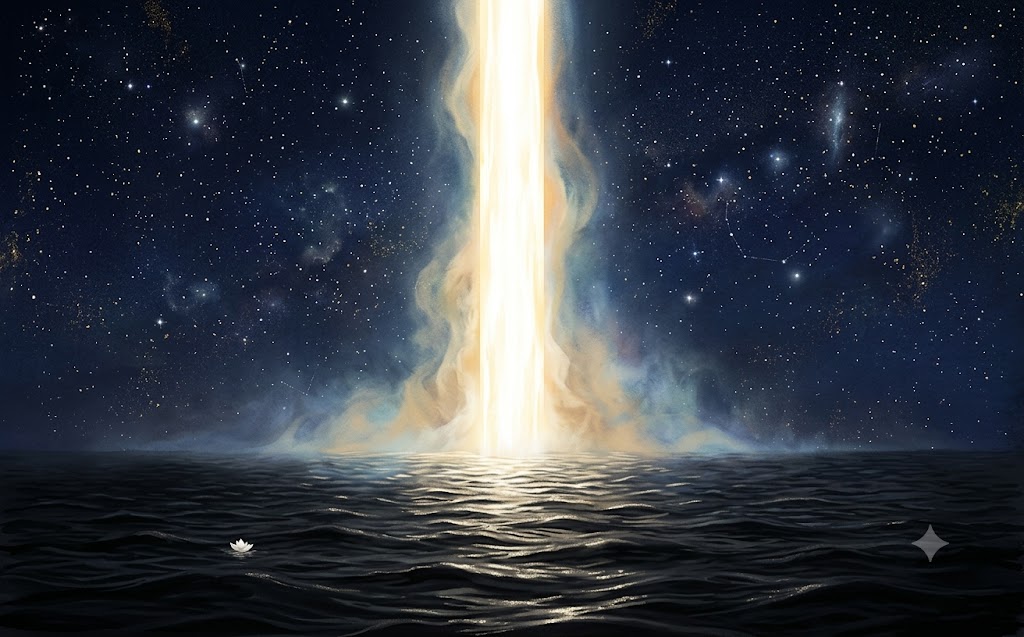
At the end of a previous Kalpa, Brahmā and Viṣṇu quarrelled over their respective supremacy, and the cosmic order began to buckle. To settle the dispute Śiva appeared between them as a colossal pillar of fire (Jyotirliṅga) piercing the heavens and the underworlds. Brahmā took the form of a swan (Haṃsa) and flew upward to find its crest; Viṣṇu became a boar (Varāha) and dug down for its root. Neither found the pillar's end. Returning humbled, they bowed — and from the column's centre Śiva revealed himself, declaring that both had been born of his own transcendent energy.

A companion narrative from the Liṅga Purāṇa records that when the world was to be created within the physical realm, Brahmā's furrowed forehead brought forth a crying, red-and-blue child. Brahmā named him Rudra (from the root rud — 'to cry', 'to roar'). This child then divided himself into the Ekādaśa Rudras — eleven male forms — and eleven corresponding Rudrāṇīs, together governing the fierce, protective, and transformative forces of the physical universe.

The non-dual paradigm of Kashmiri Shaivism (Trika)

The Trika system of Kashmir, systematised by Vasugupta (c. 850 CE) and Abhinavagupta (c. 975–1025 CE), gives Śiva's non-duality its most rigorous philosophical form. Unlike Advaita Vedānta, which treats the world as illusion (Māyā), Trika holds that the universe is entirely real — a voluntary self-manifestation of the dynamic consciousness (Chit) of Paramāśiva.

The descent of consciousness is charted through 36 Tattvas. The five pure tattvas are:

  • Śiva Tattva — pure subjective light (Prakāśa).
  • Śakti Tattva — the reflective awareness of that light (Vimarśa).
  • Sadāśiva Tattva — the initial subtle intent to create (Icchā Śakti).
  • Īśvara Tattva — the conceptualisation of the objective world (Jñāna Śakti).
  • Śuddhavidyā Tattva — the balance of subject and object (Kriyā Śakti).

As consciousness contracts through the veil of Māyā, it takes on the five Kañchukas — limitations of agency (Kalā), knowledge (Vidyā), desire (Rāga), time (Kāla), and causal order (Niyati) — until it experiences itself as the bounded individual soul (Puruṣa). Liberation is the spontaneous, intuitive recognition (Pratyabhijñā) that one has always been Śiva. The canon includes the Śiva Sūtras of Vasugupta, the Mālinīvijayottara Tantra, and Abhinavagupta's Tantrāloka.

Associated festival — Mahā Śivarātri

The central festival of Śiva is Mahā Śivarātri, kept on the fourteenth night of the dark half of Māgha (February–March). It commemorates two events at once:

  • The night Śiva appeared as the infinite pillar of fire (Jyotirliṅga), establishing his transcendent authority.
  • The cosmic marriage of Śiva and Pārvatī — the union of pure consciousness (Puruṣa) and dynamic creative energy (Prakṛti).

Devotees keep an all-night vigil (Jāgaraṇa), bathe the liṅga with milk and water, and chant the Śrī Rudram — the same Śatarudrīya preserved from the Yajurveda.

Further reading

For the full comparative treatment of Brahmā, Viṣṇu and Śiva as a cosmogonic triad — Vedic antecedents through Purāṇic synthesis, festival topography, and the non-dual paradigms of Kashmiri Trika Shaivism — see the essay Trimūrti — Scriptural Origins.
Essays

Related essays

All essays
Essay · Foundations

The Beginningless Dawn — the true origins of Sanātana Dharma

Why the tradition calls itself eternal — cyclic cosmic time (Yugas, Kalpas, Mahāpralaya), the Vedas as Apauruṣeya (unauthored) sound cognised by Rishis, and the archeo-astronomical dating that anchors the earliest scriptural layers.

Essay · Cosmogony · Ṛgveda 10.129

Nāsadīya Sūkta — the hymn of creation

A verse-by-verse reading of the Nāsadīya Sūkta — the Rishi's meditation on what preceded existence itself. From Tad Ekam (‘That One’) breathing breathlessly, through the primal desire (Kāma) that becomes the seed of mind, to the outward stretching of the cosmic ray — and the final, honest ‘perhaps even He knows not.’

Essay · Acoustics & Cosmology

Nāda Brahman — the universe as sound, from AUM to the 22 śrutis

AUM read through cymatics and the Māṇḍūkya Upaniṣad, and Nāda Brahman read through the Gandharva Veda — the seven svaras, the 22 microtonal śrutis, and a wave-first model of matter that anticipates the vibrating strings of modern physics.

Essay · Vocabulary

What is Dharma — and what is a Hindu?

The words Dharma, Sanātana and Hindu — where they come from, what they actually mean, and how the four great sampradāyas (Vaiṣṇavism, Śaivism, Śāktism, Smārtism) scale the same spiritual mountain from different sides.

Essay · Cosmogony

Trimūrti — Scriptural Origins

A comparative study of Brahmā, Viṣṇu and Śiva — Vedic antecedents, Upanishadic identifications, Purāṇic narratives, and the non-dual paradigm of Kashmiri Trika Shaivism.

Essay · Śaiva Cosmology

The Infinite Forms of the Formless — Śiva's descents and cosmic purpose

Unlike Viṣṇu's ten physical Dashāvatāras, Śiva's descents are Anśāvatāras and Rudras — instantaneous manifestations that dissolve ego, transmit Yoga, and restore Dharma. A tour of the 19 Primary Avatars, the 11 Rudras, the 28 Yogeśvaras, the Pañchabrahma, and the Śaiva-Vaiṣṇava synthesis of Hanumān as the 11th Rudra — anchored to the Mathurā Pillar Inscription of 380 CE.

Essay · Hanumān · Śaiva-Vaiṣṇava Synthesis

Sacred Wind, Eternal Devotee — Hanumān's lore and cultural significance

A textual stratigraphy of Hanumān across the Vālmīki Rāmāyaṇa, the Śiva Purāṇa, the Adhyātma and Ānanda Rāmāyaṇas, and Tulsīdās's Rāmcharitmānas — plus the Upaniṣadic anchors that place Him as a premier Vedic scholar, the Pañchamukhī rescue in Pātāla Loka, the pact with Śani, the origin of the sindūr offering, the Hanumad Rāmāyaṇa, and the metaphysics of cyclical time.

Essay · Vedic & Vedāntic Cosmology

The Devas and the Trimūrti — a stratified cosmology

Indra, Agni, Varuṇa, Sūrya, Vāyu and the other Vedic devas were once celestial sovereigns; in the Purāṇic era they appear subordinate to Brahmā, Viṣṇu, and Śiva. Not a replacement — a philosophical stratification through Nirguṇa Brahman, Iśvara, and the administrative devas.

Essay · Guru-Śiṣya Paramparā

Guru Pūrṇimā — the scriptural significance of the teacher

The full-moon day of Āṣāḍha honours the lineage of teachers who dispel darkness. From Veda Vyāsa the Ādi Guru of recorded knowledge, through the Mundaka and Kaṭha Upaniṣads, to Śiva as Ādiyogi transmitting yoga to the Saptarishis — a reading of the Guru as the bridge to the Absolute.

Essay · Esoteric Gāṇapatya

The First Principle — Gaṇeśa as Omkāra and the root of consciousness

Beyond the beloved remover of obstacles: the Gaṇapati Atharvaśīrṣa reveals Gaṇeśa as the primordial sound Om itself, the visible Absolute, and the presiding deity of the Mūlādhāra — the root that must be grounded before consciousness can ascend.

Essay · Temple architecture

Echoes, shadows and sacred geometry — 11 architectural marvels of the Hindu dynasties

Ancient and medieval Hindu builders treated stone as an instrument of optics, acoustics, geology and celestial alignment. Eleven wonders — from a solar sundial of zodiac pillars at Sringeri to a mountain chiselled from the top down at Ellora, musical monoliths at Hampi, a shadowless Chola apex, a hanging pillar at Lepakshi and an inverted stepwell in Patan.

Related lore

All stories →

Vishnu Purana, Bhagavata Purana, Mahabharata

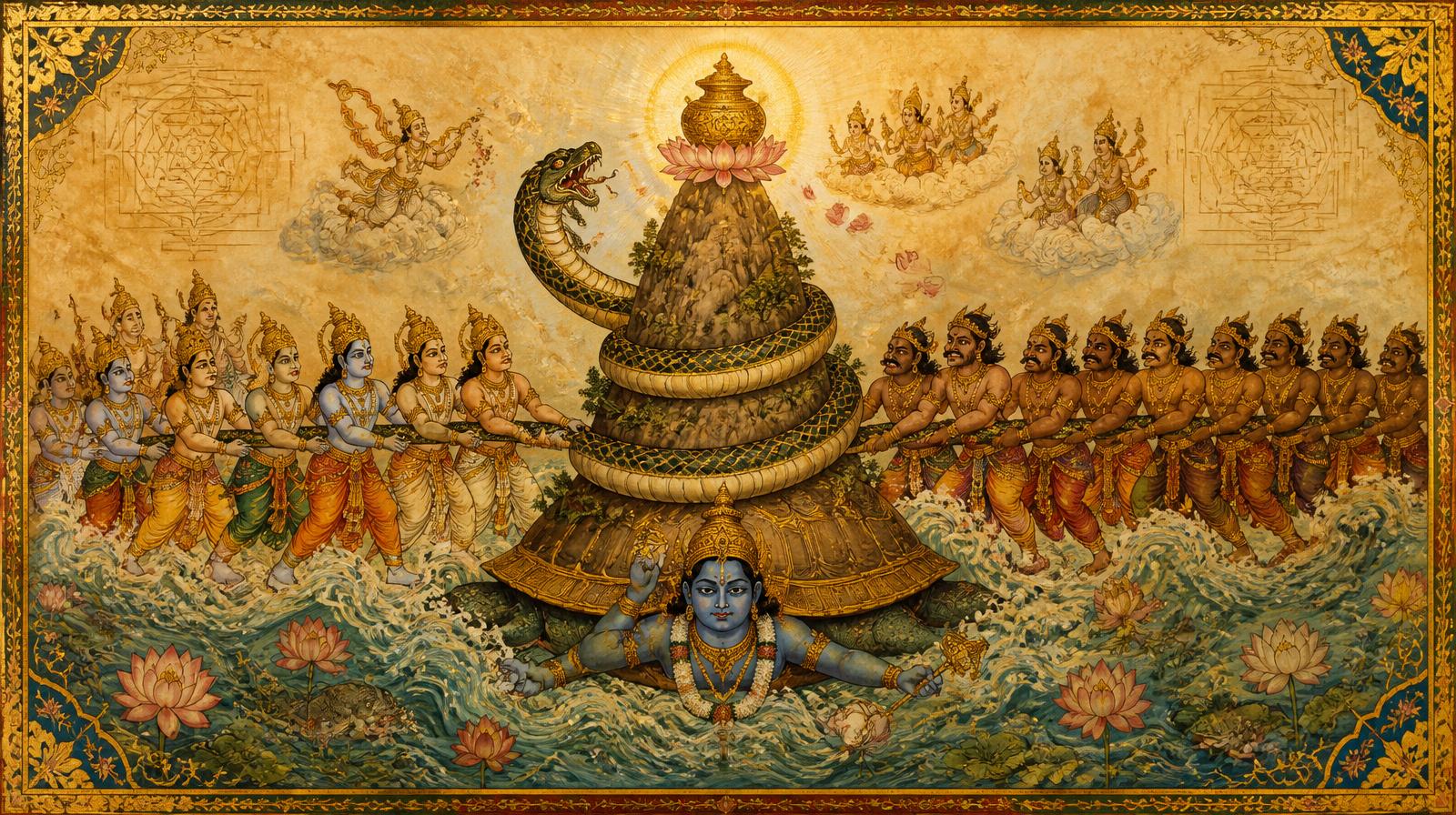
The Churning of the Cosmic Ocean

An epic cosmic event where the celestial Devas and the demonic Asuras form a temporary alliance to churn the primeval Ocean of Milk, extracting the nectar of immortality (Amrita) alongside multiple legendary treasures.

5 chapters · read →

Valmiki Ramayana, Shiva Purana

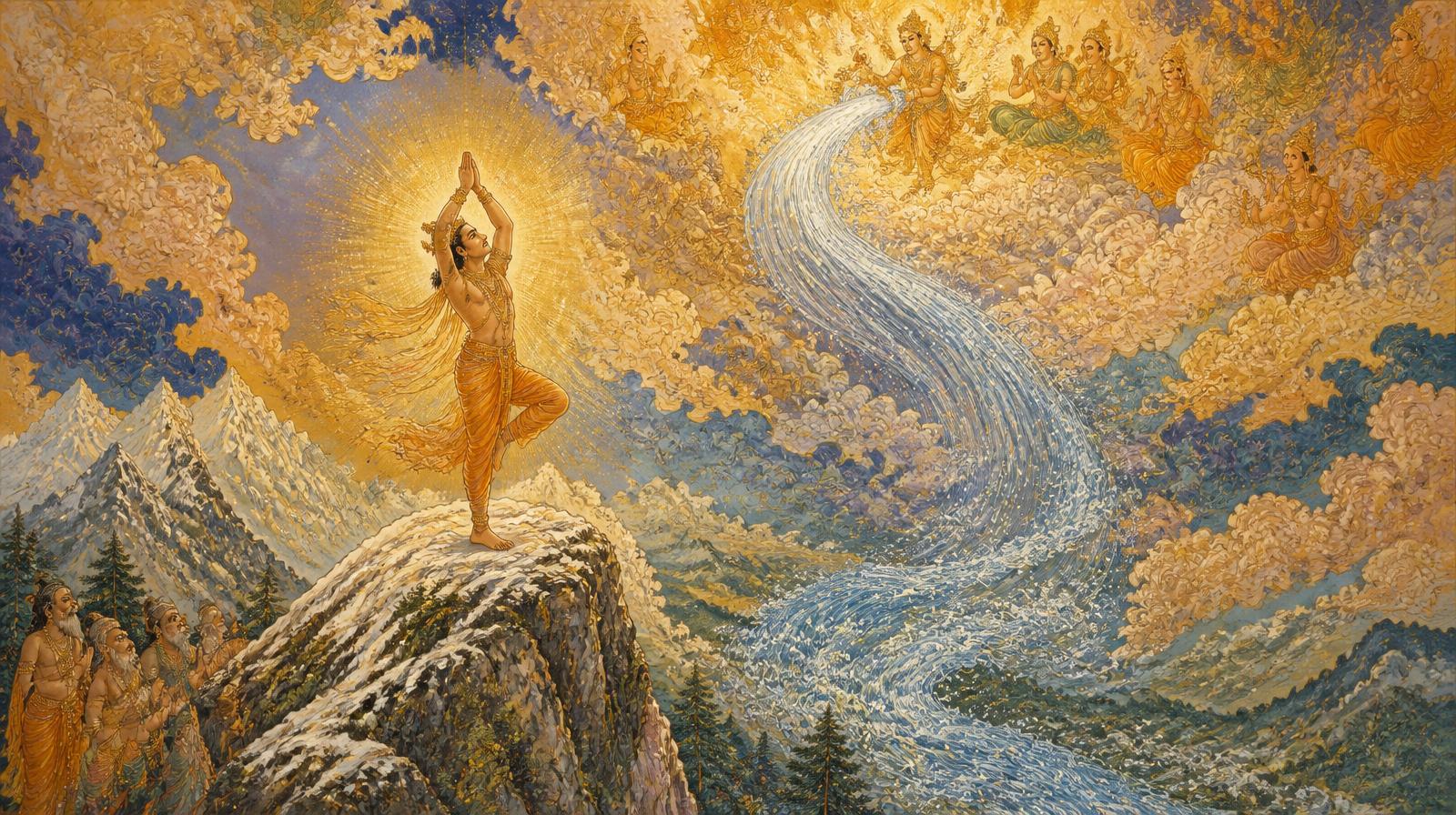
The Descent of Ganga: Earth's Sacred Flow

The epic saga of King Bhagiratha's monumental penance to bring the celestial river Ganga from the heavens down to Earth to liberate the restless souls of his incinerated ancestors.

3 chapters · read →

Markandeya Purana, Devi Bhagavata Purana

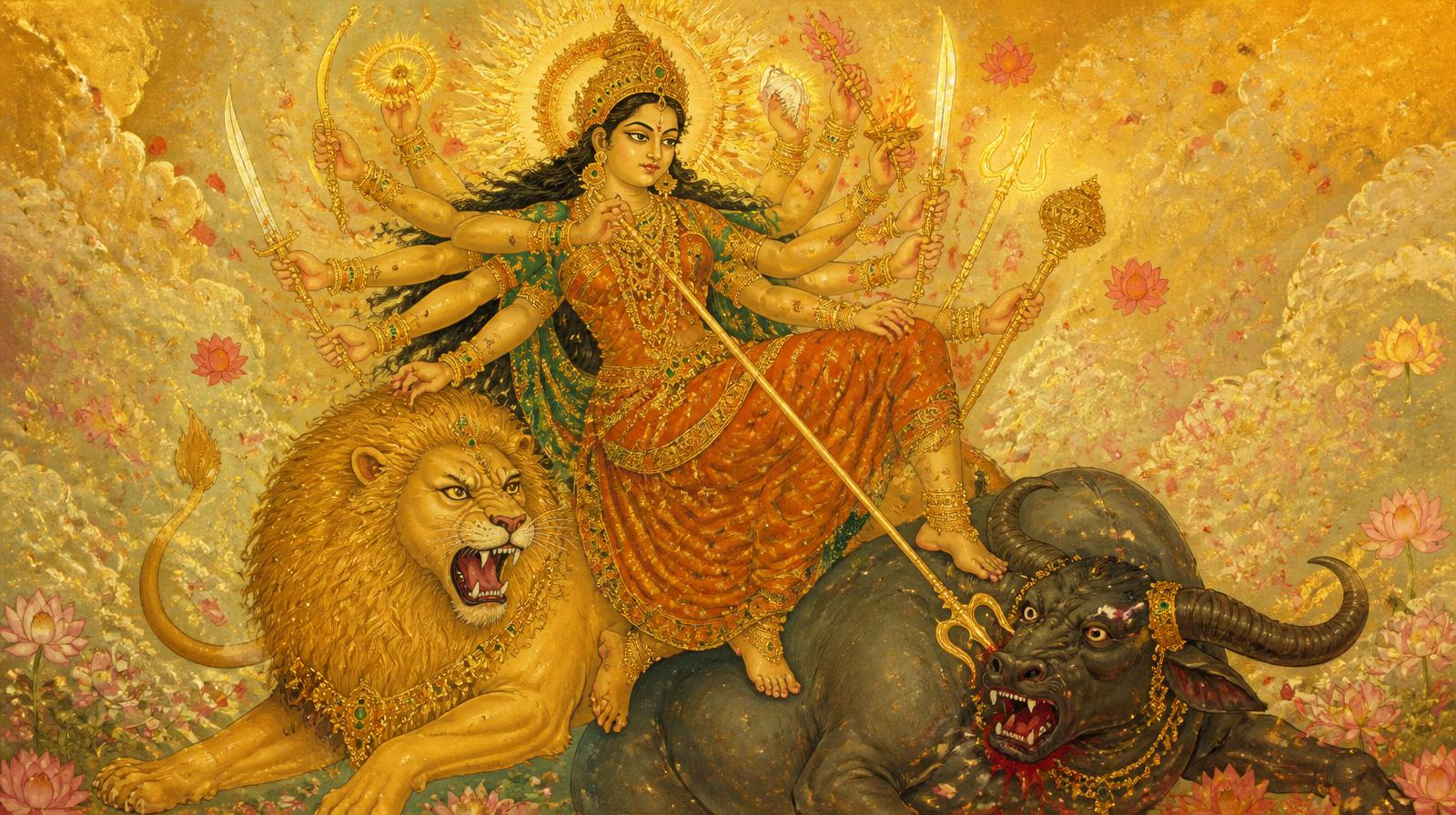
The Triumph of the Invincible Mother Durga

The spectacular manifestation of Goddess Durga from the combined fiery anger of the gods to defeat the shape-shifting buffalo demon Mahishasura, who held a boon of near-invincibility.

3 chapters · read →

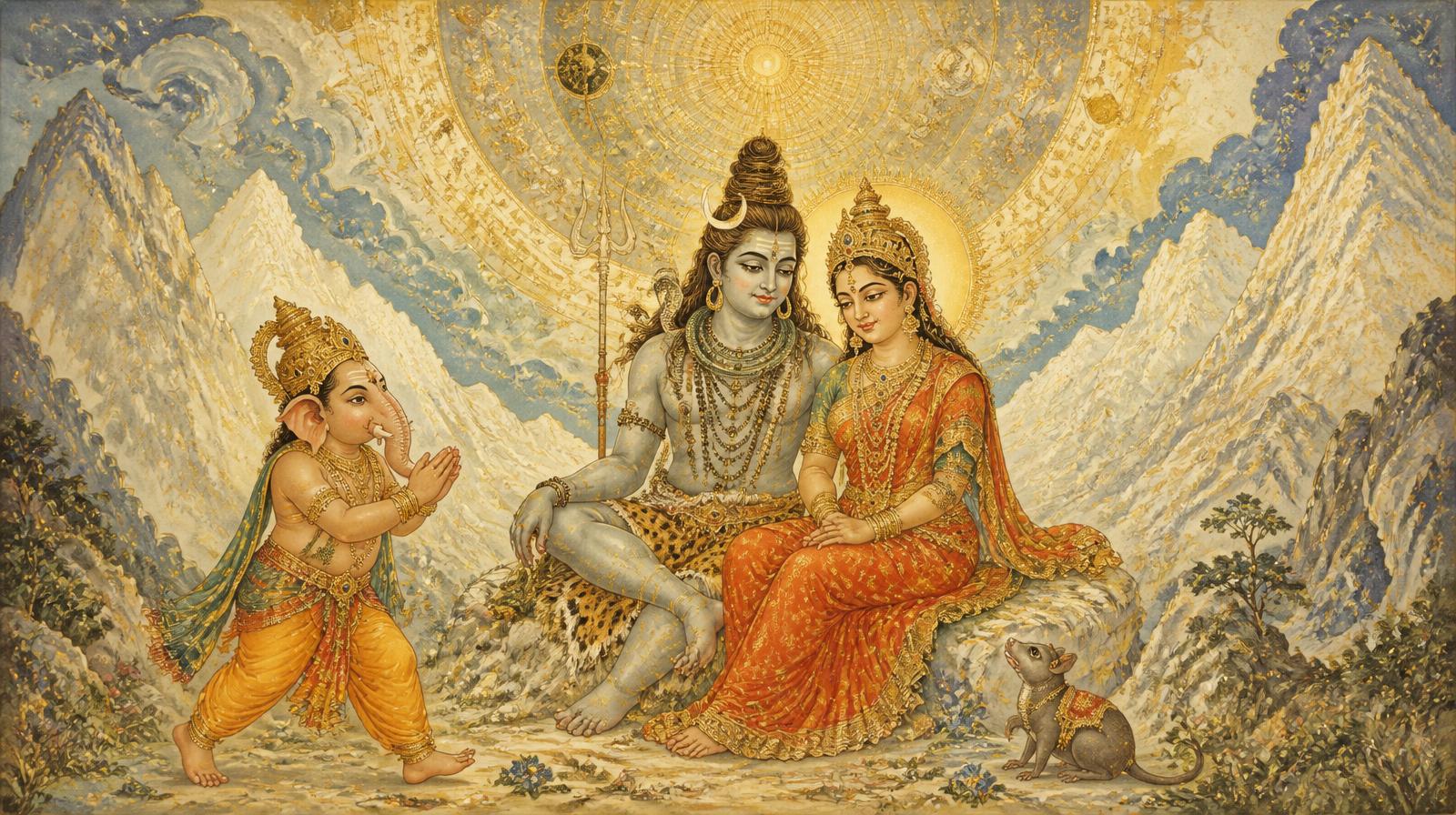
Shiva Purana, Ganesha Purana

The Great Cosmic Circumambulation of Ganesha

A charming and profound tale of wisdom where the brothers Ganesha and Kartikeya compete in a cosmic race for a divine fruit, illustrating the difference between outward effort and inner realization.

2 chapters · read →

Shiva Purana, Linga Purana, Kurma Purana

The Pillar of Fire: Lingodbhava

When Brahmā and Viṣṇu quarrelled over which of them was supreme, Śiva appeared between them as a limitless pillar of fire — neither could find its beginning or its end, and both came to know the transcendent ground from which they had been born.

3 chapters · read →

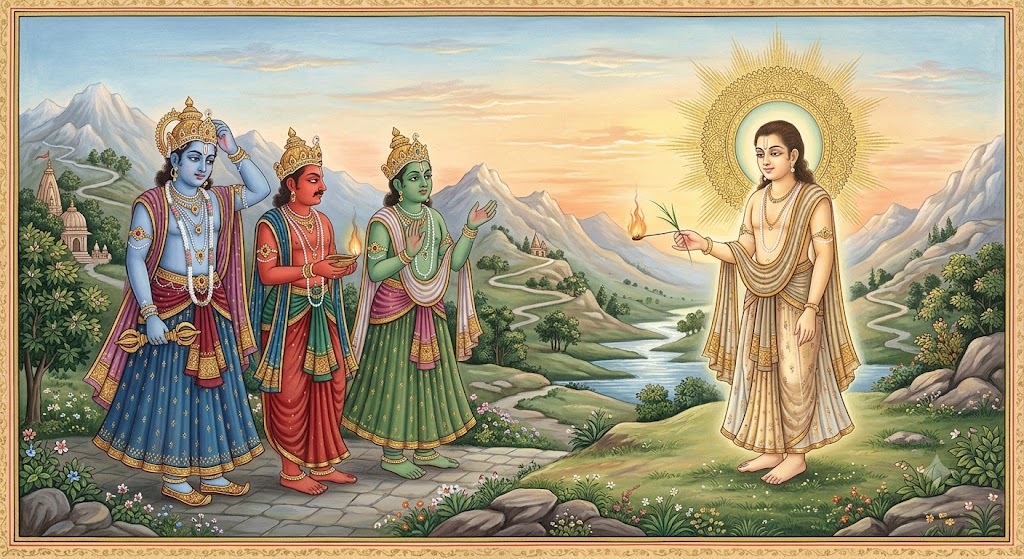
Kena Upanishad (Chapters 3 & 4), Shiva Purana (Shatarudra Samhita, Chapter 16)

The Cosmic Riddle: Yaksheshwara Avatar

To dissolve the growing pride of the Devas after their cosmic victory over the Asuras, Lord Shiva manifests as a mysterious, all-powerful spirit (Yaksha) to demonstrate that all individual power originates from the Supreme Brahman.

3 chapters · read →

Shiva Purana (Shatarudra Samhita, Chapters 24 & 25), Prasna Upanishad

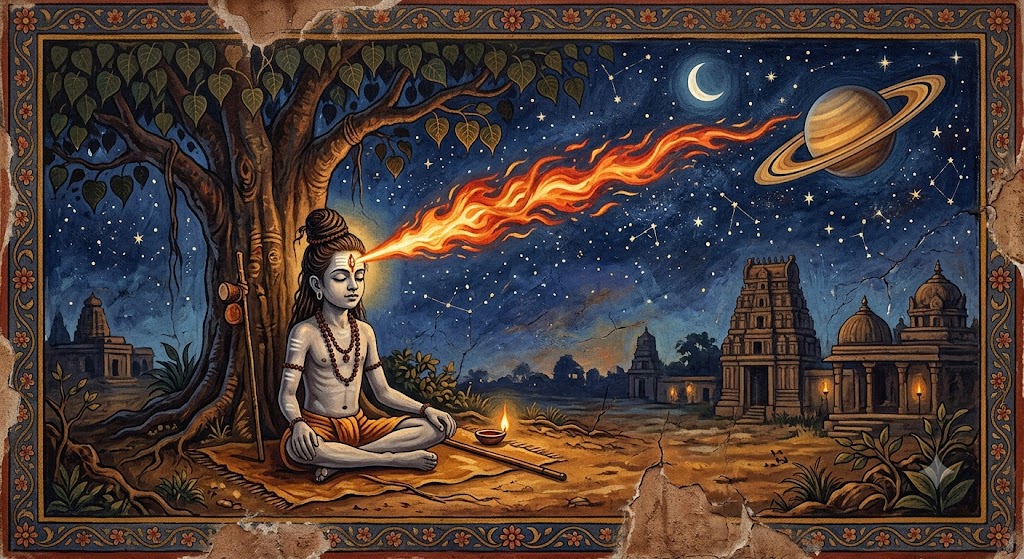
The Sage of the Peepal Tree: Pippalada Avatar

Born under the protection of a sacred Peepal tree after his father Sage Dadhichi's supreme sacrifice, Pippalada performs rigorous penances to confront Shani Dev, ultimately establishing a cosmic covenant to protect young children from severe planetary distress.

3 chapters · read →

Mahabharata (Vana Parva, Chapters 38-41), Shiva Purana (Shatarudra Samhita, Chapters 37-41)

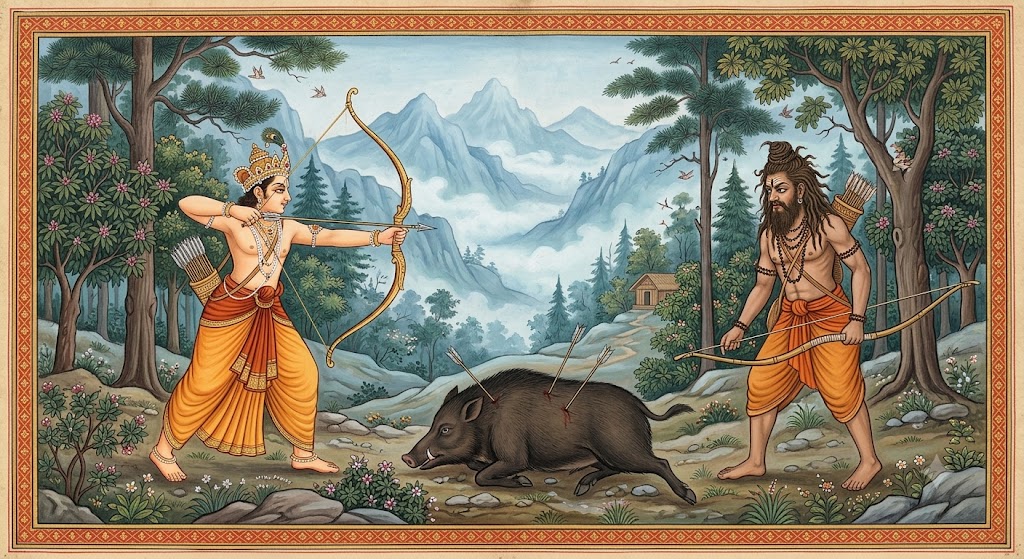
The Divine Hunter: Kirata Avatar

While performing severe penance in the Himalayas for celestial weapons, the Pandava prince Arjuna is tested by Lord Shiva and Goddess Parvati disguised as rugged tribal hunters, leading to the shattering of his warrior ego and the receipt of the invincible Pashupatastra.

3 chapters · read →

Shiva Purana (Shatarudra Samhita, Chapters 13-15)

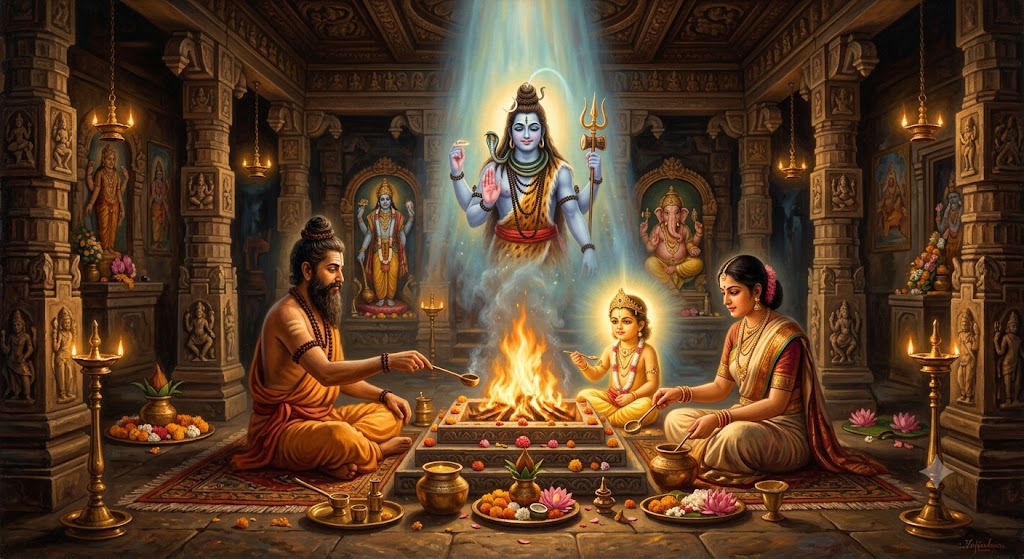
The Lord of the Hearth: Grihapati Avatar

Born as a divine boon to a pious couple, the brilliant child Grihapati learns of an astrological prediction of an early death by fire. He surrenders himself completely to Lord Shiva in Kashi, overcoming both the fear of death and the wrath of Indra.

3 chapters · read →

Shiva Purana (Rudra Samhita, Satikhanda, Chapters 31-43)

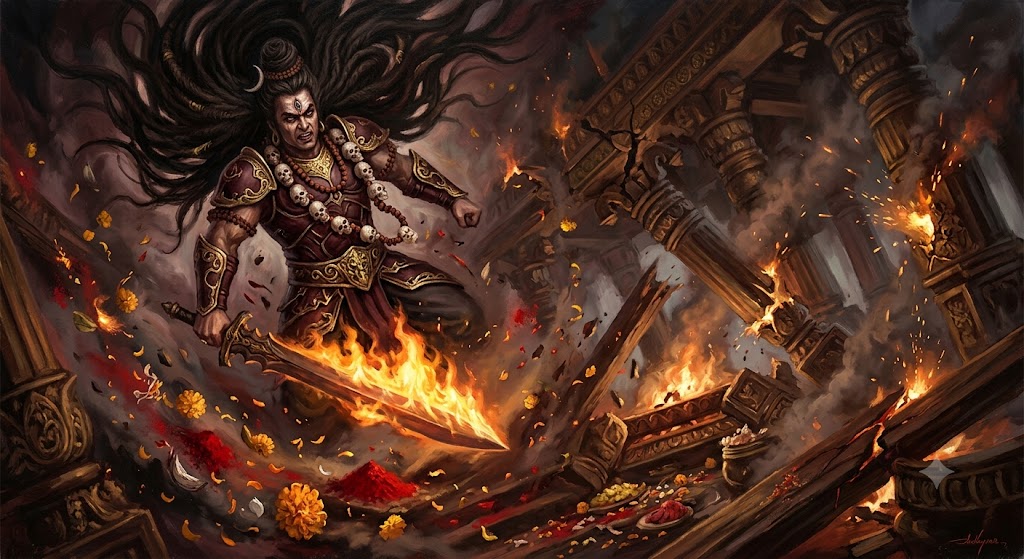
The Wrath of Justice: Veerabhadra Avatar

When Goddess Sati sacrifices her life following King Daksha's ego-driven insults, Lord Shiva's immense grief and wrath manifest as Veerabhadra to dismantle the unrighteous sacrifice and dissolve spiritual arrogance.

3 chapters · read →

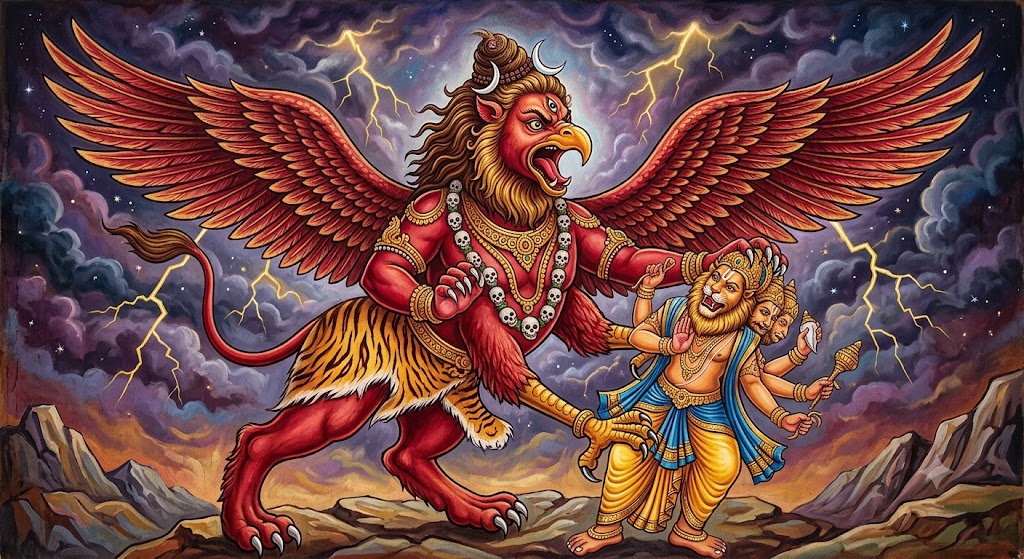
Shiva Purana (Shatarudra Samhita, Chapters 11-12), Sharabha Upanishad

The Great Pacifier: Sharabha Avatar

To pacify and balance the unstoppable, fiery fury of Lord Vishnu's Narasimha incarnation after the slaying of Hiranyakashipu, Lord Shiva manifests as the magnificent winged being Sharabha, illustrating the eternal unity of Hari and Hara.

3 chapters · read →

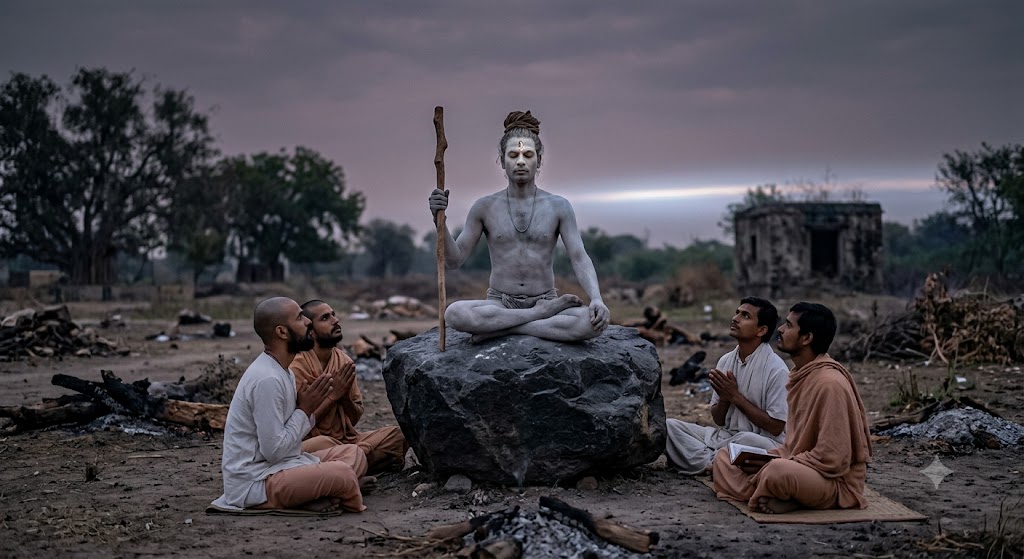
Linga Purana (Chapter 24), Vayu Purana (Chapter 23), Kurma Purana

The Master of Yoga: Lakulisha Avatar

Manifesting during the 28th Dvapara Yuga along the banks of the Narmada River, Lord Shiva as Lakulisha revives the ancient yogic sciences, establishing an unbroken lineage of teachers verified by modern archaeological records.

3 chapters · read →

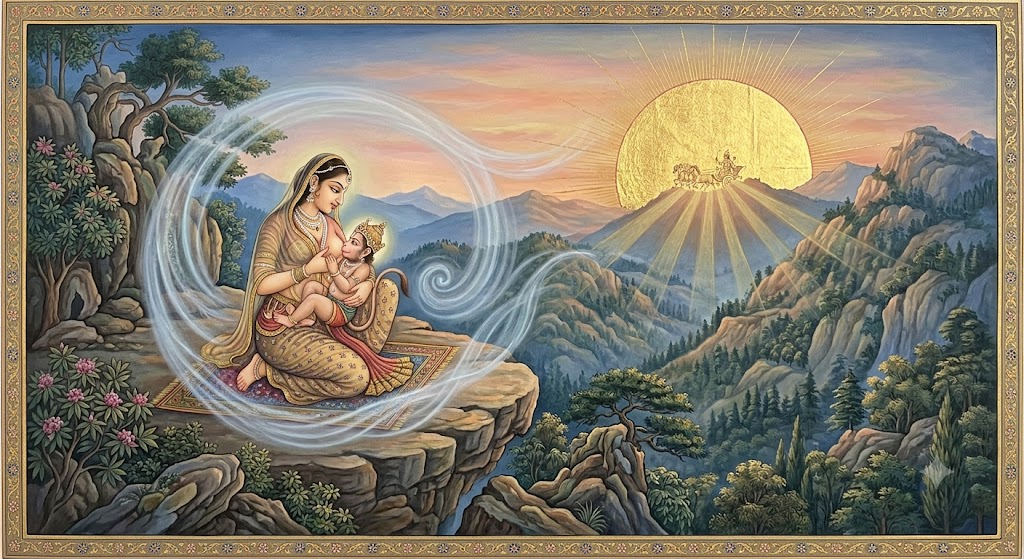
Valmiki Ramayana (Kishkindha Kanda), Shiva Purana (Shatarudra Samhita)

The Infinite Fruit: Birth and the Cosmic Leap

The divine birth of Hanuman as the Eleventh Rudra and son of Vayu, and his spectacular childhood leap toward the morning sun, which resulted in unmatched celestial boons from the gods.

3 chapters · read →

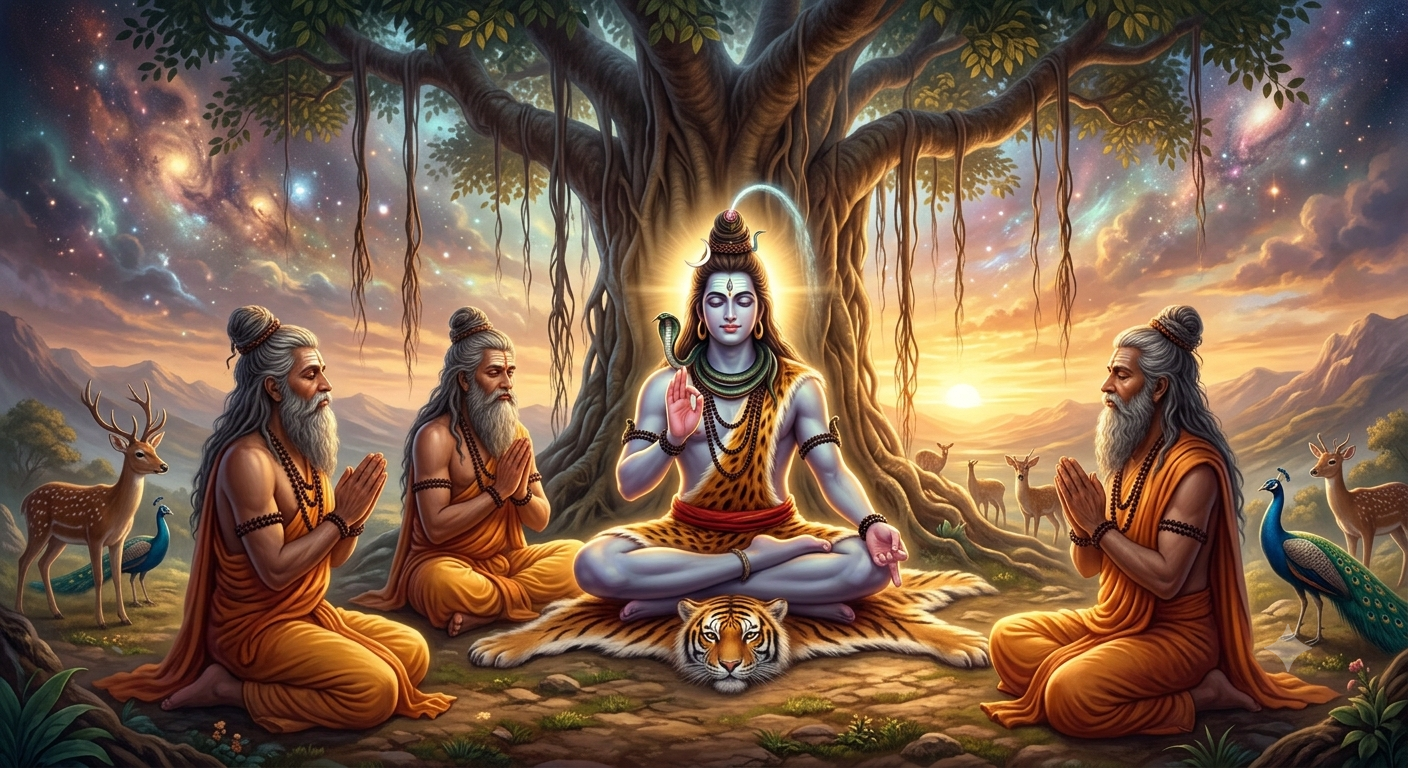
Dakṣiṇāmūrti Stotram, Skanda Purāṇa, Śiva Purāṇa

The Four Sages and the Silent Guru

At the dawn of creation, Brahmā's four mind-born sons — Sanaka, Sanandana, Sanātana and Sanatkumāra — wander the cosmos in search of the ultimate truth. Beneath an ancient banyan tree they meet a radiant young ascetic facing south. Without a single word, he answers every question they have carried for aeons — Śiva as Dakṣiṇāmūrti, the Guru who teaches through silence.

3 chapters · read →

Heritage Store

Bespoke artifacts inspired by Lord Shiva

All artifacts →

Nataraja Cosmic Energy Canvas Art

Inspired by the legend of Lord Shiva

Bring the transformative rhythm of the cosmos into your living space. This high-definition archival print captures the iconic divine stance of Lord Shiva as Nataraja performing the Ananda Tandava-the dance of bliss that sustains creation, dissolves the universe, and manifests cosmic balance out of the chaos of the Samudra Manthan.

$59.99

Ganga Avatarana Archival Giclée Print

Inspired by the legend of Lord Shiva

A stunning classical painting reimagined for modern homes. This giclée print captures the magnificent moment King Bhagiratha's prayers are answered as the roaring heavenly river Ganga cascades gracefully from the cosmic skies directly into the matted locks of Lord Shiva.

$69.99

The Divine Marriage of Shiva & Parvati: Premium Tapestry

Inspired by the legend of Lord Shiva

This premium wall tapestry depicts the legendary Kalyanasundara-the cosmic marriage of Shiva and Parvati. The intricate design exhibits the union of Purusha and Prakriti, reflecting the serene balance of masculine asceticism and feminine dynamic creation that rules over Mount Kailash.

$45.00

Divine Mantras of the Upanishads: 3-Volume Vinyl Boxset

Inspired by the legend of Lord Shiva

Indulge in the sublime acoustic vibrations of ancient India. This limited-edition 3-LP vinyl boxset compiles sacred chants from the Katha, Mandukya, and Svetasvatara Upanishads, performed by world-class Hindustani classical singers in rich analog warmth, offering a meditative audio environment.

$95.00