The preserver and sustainer
If Brahma is the architect who builds the cosmic machinery, Vishnu is the operator who keeps it running. He embodies Sattva Guṇa — the quality of balance, harmony, truth, and structural integrity.
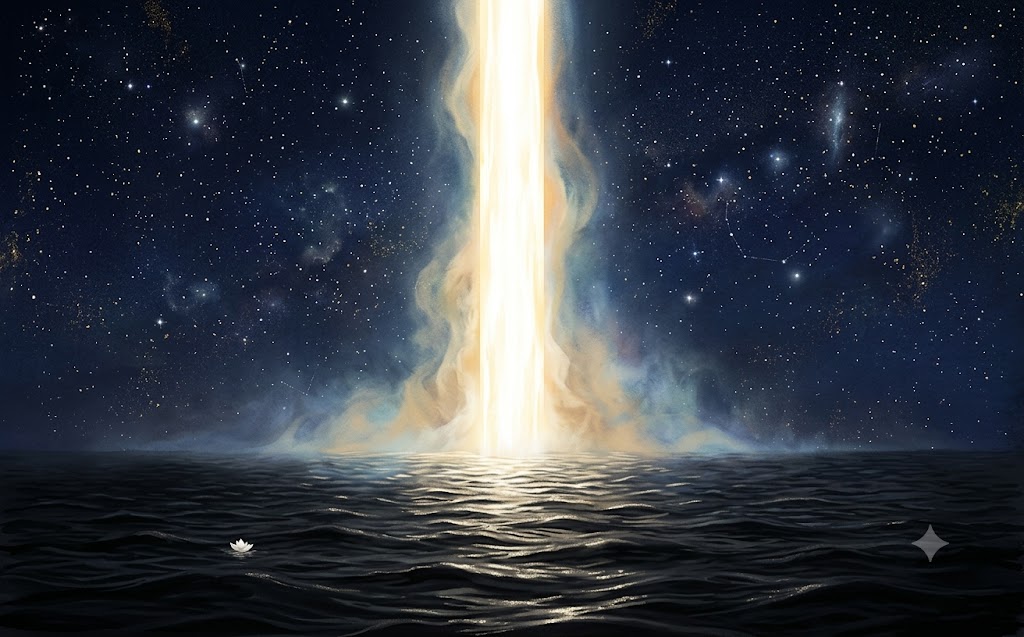
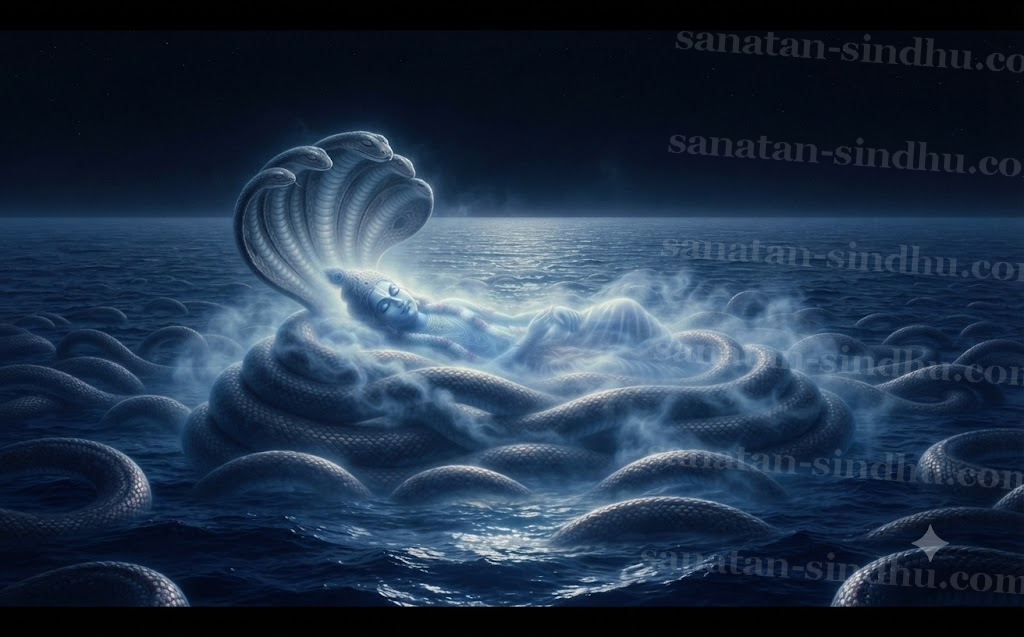
While Brahma exists mostly in the background and Shiva waits in stillness at the edge of destruction, Vishnu is actively engaged with the universe. He rests upon the multi-headed serpent Ananta-Śeṣa — infinite time and space — floating on the Kṣīra Sāgara, the cosmic Ocean of Milk. Whenever the universe tips dangerously toward chaos, Vishnu wakes from his cosmic slumber to restore balance.
The principle of Dharma
At the heart of Vishnu's role is Dharma — not merely 'religion', but the fundamental moral, ethical, and physical laws that keep the universe from collapsing into randomness. When greed, ego or evil destabilise this order, Vishnu manifests a fraction of his divine consciousness into the physical world through an Avatāra (literally 'to descend').
Yadā yadā hi dharmasya glānir bhavati bhārata… abhyutthānam adharmasya tadātmānaṁ sṛjāmy aham.
Whenever righteousness wanes and unrighteousness dominates, I manifest myself to protect the good, destroy evil, and firmly re-establish Dharma.
— Bhagavad Gītā
The Daśāvatāra — a metaphor for evolution
Vishnu's ten primary incarnations form one of the most stunning conceptual frameworks in ancient philosophy, mirroring the biological and psychological evolution of consciousness.
| Avatāra | Form | Biological / conceptual stage |
|---|---|---|
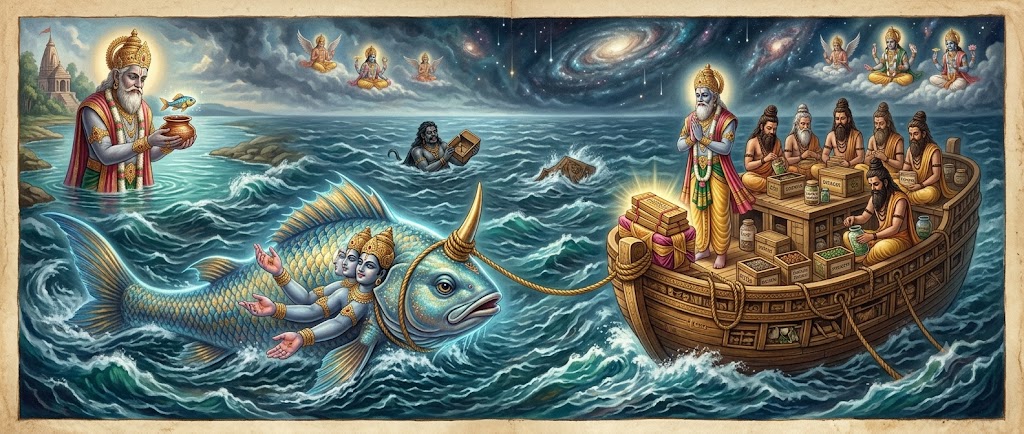
| 1. Matsya | The Fish | Aquatic life: origins in the primordial waters. |
| 2. Kūrma | The Tortoise | Amphibian: life takes its first steps on land. |
| 3. Varāha | The Boar | Terrestrial: purely land-based mammals emerge. |
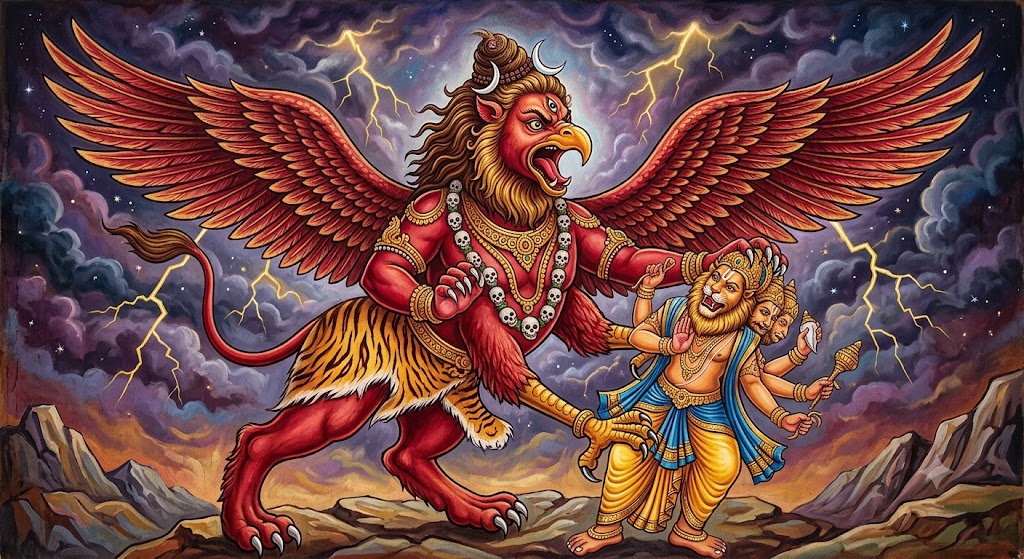
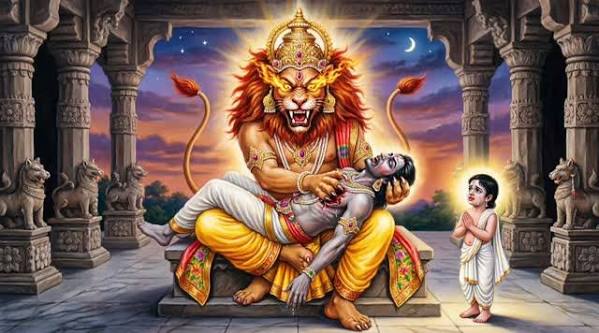
| 4. Narasiṁha | Half-man, half-lion | The transition between animal instinct and intellect. |
| 5. Vāmana | The Dwarf | Early Homo sapiens: fully human, physically small, mind developing. |
| 6. Paraśurāma | Warrior with axe | Early tribal society: fierce, volatile, primitive tools. |
| 7. Rāma | The Ideal King | Civilisation and morality: organised laws, ethics, governance. |
| 8. Kṛṣṇa | Divine Statesman | Advanced society: complex politics and philosophy. |
| 9. Buddha | The Enlightened | Spiritual awakening: turn toward inner peace and higher consciousness. |
| 10. Kalki | Future warrior | The end cycle: the universe resets. |
The cosmic tools of preservation
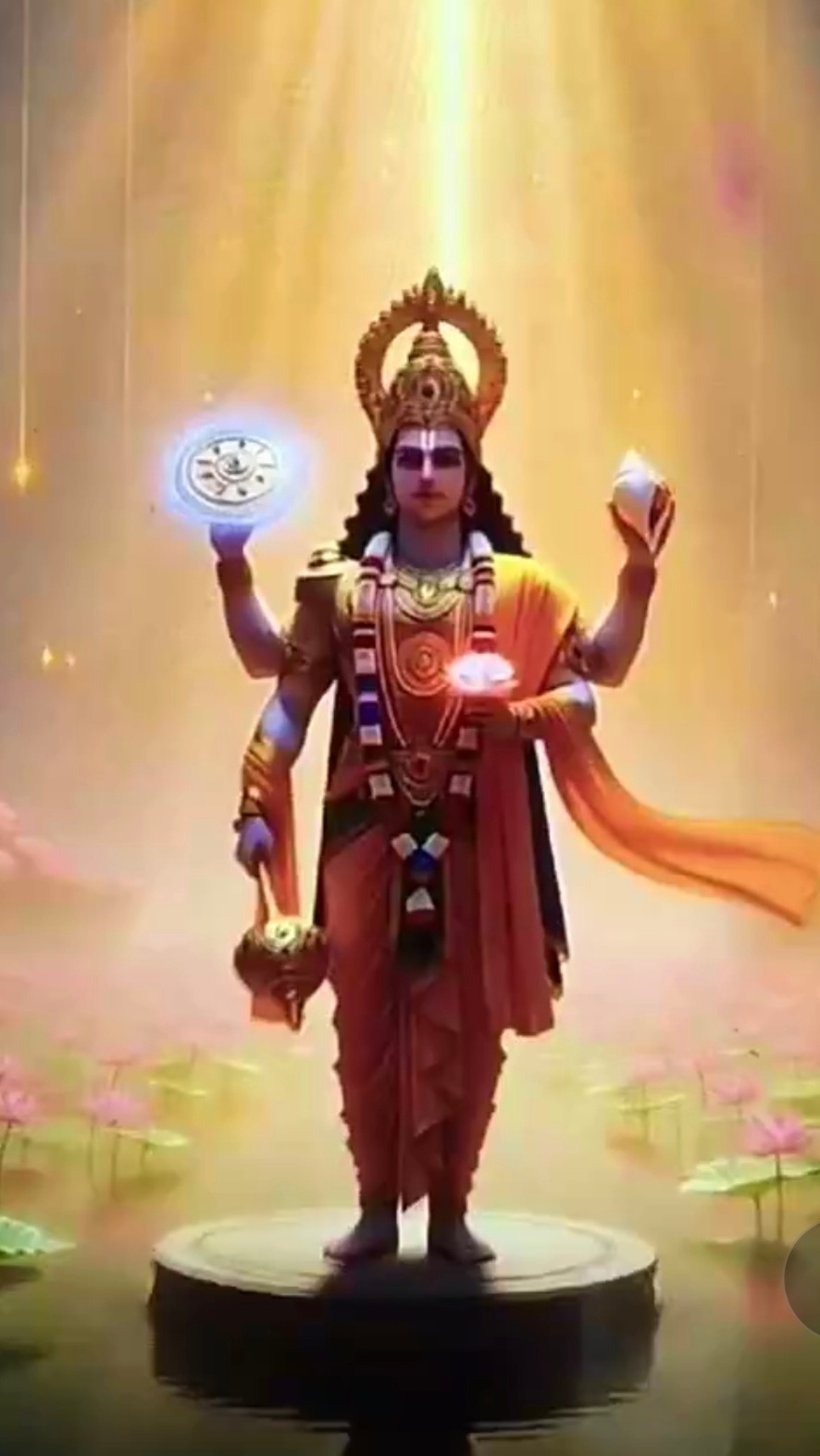
- The Pāñcajanya (conch) — its sound is the primordial vibration of creation (Oṁ), calling humanity to awaken to their higher truth.
- The Sudarśana Cakra (discus) — a spinning wheel of razor-sharp light representing cosmic mind and time. It cuts through ego instantly.
- The Kaumodakī (mace) — physical power, mental strength, and the laws of cause and effect (Karma).
- The Padma (lotus) — spiritual liberation, beauty and purity blooming unpolluted out of the mud of material life.
Vedic antecedent — the three strides
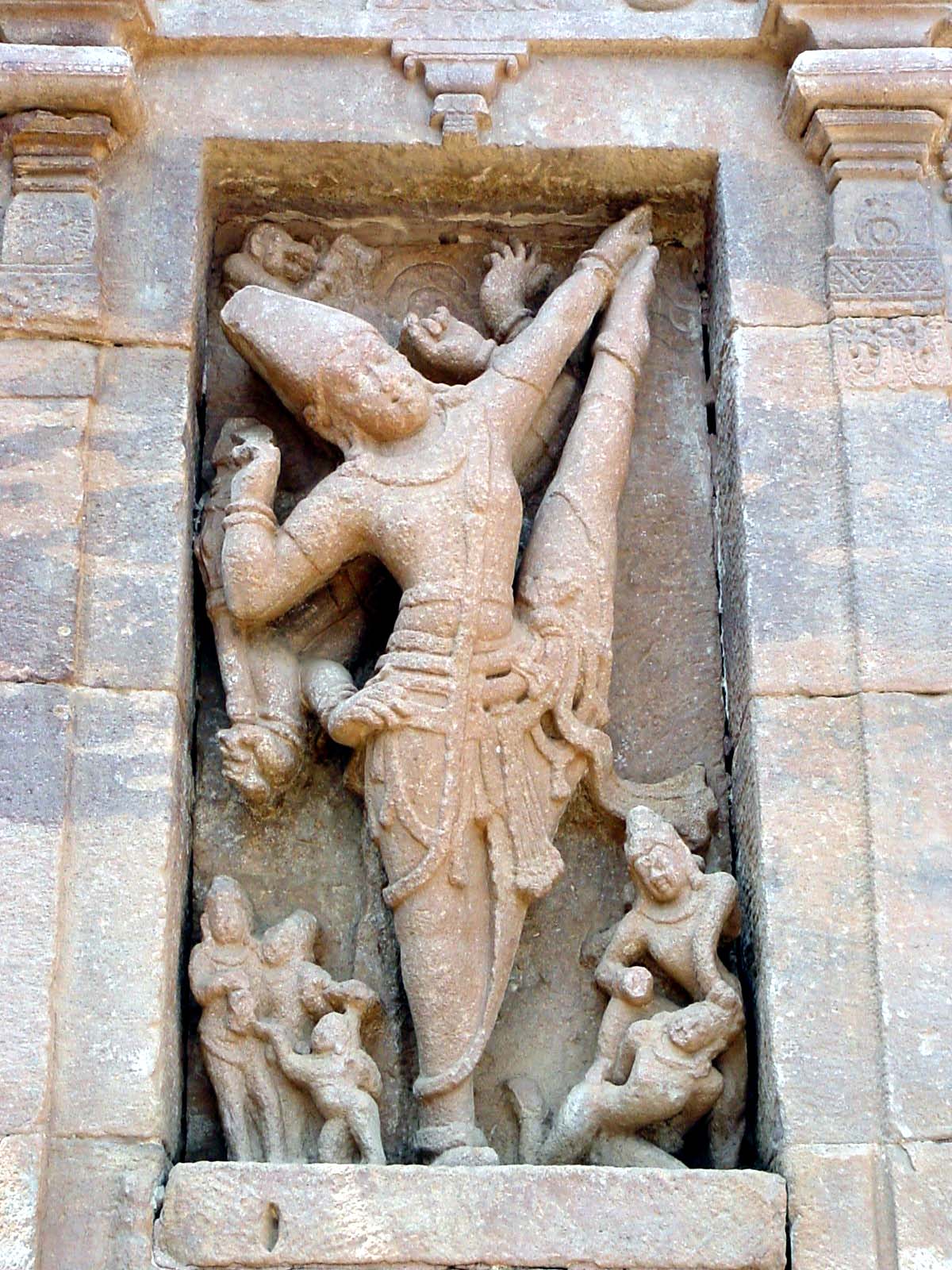
In the Ṛgveda, Viṣṇu is a solar deity of light, space, and cosmic order. The central Vedic motif is Trivikrama, the three strides by which he measures out the cosmos:
विष्णोर्नु कं वीर्याणि प्र वोचं यः पार्थिवानि विममे रजांसि । यो अस्कभायदुत्तरं सधस्थं विचक्रमाणस्त्रेधोरुगायः ॥
viṣṇor nu kaṃ vīryāṇi pra vocaṃ yaḥ pārthivāni vimame rajāṃsi | yo askabhāyad uttaraṃ sadhasthaṃ vicakramāṇas tredhorugāyaḥ ||
'I will now declare the heroic deeds of Viṣṇu, who measured out the earthly regions, who established the upper dwelling place, striding threefold — the wide-paced explorer.'
Yāska's Nirukta (c. 4th century BCE) reads the three steps as the sun's traversal of earth, atmosphere, and high heavens — establishing a stable Loka for life. The name Viṣṇu is derived from the root viṣ ('to enter into', 'to pervade'); Ādi Śaṅkarāchārya's commentary on the Viṣṇu Sahasranāma glosses it as veveṣṭi — 'he pervades everything'.
Upanishadic identification — Nārāyaṇa as Para Brahman
The Nārāyaṇa Upaniṣad and Subāla Upaniṣad elevate Viṣṇu-Nārāyaṇa to the Supreme Absolute Reality (Para Brahman). The Nārāyaṇa Sūktam of the Yajurvedic Taittirīya Āraṇyaka declares:
नारायणं परं ब्रह्म तत्त्वं नारायणः परः । नारायणः परो ज्योतिरात्मा नारायणः परः ॥
nārāyaṇaṃ paraṃ brahma tattvaṃ nārāyaṇaḥ paraḥ | nārāyaṇaḥ paro jyotir ātmā nārāyaṇaḥ paraḥ ||
'Nārāyaṇa is the Supreme Brahman; Nārāyaṇa is the Supreme Reality; Nārāyaṇa is the Supreme Light; Nārāyaṇa is the Supreme Soul.'
Here Nārāyaṇa is the indwelling soul of all beings, seated within the heart as a brilliant flame of consciousness — the one from whom Brahmā, Śiva, and the elements themselves emerge.
Puranic narrative — Anantaśayana and the ten descents
The Viṣṇu Purāṇa and Bhāgavata Purāṇa extend the Vedic foundation into a complete cosmological drama. Viṣṇu's primary state is Anantaśayana — reclining upon the serpent Śeṣa (infinite time) within the primordial milk-ocean (Kṣīra Sāgara) — representing the unmanifest potential of the universe. When cosmic order tilts toward chaos, he descends through the ten Daśāvatāra:
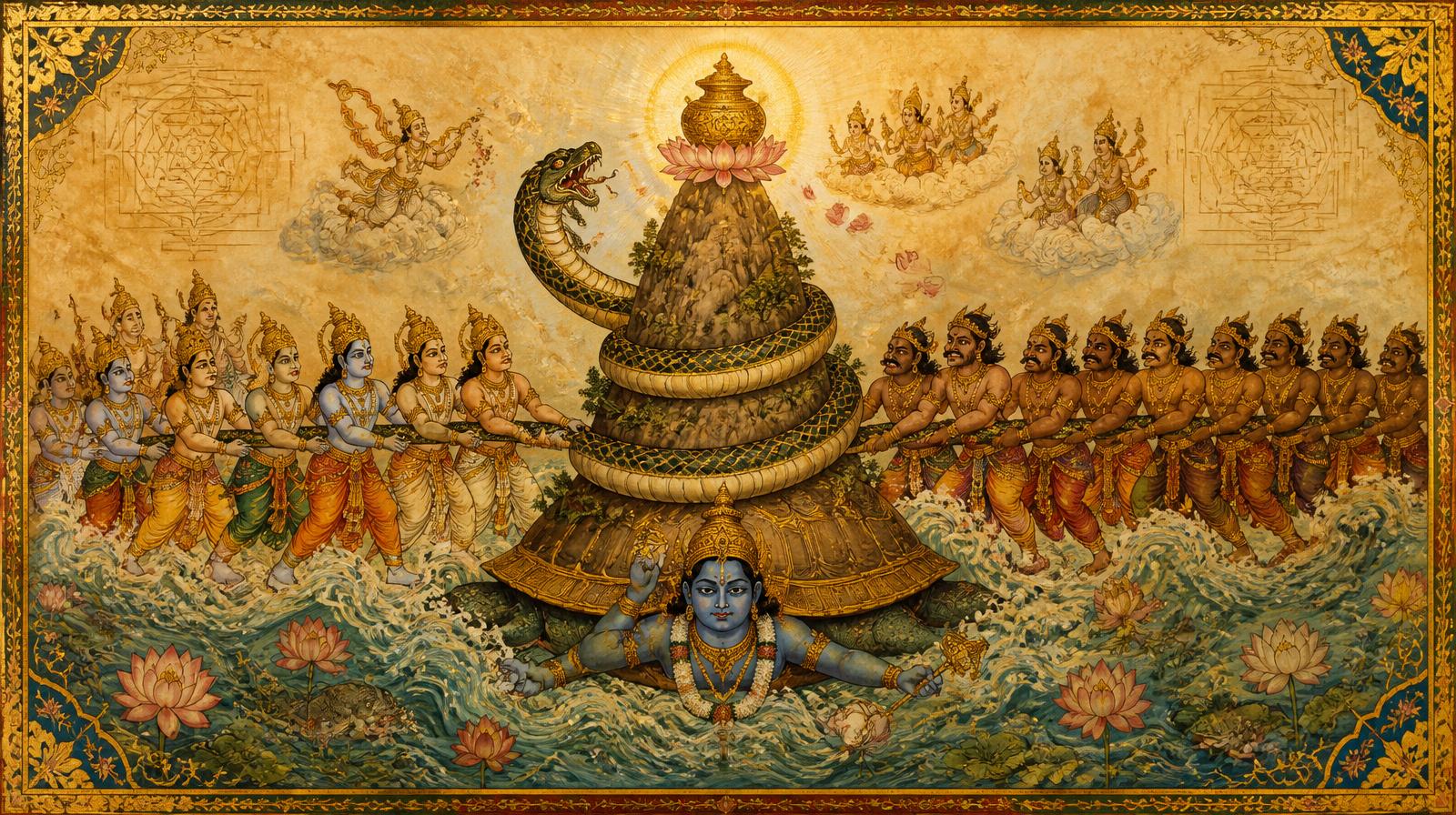
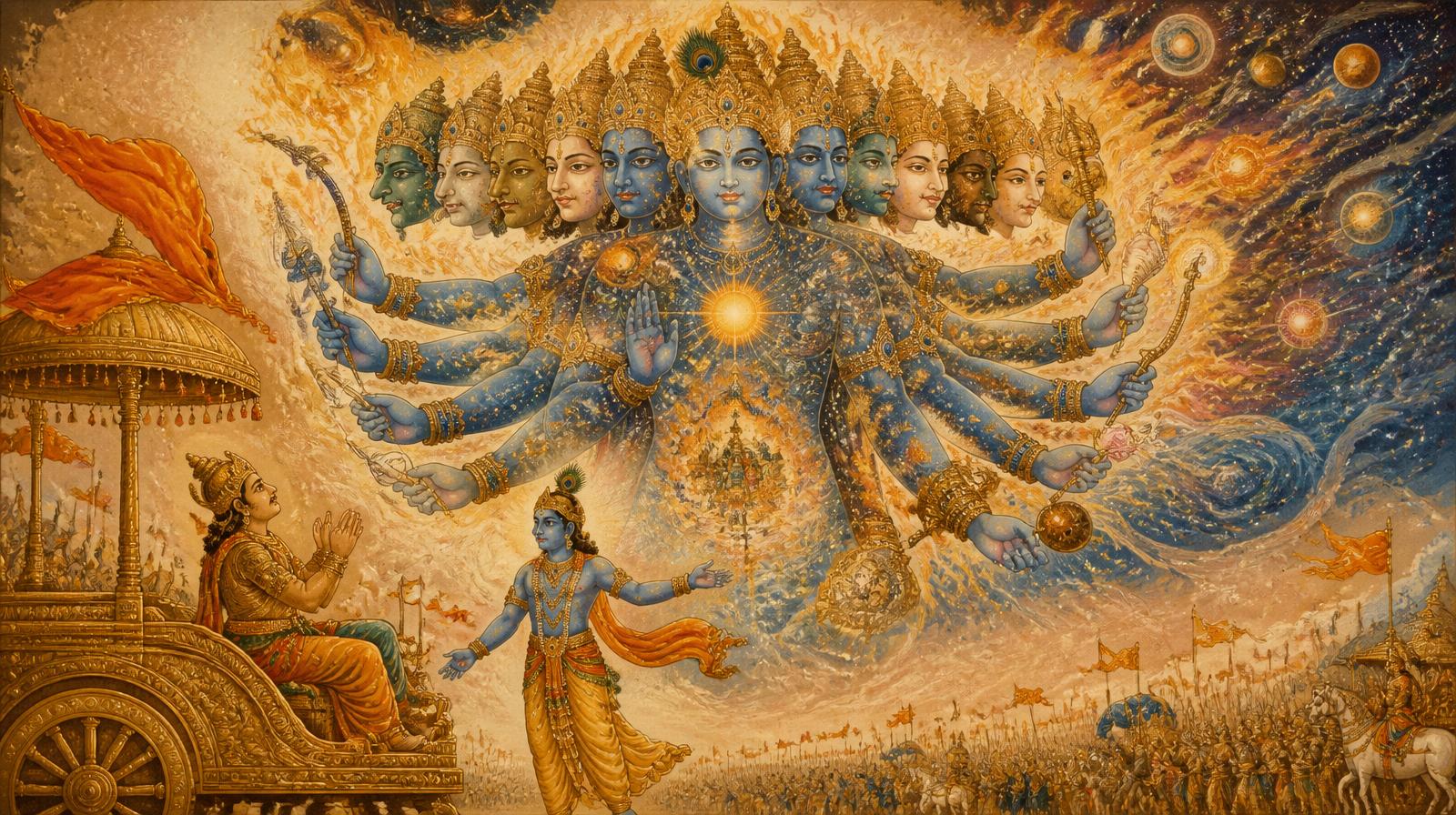
1. Matsya rescues Manu and the Vedas from the cosmic flood. 2. Kūrma becomes the pivot on his back for the churning of the ocean (Samudra Manthan). 3. Varāha raises the earth-goddess Bhūmīdevī from the depths. 4. Narasiṃha slays the demon Hiraṇyakaśipu to restore balance. 5. Vāmana subdues king Bali in three strides — mirroring the Rigvedic Trivikrama. 6. Paraśurāma purges the earth of corrupt militaristic rulers. 7. Rāma exemplifies ethical conduct (Maryādā Puruṣottama). 8. Kṛṣṇa delivers the Bhagavad Gītā on the field at Kurukṣetra. 9. Buddha introduces teachings of non-violence (Ahiṃsā). 10. Kalki, foretold at the end of Kali Yuga, dissolves the degenerate world and reopens Satya Yuga.
Associated festivals — Vaikuṇṭha Ekādaśī & Anant Caturdaśī
- Vaikuṇṭha Ekādaśī — observed in the waxing moon of Mārgaśīrṣa (December–January). On this day the gates of Viṣṇu's celestial abode, Vaikuṇṭha, are believed opened. At Sri Ranganathaswamy Temple, Srirangam, devotees fast and pass through the Vaikuṇṭha Dvāra — a symbolic enactment of liberation (Mokṣa).
- Anant Caturdaśī — celebrated in Bhādrapada (September), honouring Viṣṇu in his Ananta (infinite) form reclining on Śeṣanāga. A sacred thread with fourteen knots is bound at the wrist, representing the fourteen Lokas sustained within Viṣṇu's cosmic form.
Further reading
For the full comparative treatment of Brahmā, Viṣṇu and Śiva as a cosmogonic triad — Vedic antecedents through Purāṇic synthesis, festival topography, and the non-dual paradigms of Kashmiri Trika Shaivism — see the essay Trimūrti — Scriptural Origins.